
A rate headline can make a buyer in Rockingham County delay a perfectly workable USDA purchase, while a veteran near Front Royal may assume a VA loan is out of reach when it is not. Virginia mortgage rate trends matter, but the rate on a news ticker is not your personal mortgage rate. Your credit profile, occupancy, loan program, debt-to-income ratio, property type, and pricing options all affect the number that reaches your closing table.
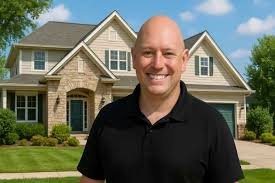
I am Duane Buziak, Mortgage Maestro, NMLS #1110647, and I work with buyers across the Blue Ridge and Shenandoah Valley who need a straight answer before they make an offer. The useful question is not simply, “Are rates going down?” It is, “What payment and cash requirement can I live with if I buy this home now?”
Table of Contents
- What is driving Virginia mortgage rate trends
- Why USDA and VA borrowers should look beyond the headline
- A real payment example
- Broker versus single-shelf mortgage shopping
- Frequently asked questions
What is moving Virginia mortgage rate trends?
Mortgage rates generally react to bond-market expectations, inflation reports, employment data, Federal Reserve policy expectations, and mortgage-backed securities demand. The Fed does not set your 30-year fixed mortgage rate directly. That distinction matters when a buyer sees a Fed announcement and expects an immediate, identical mortgage-rate move.
In the Valley, the local market adds another layer. A modest home outside Staunton may qualify for USDA, while a similar-priced property closer to Charlottesville may call for conventional, FHA, or a different financing strategy. A rate quote only has meaning after the program fits the address, household income, loan amount, and intended use.
USDA eligibility is address-specific, not simply county-specific. Much of Shenandoah, Rockingham, Augusta, Rockbridge, Warren, and surrounding rural territory has eligible areas, but town boundaries and suburban growth patterns can change the answer from one road to the next. USDA publishes its property eligibility map, and I verify the specific address rather than guessing from a listing description.
For Charlottesville move-up buyers, conventional pricing can be strong when credit, down payment, and debt ratios are favorable. The 2026 conforming loan limit is $806,500 in baseline areas and $1,249,125 in high-cost areas. UVA faculty, staff, and other buyers with variable compensation may also need a closer review of income documentation before comparing rate quotes.
The rate is only one part of affordability
A lower note rate can come with higher upfront charges. A slightly higher rate may support no-out-of-pocket closing options through a credit that offsets eligible closing expenses. Neither choice is automatically better. It depends on how long you expect to own the home, how much cash you want to preserve after closing, and whether the payment still fits comfortably.
This is particularly relevant for first-time buyers in Harrisonburg and Waynesboro. USDA can offer 100% financing for qualified buyers in eligible areas, but household income limits, property condition, and appraisal requirements must be considered. VA financing can also offer 100% financing for eligible veterans, active-duty buyers, and qualifying surviving spouses, often with no monthly mortgage insurance.
A soft credit pull mortgage review gives us a starting point without treating a first conversation like a final loan decision. With NoTouch Credit Pull, I can assess likely pricing and identify credit items worth addressing before you write an offer. That is practical for buyers who want a mortgage pre approval without hard pull activity before they are ready.
A worked Valley buyer example
Consider a $300,000 USDA-eligible home outside Harrisonburg. Assume the buyer qualifies for 100% financing and the USDA upfront guarantee fee is 1.00%. The base loan is $300,000. The upfront guarantee fee is $3,000, calculated as $300,000 × 1.00%, and it can be financed. The starting loan amount becomes $303,000.
At a hypothetical 6.50% fixed rate for 30 years, principal and interest on $303,000 is approximately $1,915 per month. The USDA annual fee, using 0.35% of the initial balance as a simple starting illustration, is about $88 per month: $303,000 × 0.35% ÷ 12. Taxes and homeowners insurance are separate and depend on the property.
Now compare that with a 6.75% rate on the same $303,000 loan. Principal and interest would be roughly $1,966 per month, or about $51 more each month. If that difference remained unchanged for 360 payments, the simple payment difference would total $18,360. Real loan balances amortize and future refinancing is never guaranteed, but the example shows why even a quarter-point deserves a clear comparison.
For a VA example, a $350,000 purchase with no down payment and a first-use funding fee of 2.15% would have a $7,525 funding fee: $350,000 × 2.15%. If financed, the starting loan would be $357,525. Some VA buyers are exempt from the funding fee, so that must be confirmed individually. For eligible VA cash-out refinances, financing can go to 100% loan-to-value; conventional cash-out is capped at 90% loan-to-value.
| Program | Best local fit | Down payment path | Rate and fee consideration |
|---|---|---|---|
| USDA | Eligible rural Valley addresses | 100% financing for qualified buyers | Upfront guarantee fee and annual fee apply |
| VA | Eligible veterans and service members | Often 0% down | Funding fee may apply; exemption is possible |
| FHA | Buyers needing flexible credit standards | Typically 3.5% down | Mortgage insurance affects total payment |
| Conventional | Move-up buyers and stronger profiles | Varies by program | Pricing often improves with credit and equity |
Why a broker comparison can change the answer
A local relationship is valuable, but a rate quote should not be limited to one product shelf. As an independent mortgage broker, I compare options through more than 500 wholesale outlets and focus heavily on USDA depth for rural Virginia buyers. That can matter when a property has acreage, an unconventional income pattern, or a program eligibility question that needs more than a generic online quote.
Tonja Showalter Armentrout at F&M Mortgage is a well-known Valley option, while Jake Adler and The Adler Mortgage Team, ALCOVA Mortgage Staunton, Bruce Burner at Benchmark Mortgage, C&F Mortgage Waynesboro, and Movement Mortgage Harrisonburg each serve local buyers through their own retail platforms. Rocket Mortgage is a national online mortgage company many buyers use as a rate-comparison reference, and Movement Mortgage is often considered for retail processing speed.
The difference is not about criticizing another professional. It is about whether one shelf has the right answer for your file. A broker comparison can be especially useful when USDA income limits are close, VA entitlement needs review, or a buyer needs Bank Statement, DSCR, Dynamo DPA, Turbo DPA, or Homes for Heroes options considered alongside standard programs.
Before a full application, ask for a soft pull mortgage broker conversation. A soft credit pull mortgage review can help determine whether a no hard inquiry mortgage pre approval approach is appropriate. NoTouch Credit Pull is designed for that early planning stage, including a no credit hit mortgage application discussion before you commit to a formal credit path.
Virginia mortgage rate trends: 8 local questions
Are Shenandoah Valley mortgage rates different from national rates?
The market drivers are national, but your final rate reflects your program, credit, loan size, occupancy, and property details. A USDA-eligible home near Edinburg may produce a different best option than a conventional purchase in Charlottesville.
Should I wait for rates to drop before buying in Augusta County?
It depends on inventory, your payment comfort, and the home itself. Waiting may help if rates improve, but it can also mean more competition or higher prices. Review both scenarios with actual payment numbers.
Can USDA rates help buyers near Harrisonburg?
Often, yes. USDA can be a strong fit for qualified buyers purchasing an eligible primary residence outside ineligible boundaries. Income limits and property eligibility still control.
Does VA require a down payment in Front Royal?
Eligible VA buyers can often finance 100% of the purchase price. Appraisal, entitlement, income, and property requirements still apply.
Can I check my options without a hard inquiry?
Yes, a soft credit pull mortgage discussion through NoTouch Credit Pull can provide early direction. A formal credit decision may require a different process later.
Are no-out-of-pocket closing options always best?
Not always. They can preserve cash, but the rate or pricing structure may differ. Compare the monthly payment and likely ownership timeline before choosing.
What if my income is seasonal or self-employed in Rockbridge County?
Documented income matters more than a single monthly snapshot. Bank Statement options may help some self-employed borrowers, while USDA and VA income rules need careful review.
Can rural investors use USDA or VA financing?
No. USDA and VA purchase financing are intended for qualified owner-occupants. Rural investors may instead need a DSCR or conventional investment-property strategy.
The best time to evaluate a rate is before you are emotionally committed to one house. Bring the address, estimated price, income picture, and cash-on-hand target, and I will help you compare the payment paths that make sense for your part of Virginia.
Duane Buziak, Mortgage Maestro | Coast2Coast Mortgage LLC | NMLS #1110647 | (804) 212-8663 | duane@coast2coastml.com | 3302 Haydenpark Lane, Henrico VA 23233 | Licensed: VA, FL, TN, GA, DC
Not a commitment to lend. Rates subject to change. Equal Housing Lender. Coast2Coast Mortgage LLC NMLS #376205. Duane Buziak NMLS #1110647.