
A self-employed buyer can have strong income, healthy savings, and a thriving business – then hit a wall because a mortgage program does not read a tax return the same way a business owner does. That is why finding the best loans for self employed buyers in the Shenandoah Valley is less about chasing one advertised rate and more about matching your real financial picture to the right program.
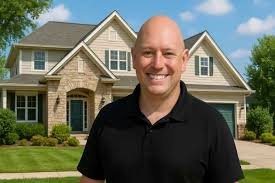
If you own a farm-adjacent business in Rockingham County, run a contracting company in Augusta County, work remotely from Front Royal, or operate a practice near Charlottesville, your income may be perfectly mortgage-ready. The paperwork simply needs the right interpretation. I am Duane Buziak, Mortgage Maestro, NMLS #1110647, and as an independent mortgage broker, I help Valley buyers compare paths that a single product shelf may miss.
Table of Contents
- Why self-employed income needs a different approach
- The best loan options for Valley business owners
- A worked USDA purchase example
- How a broker compares with retail channels
- Documents and credit preparation
- Frequently asked questions
Why self-employed income needs a different approach
Mortgage underwriting generally looks for income that is stable, documented, and likely to continue. For W-2 employees, that can be straightforward. For business owners, income may show up through tax returns, K-1s, 1099s, profit-and-loss statements, business bank deposits, retained earnings, or a combination of all of them.
The key friction is often tax strategy. Deductions can reduce taxable income, which may be smart for your business but can lower the qualifying income shown on a traditional tax-return review. That does not mean you cannot buy. It means the loan type matters.
Start early, before you are under contract on a home outside Harrisonburg or a small acreage property near Staunton. A soft credit pull mortgage review can identify likely payment ranges without immediately adding a hard inquiry to your credit file. Our NoTouch Credit Pull process is built for this stage: useful numbers first, pressure later.
Best loans for self employed buyers: the local shortlist
USDA is often the strongest first look for buyers purchasing a primary residence in the Valley’s rural-eligible areas. Many communities outside city centers in Rockingham, Augusta, Rockbridge, Shenandoah, and Warren counties may qualify by address. USDA eligibility is property-specific, so do not assume a town name tells the whole story. The USDA Property Eligibility Map is the source used to verify an address, and eligibility can extend closer to local services than buyers expect.
VA financing deserves equal attention for eligible veterans, active-duty service members, and qualifying surviving spouses. VA loans can allow no down payment, and some borrowers may qualify with scores as low as 500 depending on the complete file. VA entitlement, occupancy, residual income, and the property itself still matter, so a low down payment does not mean a casual approval process.
FHA can be a practical alternative when USDA geography, household income limits, or property condition rules do not fit. For Charlottesville move-up buyers and UVA faculty or staff whose purchase price exceeds a typical rural home budget, conventional financing may be the cleaner lane. In 2026, the conforming baseline limit is $806,500, with a high-cost ceiling of $1,249,125 where applicable.
For buyers whose tax returns understate usable cash flow, bank statement loans can use qualifying deposits rather than relying only on taxable income. They can be especially useful for consultants, real estate professionals, restaurant owners, and contractors with consistent deposits. The trade-off is that rates, down payment requirements, reserves, and documentation can be less forgiving than USDA, VA, FHA, or conventional financing.
DSCR financing is different again. It is designed for investment property buyers, including rural investors, and focuses largely on whether projected rent supports the housing payment. It is not a substitute for owner-occupied financing, but it can be a fit when a self-employed buyer is adding a rental cabin, duplex, or long-term rental to a portfolio.
| Program | Best fit | Down payment approach | Self-employed income review |
|---|---|---|---|
| USDA | Primary homes in eligible Valley areas | Often no down payment | Tax returns and documented qualifying income |
| VA | Eligible veterans and service members | Often no down payment | Tax returns, business analysis, and VA guidelines |
| FHA | Buyers needing flexible credit or non-rural location | Low down payment option | Tax-return-based income review |
| Conventional | Move-up buyers, higher-price purchases, strong profiles | Varies by program | Tax returns, K-1s, and business documentation |
| Bank Statement | Strong deposits but significant tax deductions | Usually higher than government options | Personal or business deposits over a stated period |
| DSCR | Non-owner-occupied investment property | Varies by property and profile | Property cash flow is central |
Down payment assistance can also change the math for qualifying buyers. Dynamo DPA, Turbo DPA, and Homes for Heroes may be worth reviewing alongside FHA or conventional options. Availability, income rules, repayment terms, and property location all vary, so these should be compared rather than assumed to be free money.
A worked USDA example for a Valley buyer
Consider a self-employed couple buying a $325,000 primary residence in an eligible area outside Waynesboro. If they qualify for USDA financing with no down payment, the base loan amount starts at $325,000.
Using a 1.00% USDA upfront guarantee fee, the fee is $3,250: $325,000 x 0.01 = $3,250. When financed, the total starting loan becomes $328,250. Compared with a 3.5% FHA down payment of $11,375 on the same purchase price, USDA preserves $11,375 in cash for reserves, moving costs, repairs, or business needs.
USDA also has an annual fee, commonly paid monthly as part of the payment. If the annual fee is 0.35%, the first-year amount on a $328,250 balance is about $1,148.88 per year, or about $95.74 per month before the balance changes. Exact program fees, rates, and eligibility must be confirmed for the live file.
For a VA buyer purchasing the same $325,000 home with no down payment and a first-use funding fee of 2.15%, the fee would be $6,987.50: $325,000 x 0.0215 = $6,987.50. If financed, the beginning balance would be $331,987.50. Some VA borrowers are exempt from the funding fee, which can materially improve the comparison.
The lesson is not that USDA always wins. A VA-eligible buyer with funding-fee exemption, for example, may have the better path. The right answer depends on property address, income, assets, credit, household size, and long-term plans.
Broker access versus a single product shelf
A good local retail option can provide personal service, and Valley buyers may recognize names such as Tonja Showalter Armentrout at F&M Mortgage, Jake Adler and The Adler Mortgage Team, ALCOVA Mortgage Staunton, Bruce Burner at Benchmark Mortgage, C&F Mortgage Waynesboro, and Movement Mortgage Harrisonburg. Rocket Mortgage is also a useful national rate-comparison reference, while Movement Mortgage is often recognized for processing speed.
The difference is not that one route is automatically wrong. It is the range of choices. A retail operation generally works from its own product shelf. As an independent broker, I can compare options through more than 500 wholesale funding sources and bring specialized USDA depth to the conversation. That matters when one buyer needs a straightforward VA file and another needs a bank statement review after legitimate business deductions.
Mortgage Maestro was recognized in Scotsman Guide Top Originators at #114 with $44.4 million in 2025 and reported $51.2 million in 2026 production. Those figures matter only if they translate into a clear recommendation for your situation. My 24-Hr Guarantee and Dare to Compare pricing are designed to make that recommendation transparent.
Prepare the file before the house hunt gets serious
Self-employed borrowers should keep the process organized, not overcomplicated. Have your last two years of personal and business tax returns available, along with current year-to-date profit-and-loss information and recent business and personal statements. If you are paid through an S-corporation or partnership, K-1s and ownership details may be needed.
Avoid large undocumented deposits, new business debt, or major personal purchases before closing unless they are discussed first. A no hard inquiry mortgage pre approval can be a smart first conversation for buyers still sorting out timing. A mortgage pre approval without hard pull is not a final approval, but it can help set a realistic target before you start competing for homes.
Ask for a soft pull mortgage broker review if protecting your credit profile is a priority. A no credit hit mortgage application conversation can provide an initial direction, though a full application and required verification will eventually be necessary to issue a reliable approval. NoTouch Credit Pull gives self-employed buyers room to plan before they commit.
Frequently Asked Questions
Can I get USDA financing if I am self-employed in Rockingham County?
Yes, if the property is USDA-eligible, your household income fits program limits, and your documented income supports the payment. Business ownership alone does not prevent USDA approval.
Do USDA income limits use gross business revenue?
No. USDA looks at household income under its own rules, while qualifying income for the payment is separately analyzed. Those two calculations can differ.
Can a veteran use VA financing with self-employment income?
Yes. Tax returns, business documentation, and evidence the income is likely to continue are commonly reviewed. VA entitlement and occupancy requirements also apply.
Is a 500 credit score enough for a VA loan in the Shenandoah Valley?
It may be possible with the right complete file, but score is only one factor. Income stability, payment history, residual income, and property details remain important.
Are bank statement loans good for Charlottesville business owners?
They can be a strong option when deposits are consistent but tax deductions reduce qualifying income on returns. Expect different pricing and down payment requirements than government-backed options.
Can I use down payment assistance with self-employment income?
Potentially. Dynamo DPA, Turbo DPA, and Homes for Heroes each have program-specific rules. Eligibility should be reviewed alongside the first mortgage, not afterward.
Does a soft credit pull affect my score?
A soft pull typically does not affect your score in the same way as a hard inquiry. Confirm what type of inquiry will be used before authorizing any credit review.
Can I buy a rural investment property with USDA?
No. USDA is for eligible owner-occupied primary residences. A DSCR program may be worth reviewing for a qualifying investment property.
A self-employed income file should not force you into a one-size-fits-all loan. Bring the tax returns, the deposits, and the real story behind your business. We can sort out which option supports the home you want and the company you are building.
Duane Buziak, Mortgage Maestro | Coast2Coast Mortgage LLC | NMLS #1110647 | (804) 212-8663 | duane@coast2coastml.com | 3302 Haydenpark Lane, Henrico VA 23233 | Licensed: VA, FL, TN, GA, DC
Not a commitment to lend. Rates subject to change. Equal Housing Lender. Coast2Coast Mortgage LLC NMLS #376205. Duane Buziak NMLS #1110647.