
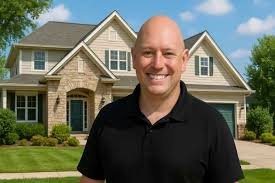
A home outside Harrisonburg, Staunton, Front Royal, or Waynesboro may be more attainable than many buyers realize. USDA loans are built for qualified buyers purchasing in eligible rural areas, and much of the Shenandoah Valley and Blue Ridge foothills fits the program far better than the word “rural” suggests. You do not need to buy a farm, and you do not need a 20% down payment.
I’m Duane Buziak, NMLS #1110647, a mortgage broker serving Virginia buyers who need straight answers on rural home financing. The first step is not guessing whether a road, subdivision, or town qualifies. It is checking the actual property address, your household income, and the home’s condition before you write an offer.
Table of Contents
- What USDA loans cover in the Valley
- Property and income eligibility
- A real USDA loan cost example
- USDA compared with other purchase options
- Why a broker’s USDA depth matters
- Eight local USDA loan questions
Why USDA loans fit so many Valley homebuyers
USDA home loans, formally the USDA Rural Development Guaranteed Loan program, can offer 100% financing for eligible primary residences. That means no required down payment from the buyer. For first-time buyers trying to keep savings available for inspections, moving, and home repairs, that can change the conversation quickly.
The program is not limited to remote mountain roads. Eligible areas often include communities around Rockingham, Augusta, Rockbridge, Shenandoah, and Warren counties, along with locations just beyond the denser parts of Charlottesville and other city centers. The USDA Property Eligibility map is the official address-level source, and it is the only reliable way to confirm a specific property.
Eligibility has three moving parts: the property must fall in an eligible area, the household must meet USDA income rules, and the buyer must qualify under normal credit and repayment standards. USDA counts income for adult household members in ways that can differ from the income used to qualify for the monthly payment. That distinction catches people off guard, especially when an adult child, parent, or roommate lives in the home.
The property also needs to be a primary residence and generally must meet appraisal and condition requirements. A well-kept home in Broadway, Elkton, Verona, or Strasburg may be an excellent fit. A property needing major structural work, or a home intended as a rental or second home, may not be.
The no-down-payment math, with real numbers
Here is a straightforward example for a $300,000 eligible home in the Shenandoah Valley. Assume the buyer negotiates a purchase price of $300,000 and uses a USDA loan with no down payment.
The base loan amount is $300,000. USDA’s upfront guarantee fee is commonly 1.00%, which equals $3,000 on this loan. That fee can be financed, producing a total starting loan amount of $303,000. The annual USDA fee, commonly 0.35%, is calculated against the outstanding principal and paid monthly. At the initial balance, $303,000 × 0.0035 = $1,060.50 annually, or about $88.38 per month before the amount gradually declines with the balance.
The buyer brings no down payment. Closing costs still exist, but seller concessions, credits, and no-out-of-pocket closing options can reduce what is needed at closing when the contract, appraisal, and transaction structure support it. That is not the same as pretending costs do not exist. It means building a purchase plan that accounts for them honestly.
A USDA loan is not automatically the cheapest choice for every buyer. A buyer with substantial savings, strong credit, and a conventional option with favorable pricing may prefer conventional financing. But for a household whose main hurdle is the down payment, USDA can preserve cash without requiring mortgage insurance in the conventional sense.
USDA, VA, FHA, and conventional: the practical differences
| Program | Down payment | Property location | Best fit |
|---|---|---|---|
| USDA | 0% for eligible buyers | USDA-eligible rural areas | Valley primary-home buyers meeting income rules |
| VA | 0% for eligible veterans and service members | No rural boundary requirement | Eligible military households, including buyers with credit scores as low as 500 in the right file |
| FHA | Typically 3.5% | Broad location flexibility | Buyers needing flexible credit guidelines |
| Conventional | Often 3% to 5% or more | Broad location flexibility | Buyers with stronger credit, savings, or higher income |
For veterans buying in rural-eligible areas, comparing USDA and VA is worthwhile, though VA is often the stronger lane because it has no USDA household income cap. VA financing can also be available up to a 500 FICO score with the right overall profile. If a VA borrower is making a cash-out refinance, the VA cash-out limit is 100% LTV, while conventional cash-out is capped at 90% LTV.
For buyers above USDA income limits, FHA, conventional, Dynamo DPA, Turbo DPA, and Homes for Heroes may deserve a look. The right answer depends on payment, cash to close, property type, credit profile, and how long you expect to own the home.
Do not confuse a pre-qualification with a blind credit hit
Before shopping aggressively, buyers deserve a payment range and a realistic property search area. A soft credit pull mortgage review can provide an early read without forcing a hard inquiry just to start a conversation. My NoTouch Credit Pull process is designed for that purpose.
If you are looking for a no hard inquiry mortgage pre approval, ask what the broker is actually reviewing. A mortgage pre approval without hard pull can be useful for planning, but a contract-ready approval may eventually require a full credit review and documentation. The benefit is timing and transparency, not a shortcut around underwriting.
NoTouch Credit Pull can help buyers who want a soft pull mortgage broker conversation before they commit to a full application. It is also useful for people seeking a no credit hit mortgage application experience at the earliest planning stage. We can identify likely USDA issues – income, debts, credit, or address eligibility – before they become contract problems.
Broker depth versus a single product shelf
A USDA file is not the place for a one-size-fits-all answer. As an independent broker with access to 500+ wholesale options, I can compare USDA against VA, FHA, conventional, bank statement, and DSCR paths when the borrower or property calls for another direction. That independence matters when a rural property has acreage, a well and septic system, an outbuilding, or an appraisal question.
Valley buyers may also compare local teams such as Tonja Showalter Armentrout at F&M Mortgage, Jake Adler and The Adler Mortgage Team, ALCOVA Mortgage Staunton, Bruce Burner at Benchmark Mortgage, C&F Mortgage Waynesboro, and Movement Mortgage Harrisonburg. Nationally, Rocket Mortgage is often part of the rate-comparison conversation, while Movement Mortgage is known by many buyers for retail processing speed.
Those are legitimate comparisons. The difference is structure: retail outlets generally work from one product shelf, while a broker can shop across wholesale options and bring deeper USDA-specific attention to a file. My job is not to push USDA where it does not fit. It is to make sure a qualified Valley buyer does not miss it because a program was never properly reviewed.
Frequently asked questions about USDA loans
1. Can I use a USDA loan in Harrisonburg or Staunton?
Possibly, but eligibility is determined by the exact address. Areas outside the core city boundaries are more likely to qualify, so check the property before assuming either way.
2. Do USDA loans require a down payment?
Eligible buyers can finance 100% of the purchase price, meaning no required down payment. Closing costs are separate and may be addressed with credits or no-out-of-pocket closing options when available.
3. What are USDA income limits in Rockingham or Augusta County?
Limits vary by county, household size, and program updates. USDA considers household income, not only the income of the borrowers on the note.
4. Can a Charlottesville buyer use USDA financing?
Sometimes. The city itself is generally less likely to qualify, but surrounding eligible communities and addresses may. Verify the specific home, not the mailing address alone.
5. Does USDA allow acreage in the Shenandoah Valley?
It can, provided the property is primarily residential and the acreage is typical for the area. Large acreage or income-producing uses require closer review.
6. Is USDA better than VA for a veteran in Front Royal?
Usually VA deserves the first comparison because it has no rural map or USDA income cap. USDA may still be worth reviewing if the property and household qualify.
7. Can I get pre-qualified without a hard credit inquiry?
Yes. A soft credit pull mortgage review through NoTouch Credit Pull can help you plan before a full underwriting review is needed.
8. Can USDA be used for an investment property near Waynesboro?
No. USDA financing is for an eligible owner-occupied primary residence, not a second home or rental investment.
A good USDA strategy starts with the address and the household picture, not a generic online rate quote. If you are considering a home along the Valley and Ridge corridor, call before you fall in love with a property that may not fit – or overlook one that does.
Duane Buziak, Mortgage Maestro | Coast2Coast Mortgage LLC | NMLS #1110647 | (804) 212-8663 | duane@coast2coastml.com | 3302 Haydenpark Lane, Henrico VA 23233 | Licensed: VA, FL, TN, GA, DC
Not a commitment to lend. Rates subject to change. Equal Housing Lender. Coast2Coast Mortgage LLC NMLS #376205. Duane Buziak NMLS #1110647.