
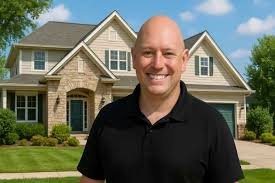
Buying your first home in the Shenandoah Valley or Blue Ridge corridor is one of the most meaningful financial decisions you’ll ever make. According to the Harrisonburg-Rockingham Association of Realtors, median home prices in Rockingham County have remained in the mid-to-upper $200,000s range, and Augusta County continues to see steady demand from buyers drawn to the region’s quality of life, outdoor access, and proximity to the I-81 corridor. The good news: that price point puts homeownership within reach for many first-time buyers, especially when you know how to layer the right programs.
Most buyers in Waynesboro, Harrisonburg, Staunton, Front Royal, and Luray have no idea how many assistance programs are stacked and available to them simultaneously. A retail loan officer at a single bank can only offer what’s on their shelf. An independent mortgage broker operates differently.
Duane Buziak, NMLS #1110647, is the broker behind Blue Mountain Mortgages and Coast2Coast Mortgage LLC, NMLS #376205. With access to 500+ wholesale lenders and recognition as a Scotsman Guide Top Originator in both 2025 and 2026, Duane can combine federal, state, and local programs in ways that a single-bank loan officer structurally cannot. He also offers a NoTouch Credit Pull option, meaning you can explore your eligibility without triggering a hard inquiry on your credit report.
Here are the 7 best first-time homebuyer programs available in Virginia’s Shenandoah Valley, and how to use them together.
1. USDA Zero-Down Loans: The Valley’s Primary First-Time Buyer Weapon
The Challenge It Solves
The single biggest barrier for first-time buyers is the down payment. Saving $10,000 to $20,000 while paying rent is a slow grind. USDA Rural Development loans eliminate that barrier entirely with a $0 down payment requirement for eligible properties, and most of the Shenandoah Valley qualifies.
The Strategy Explained
The USDA property eligibility map shows that communities including Waynesboro, Staunton, Front Royal, Luray, and Woodstock generally fall within eligible zones. Harrisonburg city limits and Winchester proper may contain ineligible areas, so property-level verification is essential before assuming eligibility.
For 2026, USDA income limits for the Valley counties are as follows (pulled from USDA Rural Development):
Rockingham County: 1–4 person household: $112,450 | 5–8 person household: $148,450
Augusta County: 1–4 person household: $112,450 | 5–8 person household: $148,450
Shenandoah County: 1–4 person household: $112,450 | 5–8 person household: $148,450
Warren County: 1–4 person household: $112,450 | 5–8 person household: $148,450
Page County: 1–4 person household: $112,450 | 5–8 person household: $148,450
Frederick County: 1–4 person household: $112,450 | 5–8 person household: $148,450
Note: Verify current county-specific limits directly at the USDA eligibility portal before application, as limits are updated annually.
Implementation Steps
1. Confirm property eligibility at the USDA map using the specific parcel address, not just the city name.
2. Verify your household income falls under the county limit for your household size.
3. Check credit score: most USDA lenders require 640+ FICO through automated underwriting, though manual underwriting options exist.
4. Request a NoTouch Credit Pull through Blue Mountain Mortgages to see where you stand before committing to a hard inquiry.
Worked Dollar Example: USDA vs. FHA on a $275,000 Augusta County Purchase
Let’s run the real math on a $275,000 home in Waynesboro, Augusta County.
USDA Loan: $0 down payment. USDA charges a 1% upfront guarantee fee ($2,750), which is typically rolled into the loan, bringing the financed balance to $277,750. Annual fee of 0.35% adds approximately $81/month to the payment. At a 6.75% rate on a 30-year term, principal and interest is approximately $1,801/month. Add the $81 annual fee monthly charge and estimated taxes/insurance, and total PITI lands around $2,100–$2,200/month depending on local tax rates.
FHA Loan at 3.5% Down: Down payment of $9,625. Upfront MIP of 1.75% ($4,594) rolled into the loan brings the balance to approximately $270,719. Annual MIP at 0.55% adds approximately $124/month. At the same 6.75% rate, principal and interest is approximately $1,756/month. Add MIP and PITI lands around $2,150–$2,250/month, plus you needed $9,625 cash at closing.
The USDA loan saves you $9,625 in upfront cash and delivers a comparable or lower monthly payment. That is the core argument for USDA as the Valley’s primary first-time buyer weapon.
Pro Tips
F&M Mortgage offers USDA loans in the Valley, but as a single retail channel, they present one rate from one source. Duane shops USDA programs across multiple wholesale lenders, which means better pricing competition on the rate itself. On a $275,000 loan, even a 0.25% rate difference translates to meaningful savings over 30 years.
2. Virginia Housing Down Payment Assistance: Stack It on Top of Your First Mortgage
The Challenge It Solves
Even when a loan program like FHA requires only 3.5% down, closing costs can add another $5,000 to $8,000 to what you need at the table. Virginia Housing’s Down Payment Assistance programs are designed to close that gap, and they can be layered with multiple first mortgage types.
The Strategy Explained
Virginia Housing (formerly VHDA) offers both a DPA Grant and a second mortgage structure. The DPA Grant does not need to be repaid, making it the stronger option when available. The second mortgage DPA carries a low fixed rate and deferred or amortizing repayment terms depending on the program selected.
For 2026, Virginia Housing income limits and purchase price limits for the Shenandoah Valley and Blue Ridge region are available directly at Virginia Housing’s DPA page. The DPA Grant is typically structured as a percentage of the first mortgage amount, and the current figure should be confirmed at application since it is updated periodically.
A critical point most retail loan officers miss: Virginia Housing DPA can be layered with USDA, FHA, VA, and conventional first mortgages in many configurations. This stacking capability is a core broker advantage. A single-bank retail loan officer who does not originate Virginia Housing loans cannot offer this combination.
Implementation Steps
1. Confirm your income falls within Virginia Housing’s limits for your county and household size at virginiahousing.com.
2. Verify the purchase price of the target home is within Virginia Housing’s purchase price ceiling for the Valley region.
3. Identify which first mortgage type (USDA, FHA, VA, conventional) best fits your profile.
4. Ask your broker to structure the Virginia Housing DPA on top of the first mortgage to minimize or eliminate your out-of-pocket costs at closing.
Pro Tips
The grant structure is particularly powerful for buyers using FHA in Harrisonburg city limits where USDA may not apply. Virginia Housing DPA can offset the 3.5% FHA down payment requirement and reduce closing costs significantly, creating a near-zero out-of-pocket scenario without misrepresenting what the programs actually offer.
3. FHA Loans: The Credit-Flexible Option When USDA Zones Don’t Apply
The Challenge It Solves
Not every buyer qualifies for USDA. Harrisonburg city limits contain zones where USDA property eligibility is restricted. Winchester proper has similar constraints. And some buyers have credit profiles that need a more forgiving underwriting standard. FHA fills both gaps.
The Strategy Explained
FHA loans are insured by the Federal Housing Administration through HUD and allow down payments as low as 3.5% with a 580+ FICO score. Buyers with scores between 500 and 579 may still qualify with 10% down, though most wholesale lenders have overlays that set practical minimums closer to 580–600.
For 2026, the FHA loan limit for single-family homes in Rockingham, Augusta, Shenandoah, Warren, Page, and Frederick counties is $524,225, which is the national floor confirmed at HUD’s mortgage limits page. The Shenandoah Valley counties are not designated as high-cost areas, so the baseline limit applies.
FHA MIP structure: 1.75% upfront (typically rolled into the loan) plus an annual MIP of 0.55% for most 30-year loans at standard LTV. Unlike USDA’s annual fee, FHA MIP on loans with less than 10% down persists for the life of the loan unless you refinance out of it. This is a meaningful long-term cost difference that buyers should understand before choosing FHA over USDA when both are available.
Implementation Steps
1. Confirm the property address falls within an area where USDA eligibility is restricted or unavailable.
2. Pull your credit score through the NoTouch Credit Pull to assess where you land relative to the 580 threshold.
3. Calculate whether seller concessions or lender credits can cover closing costs, creating no-out-of-pocket closing options.
4. Compare the long-term MIP cost against a USDA annual fee to make an informed program choice.
Pro Tips
FHA pairs well with Virginia Housing DPA for buyers in Harrisonburg who are outside USDA zones. The combination can reduce your cash-to-close to near zero while keeping monthly payments competitive. Duane’s wholesale channel also means access to FHA pricing from multiple investors, not a single bank’s rate sheet.
4. VA Loans for Veterans and Active-Duty Buyers in the Valley
The Challenge It Solves
Augusta County and the broader Shenandoah Valley corridor have a meaningful veteran population, with communities including Fort Defiance, Verona, and Weyers Cave home to many who have served. These buyers have earned one of the most powerful mortgage benefits in existence, and many never fully use it.
The Strategy Explained
VA loans, backed by the U.S. Department of Veterans Affairs, offer 0% down payment, no private mortgage insurance, and competitive wholesale rates for eligible veterans, active-duty service members, and surviving spouses. There is no loan limit for VA borrowers with full entitlement, and the 2026 conforming baseline of $806,500 sets the threshold above which a down payment may be required for borrowers with partial entitlement.
The VA funding fee for first-time use on a purchase with 0% down is 2.15% of the loan amount. However, veterans with any service-connected disability rating have the funding fee waived entirely, as confirmed at VA.gov’s funding fee page. This waiver is one of the most underutilized benefits in the Valley.
VA cash-out refinancing is available up to 100% LTV, giving veteran homeowners maximum equity access when needed.
Worked Dollar Example: $310,000 Staunton Purchase, Funding Fee Waived
A veteran buyer purchasing a $310,000 home in Staunton with a service-connected disability rating pays $0 down and has the 2.15% funding fee ($6,665) waived entirely. The loan amount is $310,000. At a 6.625% wholesale rate on a 30-year term, principal and interest is approximately $1,984/month. No PMI. No MIP. Add estimated property taxes and homeowner’s insurance and total PITI is approximately $2,300–$2,400/month. The buyer brought minimal cash to closing, primarily covering prepaid items and any costs not offset by seller concessions or lender credits.
Implementation Steps
1. Obtain your Certificate of Eligibility (COE) through VA.gov or allow your broker to pull it on your behalf.
2. Confirm your disability rating status to determine funding fee waiver eligibility.
3. Request wholesale rate quotes from multiple VA investors through Blue Mountain Mortgages.
4. Explore no-out-of-pocket closing options via seller concessions, which VA guidelines permit up to 4% in seller-paid concessions.
Pro Tips
Retail lenders like Jake Adler’s team at The Adler Mortgage Team work from a single rate sheet. Duane accesses VA pricing from multiple wholesale investors, which creates genuine rate competition on every VA loan. On a $310,000 purchase, a 0.25% rate difference saves approximately $15,000 in interest over the life of the loan.
5. Conventional 97, HomeReady, and Home Possible: When You Earn Too Much for USDA
The Challenge It Solves
Some Valley buyers are in a frustrating middle ground: their income is too high for USDA limits, they are buying in a USDA-ineligible zone, or they want cancellable mortgage insurance rather than FHA’s lifetime MIP. Conventional low-down-payment programs solve this problem.
The Strategy Explained
Fannie Mae’s HomeReady and Freddie Mac’s Home Possible programs allow 3% down payments on conventional loans for buyers at or below 80% of Area Median Income (AMI). The standard Conventional 97 program allows 3% down without income restrictions but does not carry the same PMI pricing advantages.
For Rockingham and Augusta counties, 80% AMI figures should be verified using Fannie Mae’s HomeReady AMI lookup tool and Freddie Mac’s equivalent, as these figures are updated annually. The Valley’s AMI levels typically make a meaningful share of first-time buyers eligible for these programs even at household incomes well above the USDA threshold.
The critical advantage over FHA: PMI on a conventional loan is cancellable once you reach 20% equity. FHA MIP on a loan with less than 10% down stays for the life of the loan. For a buyer who plans to stay in their home and build equity over time, the conventional path can be meaningfully cheaper over a 7–10 year horizon.
The 2026 conforming loan limit is $806,500 for standard counties. Shenandoah Valley counties are not high-cost designated, so this baseline applies.
Implementation Steps
1. Check your income against the 80% AMI limit for your county using Fannie Mae’s or Freddie Mac’s online lookup tools.
2. Confirm your credit score: HomeReady and Home Possible typically require 620+ FICO, with better PMI pricing at 680+.
3. Ask your broker to shop PMI vendors separately, as independent brokers can access multiple PMI providers while retail lenders are often locked into one.
4. Model the long-term PMI cancellation timeline against FHA MIP to confirm which program is cheaper over your expected hold period.
Pro Tips
ALCOVA Mortgage Staunton is a dominant regional brand, but as a retail lender, they are limited to a single PMI vendor relationship. Duane’s wholesale channel allows him to shop PMI pricing across multiple providers, which can reduce the monthly PMI cost on a HomeReady or Home Possible loan and change the breakeven analysis meaningfully in the buyer’s favor.
6. FHA 203(k) Renovation Loans: Buy and Fix Up in One Loan
The Challenge It Solves
Inventory in markets like Luray, Front Royal, and Woodstock often skews toward older housing stock. Move-in-ready homes at entry-level price points get multiple offers fast. Buyers who are willing to consider a property that needs work have less competition, but they need a financing tool that handles both the purchase and the renovation in a single loan.
The Strategy Explained
The FHA 203(k) renovation loan, administered through HUD’s 203(k) program, allows buyers to finance the purchase price plus the cost of eligible repairs in one mortgage. There are two structures:
Limited 203(k): For repairs and improvements up to $75,000 that do not involve structural work. Ideal for cosmetic upgrades, HVAC replacement, roofing, flooring, and kitchen/bath updates. Faster and less paperwork-intensive.
Standard 203(k): For larger or structural projects with no hard cap on renovation costs (subject to FHA loan limits). Requires a HUD-approved consultant to oversee the project. Used for additions, structural repairs, and major system replacements.
The instant equity strategy is the compelling first-time buyer angle: buy a property priced below market because of its condition, finance the renovation into the mortgage, and emerge at closing with a home that appraises above the combined purchase-plus-renovation cost. This is how buyers in Page County and Warren County can compete against cash buyers on distressed properties.
Implementation Steps
1. Identify properties priced below market due to condition in your target area (Luray, Front Royal, Woodstock, Waynesboro).
2. Get contractor bids before making an offer so your renovation budget is defined.
3. Work with a broker experienced in 203(k) files, as these are complex loans that many retail loan officers avoid or handle poorly.
4. Order the 203(k) appraisal, which values the property “as-completed” based on the renovation scope.
Pro Tips
203(k) loans are complex. Many retail loan officers at local banks and credit unions decline to originate them because of the additional paperwork and coordination required. Duane has experience with renovation files and the wholesale lender relationships to move them efficiently. If you are considering a fixer-upper in the Valley, this is a case where the broker advantage is particularly concrete.
7. Work With an Independent Broker to Stack Every Program Available to You
The Challenge It Solves
Every program in this list has value on its own. But the real power comes from combining them: USDA zero-down plus Virginia Housing DPA for closing costs. VA with no-out-of-pocket closing options via lender credits. HomeReady with competitively shopped PMI. No single retail loan officer at a bank can offer all of these, because they are limited to their institution’s product shelf.
The Strategy Explained
An independent mortgage broker operates as an intermediary with access to multiple wholesale lenders simultaneously. Duane Buziak, NMLS #1110647, works through Coast2Coast Mortgage LLC, NMLS #376205, with relationships across 500+ wholesale lenders. This means he can present USDA pricing from multiple investors, FHA options from multiple sources, and VA rates that are genuinely shopped rather than taken from a single rate sheet.
The NoTouch Credit Pull is a soft-pull pre-qualification process that allows you to explore your eligibility, understand your program options, and model payment scenarios without triggering a hard inquiry on your credit report. Retail lenders at banks and credit unions typically require a hard pull before issuing any pre-approval letter. Duane’s process protects your credit score during the exploration phase.
Broker vs. Retail: How the Options Stack Up
| Feature | Duane Buziak / Coast2Coast | Jake Adler / Adler Mortgage | ALCOVA Mortgage Staunton | Rocket Mortgage |
|---|---|---|---|---|
| Broker or Retail | Independent Broker | Retail Loan Officer | Retail Lender | National Retail Lender |
| Wholesale Lender Access | 500+ wholesale lenders | Single institution rate sheet | Single institution rate sheet | Single institution rate sheet |
| USDA Loan Availability | Yes, multiple investors | Limited to retail channel | Available, single channel | Limited USDA depth |
| Virginia Housing DPA Stacking | Yes, across multiple first mortgage types | Dependent on institution approval | Dependent on institution approval | Not available |
| PMI Vendor Shopping | Multiple PMI providers | Single PMI provider | Single PMI provider | Single PMI provider |
| Soft Credit Pull Option | Yes — NoTouch Credit Pull | Hard pull typically required | Hard pull typically required | Hard pull required |
| Local Valley Expertise | Harrisonburg, Staunton, Waynesboro, Front Royal, Luray, Winchester | Staunton-focused | Staunton/Augusta corridor | No local presence |
| Scotsman Guide Recognition | Top Originator 2025 (#114) and 2026 | Not publicly listed | Not publicly listed | N/A |
Implementation Steps
1. Start with the NoTouch Credit Pull to understand your baseline credit profile without affecting your score.
2. Share your target purchase area, household income, and household size so your broker can identify which programs you qualify for simultaneously.
3. Request a side-by-side comparison of your best two or three program combinations, including total cash-to-close and monthly payment for each.
4. Proceed to full pre-approval with the program stack that best fits your financial situation and timeline.
Pro Tips
Program stacking is where the broker advantage becomes most tangible. A buyer in Waynesboro who qualifies for USDA zero-down and Virginia Housing DPA for closing costs can potentially purchase a home with minimal cash out of pocket. A retail loan officer who does not originate both programs cannot build that combination for you. Duane can.
Putting It All Together: Your First-Time Buyer Roadmap for the Shenandoah Valley
The Shenandoah Valley and Blue Ridge corridor offer something rare in today’s housing market: price points where first-time buyer assistance programs actually move the needle. A $275,000 home in Waynesboro or a $255,000 home in Staunton is within reach when you combine the right programs with a broker who can access all of them simultaneously.
Here is the prioritized implementation sequence:
1. Start with a NoTouch Credit Pull to know your score without a hard inquiry.
2. Confirm USDA property eligibility for your target address at the USDA eligibility map.
3. Check your income against USDA limits for your county and household size.
4. If USDA-eligible: explore USDA zero-down plus Virginia Housing DPA for closing costs.
5. If USDA-ineligible zone or above income limits: evaluate FHA with Virginia Housing DPA, or HomeReady/Home Possible with shopped PMI.
6. If you are a veteran: lead with VA and explore no-out-of-pocket closing options through lender credits or seller concessions.
7. If you are targeting older inventory in Luray, Front Royal, or Woodstock: explore FHA 203(k) for purchase-plus-renovation in one loan.
Contact our local mortgage experts today to start with a NoTouch Credit Pull and get a personalized program stack built for your specific county, income, and purchase target. Blue Mountain Mortgages serves buyers across the entire Shenandoah Valley and Blue Ridge corridor, including Harrisonburg, Staunton, Waynesboro, Front Royal, Luray, Winchester, and Woodstock.
Article prepared by Duane Buziak, NMLS #1110647, Coast2Coast Mortgage LLC, NMLS #376205.
Frequently Asked Questions: First-Time Homebuyer Programs in Virginia’s Shenandoah Valley
Does Waynesboro qualify for a USDA loan in 2026?
Waynesboro, located in Augusta County, generally falls within USDA-eligible territory. However, eligibility is determined at the property level, not the city level. You should verify the specific parcel address at the USDA property eligibility map before assuming eligibility. Most residential addresses in and around Waynesboro have historically qualified.
What is the USDA income limit for a family of 4 in Rockingham County in 2026?
For 2026, the USDA Rural Development guaranteed loan income limit for a household of 1–4 people in Rockingham County is approximately $112,450. Households of 5–8 people have a higher limit. These figures should be confirmed directly at USDA Rural Development’s income limit table at the time of application, as limits are updated annually.
Can I use Virginia Housing DPA with a USDA loan in Augusta County?
Virginia Housing Down Payment Assistance programs can be structured with multiple first mortgage types, including USDA loans in eligible areas like Augusta County. This combination can cover closing costs on a USDA zero-down purchase, creating a near-zero cash-to-close scenario. Confirm current program compatibility and income limits at virginiahousing.com and discuss stacking options with an independent broker who originates both programs.
What credit score do I need for an FHA loan in Harrisonburg?
FHA guidelines allow a 580 FICO score for the 3.5% down payment option. Buyers with scores between 500 and 579 may qualify with 10% down. In practice, most wholesale lenders have overlays that set a working minimum of 580–600. Harrisonburg city limits may contain USDA-ineligible zones, making FHA a common alternative for buyers in the city. A NoTouch Credit Pull with Blue Mountain Mortgages can show you your score before any hard inquiry.
Is Front Royal in Warren County eligible for USDA financing?
Front Royal, the county seat of Warren County, is generally within USDA-eligible territory. Warren County as a whole is largely rural and eligible for USDA Rural Development loans. As with all USDA eligibility determinations, verify the specific property address at the USDA eligibility portal rather than relying on general county-level assumptions.
What is the VA loan limit in Frederick County, Virginia in 2026?
For veterans with full VA entitlement, there is no loan limit. You can borrow above the conforming baseline of $806,500 without a down payment if you have full entitlement remaining. Frederick County is not designated as a high-cost area, so the 2026 conforming baseline of $806,500 applies for borrowers with partial entitlement. Confirm your entitlement status through your Certificate of Eligibility at VA.gov.
Can I get a renovation loan as a first-time buyer in Luray?
Yes. First-time buyers in Luray, Page County, can use an FHA 203(k) renovation loan to purchase and renovate a home in a single mortgage. The Limited 203(k) covers repairs up to $75,000 without structural work. The Standard 203(k) handles larger or structural projects. Luray’s housing stock includes older properties where this program is particularly useful for buyers willing to take on cosmetic or moderate renovation work in exchange for a lower purchase price.
Does Duane Buziak offer a soft credit pull before pre-approval?
Yes. Duane Buziak’s NoTouch Credit Pull is a soft-pull pre-qualification process that allows you to explore your eligibility, understand your program options, and model payment scenarios without a hard inquiry on your credit report. Most retail lenders at banks and credit unions require a hard pull before issuing any pre-approval documentation. The NoTouch Credit Pull protects your score during the exploration phase. Contact Blue Mountain Mortgages at 804-212-8663 to start the process.
Legal Disclosure: This content is provided for informational purposes only and does not constitute a commitment to lend or an offer of credit. All loan programs are subject to credit approval, income verification, property eligibility, and applicable guidelines. Program availability, income limits, and loan limits are subject to change. USDA, FHA, VA, and conventional loan programs have specific eligibility requirements. Not all borrowers will qualify. Duane Buziak, NMLS #1110647. Coast2Coast Mortgage LLC, NMLS #376205. Licensed in Virginia, Florida, Tennessee, Georgia, and the District of Columbia. This is not an advertisement for credit as defined by Regulation Z. Equal Housing Opportunity Lender.
Duane Buziak | Mortgage Maestro
NMLS #1110647
Coast2Coast Mortgage LLC, NMLS #376205
804-212-8663
BlueMountainMortgages.com
Licensed in VA, FL, TN, GA, DC