
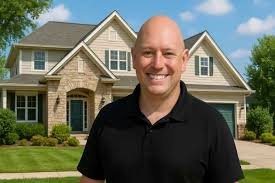
You’ve found the perfect lot in a growing subdivision just outside Harrisonburg. The model home looks exactly right. The builder’s sales rep slides a packet across the table and mentions that their preferred lender can cover $10,000 in closing costs — if you use them. Sounds like a no-brainer, right?
Not so fast. Financing a new construction home in the Shenandoah Valley works very differently from buying an existing property, and the builder’s lender offer is often the first of several surprises that catch buyers off guard. From construction-to-permanent loan timelines to appraisal gaps, program eligibility quirks, and rate lock strategies that span nearly a year, new construction mortgages have their own rulebook — and the stakes of not knowing it are measured in thousands of dollars over the life of your loan.
This guide is written specifically for buyers in Rockingham County, Augusta County, Shenandoah County, Warren County, and Page County who are considering a newly built home in 2026. We’ll walk through every major loan program — USDA Rural Development, VA, FHA, and Conventional — explain how each applies to new construction in the Valley, and show you the real numbers so you can make a fully informed decision before signing anything.
One thing worth knowing upfront: as an independent mortgage broker with access to 500+ wholesale lenders, Duane Buziak can shop the full market on your behalf — something a builder’s in-house lender or a single retail bank simply cannot do. That shelf-width advantage matters enormously when you’re navigating extended rate locks, USDA builder approvals, and program-specific construction requirements.
Article prepared by Duane Buziak, NMLS #1110647, Coast2Coast Mortgage LLC, NMLS #376205.
New Construction Financing Is a Different Animal — Here’s Why
When you buy an existing home, the financing process follows a familiar sequence: find the house, get pre-approved, make an offer, close in 30–45 days. New construction adds layers that most buyers don’t anticipate until they’re already under contract.
The first thing to understand is that there are two primary financing paths for new construction.
Construction-to-Permanent Loans (One-Time Close): This structure combines the construction financing and the permanent mortgage into a single loan with one closing. The buyer locks in the loan terms upfront, the lender funds draws to the builder during construction, and the loan automatically converts to a standard mortgage once the home is complete. This approach eliminates a second closing and a second round of closing costs, but it requires the lender to underwrite both the construction phase and the permanent loan simultaneously.
End Loans (Stand-Alone Purchase Mortgages): This is actually more common in Valley production-home subdivisions. The builder finances the construction themselves (or through a construction line of credit), and the buyer only enters the picture at the end — applying for a standard purchase mortgage once the certificate of occupancy is issued. This is simpler for the buyer but means you’re not locked into your rate until the home is nearly complete, which introduces rate risk during a long build timeline.
Now, about that builder incentive. Builders routinely offer $5,000 to $15,000 in closing cost credits tied to using their preferred or affiliated lender. The credit is real. The question is what it costs you in rate. If a builder’s preferred lender quotes you a rate that is 0.25% to 0.50% higher than what an independent broker can source from the wholesale market, the math often flips. On a $285,000 loan at a 0.375% rate premium, you could pay several thousand dollars more in interest over the first five years alone — more than erasing the credit. An independent broker can model this comparison explicitly, side by side, before you commit.
The appraisal challenge is the third major surprise. New construction appraisals are not based on the builder’s contract price. They’re based on comparable sales of similar completed homes in the area. In fast-growing Valley markets where builder prices are rising faster than the resale comp pool, the appraised value can come in below the contract price. If that happens, the buyer is responsible for covering the gap — unless the builder contract includes an appraisal contingency. This is a negotiating point most buyers don’t know to ask for, and it’s one of the most important protections you can secure before breaking ground.
Which Loan Programs Work for New Construction in the Valley
Not every loan program handles new construction the same way. Here’s a clear-eyed breakdown of what works, what has conditions, and what the numbers look like for Valley buyers in 2026.
USDA Rural Development — The Primary Lane for Eligible Valley Buyers
USDA Section 502 Guaranteed loans do finance new construction in eligible rural areas, and this is the most powerful program available to qualifying Valley buyers. Zero down payment, no private mortgage insurance, and competitive wholesale rates make USDA the clear winner for those who qualify.
The good news for Shenandoah Valley buyers: many ZIP codes surrounding Harrisonburg, Staunton, Waynesboro, Luray, Front Royal, Woodstock, and Winchester suburbs remain USDA-eligible. Specific communities in Rockingham County — including Broadway, Bridgewater, Dayton, and Elkton — are worth checking. Augusta County communities including Verona, Fort Defiance, Fishersville, and areas outside Staunton proper also frequently qualify. You can verify eligibility for any specific address using the USDA Property Eligibility Map.
For new construction specifically, USDA requires the builder to be approved, the home to meet USDA Thermal and Site Standards, and the property to pass inspections at multiple stages during construction. This adds coordination requirements that a broker with multiple USDA wholesale lender relationships can navigate more flexibly than a single-bank USDA originator.
On income limits: for 2026, Rockingham County and Augusta County 1–4 person household income limits are approximately $110,650 (moderate income), with 5–8 person households at approximately $146,050. These figures should be verified at the time of application using the USDA Income Limits table, as limits are updated periodically. Page County income limits may differ — verify county-specific figures before proceeding.
VA Loans — The Zero-Down Option for Qualifying Veterans
VA loans do allow new construction financing, though the requirements are more involved than a standard VA purchase. The home must meet VA Minimum Property Requirements (MPRs) at completion, and VA requires compliance inspections during the construction process per VA Pamphlet 26-7, Chapter 10. A VA-approved appraiser must be involved.
Augusta County has a meaningful veteran population, particularly in the Fort Defiance, Verona, and Weyers Cave areas. For a qualifying veteran, VA new construction offers zero down payment and no PMI — and the VA funding fee is waived entirely for veterans with a service-connected disability rating.
FHA and Conventional — Solid Options with Down Payment Requirements
FHA requires 3.5% down for borrowers with a 580+ FICO score, and 10% down for scores between 500 and 579. For new construction, FHA requires either a 10-year builder warranty or three inspections during construction per HUD guidelines. Annual MIP is currently 0.55% for most 30-year loans with less than 10% down — verify current rates at HUD.gov before closing.
Conventional loans are the default for builder-preferred lenders and work well as end loans once the certificate of occupancy is issued. The 2026 conforming loan limit is $806,500 for baseline counties — all primary Valley counties fall under this limit. Conventional requires 3% to 20% down depending on credit profile. An independent broker can frequently beat the builder’s conventional rate through wholesale pricing.
The Real Numbers: What a New Construction Mortgage Costs Valley Buyers
Let’s move from program descriptions to actual math. These worked examples use real Valley price points and current program parameters.
Example 1: USDA New Construction vs. FHA in Rockingham County
Purchase price: $285,000 new build in an eligible Rockingham County subdivision.
Under USDA: $0 down payment. USDA upfront guarantee fee of 1.0% ($2,850) is typically financed into the loan, bringing the loan amount to $287,850. Annual guarantee fee: 0.35% of the outstanding loan balance, which works out to approximately $84/month in year one. At a 30-year term, the estimated principal and interest payment at a competitive wholesale rate, plus the annual fee, produces a total monthly obligation materially lower than the FHA alternative.
Under FHA: 3.5% down = $9,975 out of pocket. Loan amount: $275,025. FHA upfront MIP: 1.75% ($4,813) financed in, bringing the loan to $279,838. Annual MIP: 0.55% = approximately $128/month in year one. FHA MIP on a 30-year loan with less than 10% down persists for the life of the loan — it does not cancel automatically.
The USDA buyer preserves nearly $10,000 in cash at closing and pays approximately $44 less per month in mortgage insurance. Over five years, that difference compounds to roughly $2,640 in insurance savings alone, plus the $9,975 in preserved down payment capital. For an eligible buyer, USDA is not a close call.
Example 2: VA New Construction vs. Conventional in Augusta County
Purchase price: $310,000 new build in Augusta County. Buyer is a veteran with a service-connected disability rating — VA funding fee waived.
Under VA: $0 down. Loan amount: $310,000. No PMI, no funding fee. Monthly payment at a competitive wholesale rate reflects only principal, interest, taxes, and insurance.
Under Conventional at 5% down: $15,500 out of pocket. Loan amount: $294,500. PMI on a conventional loan at this loan-to-value ratio typically runs 0.5% to 0.8% annually — call it $123 to $196/month until the loan reaches 80% LTV. The veteran buyer preserves $15,500 in cash and eliminates PMI entirely.
On no-out-of-pocket closing options: for conventional, FHA, and VA new construction end loans, seller concessions or lender credits can be structured to cover closing costs, depending on the contract terms and rate tradeoff. These are not “zero closing cost” scenarios — they are cost-shifting strategies that move expenses into the rate or the seller’s proceeds. Ask about how these options apply to your specific scenario.
Builder Lender vs. Independent Broker: The Comparison That Could Save You Thousands
The builder’s preferred lender pitch is designed to feel like a benefit. Sometimes the credit is genuinely useful. But the rate and program comparison almost always tells a different story. Here’s how the options stack up.
| Feature | Blue Mountain Mortgages (Duane Buziak) | ALCOVA Mortgage Staunton | Rocket Mortgage | Builder In-House Lender |
|---|---|---|---|---|
| Loan Programs Available | USDA, VA, FHA, Conventional, Jumbo, Investment | Conventional, FHA, VA (retail shelf) | Conventional, FHA, VA (limited USDA) | Conventional primary; limited government programs |
| Rate Shopping Ability | 500+ wholesale lenders — full market access | Single retail shelf — one set of rates | Single platform — one set of rates | Captive — one lender, no competition |
| USDA New Construction Access | Multiple USDA wholesale lenders — flexible builder approval | Limited — single retail USDA channel | Limited USDA availability | Rarely offered |
| NoTouch Credit Pull Pre-Approval | Yes — soft pull models all programs before hard inquiry | Typically requires hard pull | Requires hard pull for formal pre-approval | Requires hard pull |
| Builder Incentive Compatibility | Can model true cost comparison vs. builder credit | Cannot compare across lenders | Cannot compare across lenders | Credit tied to using this lender only |
| Local Valley Expertise | Shenandoah Valley and Blue Ridge corridor specialist | Strong Staunton/Augusta County presence | No local market knowledge | Builder-focused, not buyer-focused |
The NoTouch Credit Pull advantage deserves its own explanation. Before you sign a builder contract — before you’ve committed to anything — Duane can run a soft credit pull and model your full program menu: USDA eligibility, VA eligibility, FHA parameters, and conventional options, all side by side. No hard inquiry on your credit report. No commitment. Just a complete picture of what you qualify for and what each program costs over time.
ALCOVA Mortgage, Rocket Mortgage, and virtually every builder-affiliated lender require a hard credit pull to generate a formal pre-approval. For a buyer still shopping builders and comparing subdivisions, that hard inquiry is unnecessary — and if you’re shopping multiple lenders, multiple hard pulls within a short window can affect your score.
The shelf-width advantage is equally concrete. An independent broker accessing wholesale pricing from 500+ lenders is not competing on a single rate card. On a $285,000 new construction loan, a 0.25% rate difference translates to a meaningful payment difference every month for 30 years. The builder’s credit may cover closing costs once. A lower rate saves money every single month.
The New Construction Timeline: What Happens Between Contract and Closing
New construction mortgage timelines don’t compress the way resale timelines do. Understanding the sequence — and where the risk points are — is essential for a smooth closing.
Contract Signing through Pre-Approval: Once you’ve signed the builder contract, the clock starts. This is the moment to finalize your loan program selection and get formally pre-approved. Your lender will order an appraisal based on the builder’s plans and specifications — not a completed home — so the appraiser is essentially projecting value based on comparable completed sales.
The Construction Phase and Rate Lock Strategy: This is where new construction financing diverges most sharply from a standard purchase. Standard rate locks run 30 to 60 days. A production home in the Valley typically takes 6 to 12 months to complete. Custom builds run longer. A 30-day lock is useless for a home that won’t close for eight months.
Extended rate lock programs — available through select wholesale lenders in 90 to 360-day increments — solve this problem, but they come at a cost. Typically, an extended lock carries either an upfront fee (often a fraction of a percent of the loan amount) or a slightly higher rate compared to a standard lock. Float-down options add another layer: for an additional cost, the buyer can capture a lower rate if market rates drop during the lock period. Whether the float-down premium is worth it depends on the rate environment and the remaining build timeline.
This is a genuine differentiator for an independent broker. With 500+ wholesale lenders, Duane can shop extended lock programs across multiple investors and find the structure that best fits your build timeline and rate outlook. A single retail lender — ALCOVA, Movement Mortgage Harrisonburg, or a builder’s affiliate — may offer only one extended lock option, take it or leave it.
Final Inspection, Certificate of Occupancy, and Closing: As the home nears completion, the lender will order a final inspection to confirm the property meets program requirements. For VA, this includes compliance inspections during construction. For USDA, the home must meet Thermal and Site Standards. Once the certificate of occupancy is issued, final underwriting begins and the loan closes.
What Can Derail a New Construction Closing: Four things kill new construction closings more than anything else: appraisal gaps (the appraised value comes in below contract price), builder delays that push past the rate lock expiration, final inspection failures, and changes to the buyer’s financial profile during the build period. On that last point: do not change jobs, do not open new credit accounts, and do not make large purchases during the build. Underwriting re-verifies your financial profile at closing — any material change can trigger a denial or a delay.
8 Questions Valley Buyers Ask About New Construction Mortgages
Q: Does a new construction home in Rockingham County qualify for a USDA loan in 2026?
Many areas in Rockingham County — including communities outside the Harrisonburg city limits such as Broadway, Bridgewater, Dayton, and Elkton — remain USDA-eligible in 2026. The property address must be verified using the USDA Property Eligibility Map. The home must also meet USDA construction standards and use a USDA-approved builder. Contact Duane Buziak at Blue Mountain Mortgages to confirm eligibility for your specific subdivision before signing a builder contract.
Q: Can I use a VA loan to build a new home in Augusta County?
Yes. VA loans do finance new construction in Augusta County, but the process involves compliance inspections during the build and a VA-approved appraiser. The home must meet VA Minimum Property Requirements at completion. Veterans with a service-connected disability rating have their VA funding fee waived, which further improves the program’s cost advantage.
Q: What credit score do I need for a new construction mortgage in Harrisonburg?
For USDA and VA loans, most wholesale lenders look for a 640+ FICO score, though some investors go lower with compensating factors. FHA requires a minimum 580 for 3.5% down, or 500 with 10% down. Conventional new construction typically requires 620 or higher, with better rates available above 740. Duane Buziak can run a NoTouch Credit Pull — a soft inquiry that doesn’t affect your score — to assess your current profile and identify the programs you qualify for before you apply anywhere.
Q: Should I use the builder’s lender or find my own mortgage broker in Staunton?
You are not required to use the builder’s lender, and in most cases, you’ll save money by shopping independently. Builder closing cost credits are real, but they’re often offset by a higher interest rate that costs more over the life of the loan. An independent broker with access to 500+ wholesale lenders can model the true cost comparison — credit vs. rate differential — so you can make a fully informed decision.
Q: How long does it take to close on a new construction home in the Shenandoah Valley?
For production homes in Valley subdivisions, build timelines typically run 6 to 12 months from contract to certificate of occupancy. The mortgage closing itself typically takes 30 to 45 days from the time the CO is issued. The key planning point is rate lock strategy: standard 30–60 day locks don’t cover the build period, so extended rate lock programs are essential.
Q: What happens if the appraisal comes in below the builder’s contract price in Waynesboro?
If the appraisal comes in below the contract price, the lender will only finance up to the appraised value. The buyer is responsible for covering the gap unless the builder contract includes an appraisal contingency. In fast-growing markets like Waynesboro and the broader Augusta County corridor, where builder prices are rising, negotiating an appraisal contingency before signing the builder contract is a critical protection.
Q: Can I get a NoTouch Credit Pull pre-approval before signing a new construction contract?
Yes. Duane Buziak at Blue Mountain Mortgages can run a soft credit pull — which does not affect your credit score — and model your full program eligibility across USDA, VA, FHA, and Conventional loans before you sign any builder contract. This gives you a complete picture of your options and rate ranges without committing to a hard inquiry. It’s one of the most practical advantages of working with an independent broker rather than a builder’s captive lender.
Q: What are the USDA income limits for a new construction loan in Page County in 2026?
Page County income limits for USDA Rural Development loans are set at the county level and may differ from Rockingham or Augusta County limits. For 2026, verify current Page County limits directly through the USDA Income Limits table before applying, as limits are updated periodically. Luray and surrounding Page County communities frequently qualify for USDA eligibility — both on the property side and the income side — making USDA new construction a viable path for many buyers in that market.
Putting It All Together: Your Next Step Toward a New Home in the Valley
Here’s the decision framework that serves most Valley buyers well in 2026. Start with USDA eligibility. If the property address qualifies and your household income falls within the county limit, USDA is almost always the strongest program available — zero down, no PMI, and competitive wholesale rates. If you’re a qualifying veteran, VA is your next consideration: zero down, no PMI, and the funding fee waived if you have a service-connected disability. If neither USDA nor VA applies, FHA and conventional both work for new construction end loans, with the key distinction being down payment requirement and mortgage insurance cost.
In every scenario, the builder’s preferred lender should be evaluated against independent broker pricing before you commit. The closing cost credit may be worth taking. It may not. The only way to know is to run the comparison with real numbers — and that’s exactly what an independent broker with 500+ wholesale lenders can do for you.
If you’re still in the builder-shopping phase and haven’t signed a contract yet, the smartest first move is a NoTouch Credit Pull pre-approval through Blue Mountain Mortgages. One soft inquiry, no commitment, full program picture — USDA, VA, FHA, and Conventional side by side — before you sit down across from any builder’s sales rep.
Ready to get started? Contact our local mortgage experts today or call Duane Buziak directly at 804-212-8663. Blue Mountain Mortgages serves buyers throughout the Shenandoah Valley and Blue Ridge corridor — Harrisonburg, Staunton, Waynesboro, Winchester, Front Royal, Luray, Woodstock, and every county in between.