
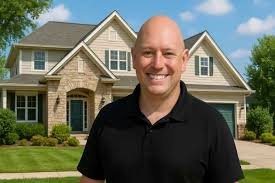
A new home outside Harrisonburg, Staunton, Front Royal, or Charlottesville often starts with a lot, a builder estimate, and one big question: how to finance new construction without getting squeezed by changing costs before the keys are in hand. Unlike buying an existing home, you are financing land, construction draws, inspections, and a permanent mortgage – sometimes through one loan and sometimes through two.
I am Duane Buziak, Mortgage Maestro and an independent mortgage broker with Coast2Coast Mortgage LLC, NMLS #1110647. My job is to make the financing side clear before you commit to a builder, a lot, or a budget that looks good only on paper.
Table of Contents
- Construction-to-permanent financing
- Choosing the right loan program
- A worked new-construction example
- Broker versus single-shelf financing
- Questions Valley buyers ask
Start with the lot, the builder, and the payment
The first mistake buyers make is falling in love with a floor plan before confirming whether the land and builder work with their financing. A construction loan is based on the completed home’s value, the total project cost, your credit profile, available cash, and the builder’s qualifications.
In Rockingham, Augusta, Rockbridge, Shenandoah, and Warren counties, the lot itself can change the loan strategy. A parcel may need a well, septic approval, driveway work, utility extensions, or grading. Those are not side notes. They belong in the construction budget and can affect appraisal value and draw timing.
Before signing a lot contract, ask for a fully itemized builder agreement. It should identify the base price, allowances, site work, permits, contingency, estimated completion date, and every item excluded from the price. “Starting at” pricing is not a construction budget.
A soft credit pull mortgage review can help you establish a realistic range early. With NoTouch Credit Pull, I can discuss payment scenarios and program fit without beginning with a hard inquiry. That matters when you are comparing lots, builders, and financing options over several months.
How to finance new construction: two common structures
One-time-close construction-to-permanent loan
A one-time-close loan combines construction financing and the permanent mortgage. The loan funds the build through scheduled draws, then converts to the permanent loan after completion. This can reduce duplicate closing expenses and gives you one underwriting path, but the builder and project must meet program requirements.
USDA and VA construction-to-permanent options can be especially valuable for qualified Valley buyers. USDA is often a strong fit where the property is eligible and household income falls within program limits. VA can be a powerful route for eligible veterans, including buyers with limited funds for a down payment.
The USDA eligibility map remains the practical starting point for rural location questions. Much of the Shenandoah Valley is eligible, though boundaries can change block by block near larger towns. Verify the exact parcel, not just the mailing address, through the USDA Property Eligibility Map before relying on a program assumption.
Two-close construction financing
With a two-close structure, you first close a short-term construction loan and later obtain a permanent mortgage once the home is complete. This may offer more flexibility with certain builders or custom projects, but it introduces a second closing and potential interest-rate uncertainty on the permanent financing.
For a custom home on acreage near Waynesboro or rural Charlottesville, two closes may be worth considering if the project is complex. For a simpler build with an approved builder, one-time-close financing may be cleaner. The right answer depends on the property, program, and builder paperwork.
Which program fits a Valley build?
| Program | Best fit | Down payment | Key construction consideration |
|---|---|---|---|
| USDA | Eligible rural primary residences | Often 0% | Income limits, property eligibility, and approved builder requirements apply |
| VA | Eligible veterans and service members | Often 0% | Entitlement, builder approval, and VA property standards matter |
| FHA | Buyers needing flexible credit options | As low as 3.5% | Mortgage insurance and builder documentation affect the final structure |
| Conventional | Higher-income or larger loan profiles | Varies | Can suit strong-credit borrowers and certain higher-value builds |
USDA should be examined first for many primary-residence projects outside the Valley’s town centers. It is not simply a “farm loan.” A new home in an eligible area may qualify if the household meets income requirements and the project meets guidelines.
VA financing deserves the same early attention for eligible buyers. VA construction financing is more specialized, but it can solve the down-payment barrier for a qualified veteran. The VA funding fee depends on service history, usage, and other factors, and some veterans are exempt. If you later refinance with a VA cash-out loan, VA cash-out is available up to 100% LTV when qualifications are met. Conventional cash-out is capped at 90% LTV.
FHA can serve buyers who need a more flexible credit route. Conventional financing may be attractive for strong credit, larger reserves, or higher loan amounts. For 2026, the baseline conforming loan limit is $806,500, with a high-cost ceiling of $1,249,125 where applicable.
A worked USDA construction example
Assume you are building a primary residence near Broadway. The finished lot costs $55,000, the builder contract is $345,000, site work and permits total $20,000, and you include a $10,000 contingency. Your total project cost is $430,000.
With a USDA structure at 100% financing, the base loan amount is $430,000. The upfront USDA guarantee fee is 1%: $430,000 × 0.01 = $4,300. When financed, the total starting loan is $434,300. The annual USDA fee is then calculated monthly based on the outstanding balance, so it should be included in your payment review along with taxes and homeowners insurance.
Now compare that with a 3.5% FHA down payment on the $430,000 project cost. The down payment would be $15,050. That does not automatically make USDA better – USDA has income and eligibility rules – but it shows why a property just outside a town boundary can materially change the cash needed.
Do not forget your contingency. If site work runs $8,000 over budget and there is no approved contingency, that money may have to come from you. Construction financing is not the place to assume every allowance will hold.
Why use a broker instead of one product shelf?
A local retail office can provide personal service, and buyers should compare options. Tonja Showalter Armentrout / F&M Mortgage, Jake Adler / The Adler Mortgage Team, ALCOVA Mortgage Staunton, Bruce Burner / Benchmark Mortgage, C&F Mortgage Waynesboro, and Movement Mortgage Harrisonburg each operate in markets where local relationships matter. Rocket Mortgage is also a common national online comparison point.
The difference is product access and specialization. A retail operation generally works from its available product shelf. As an independent broker, I can compare options across 500+ wholesale lenders, with particular attention to USDA and VA construction scenarios that can be overlooked when a file does not fit a standard lane. Rocket Mortgage may be useful for rate comparison; Movement Mortgage is often discussed for processing speed. Your decision should come down to documented terms, program fit, builder acceptance, and the person accountable for the file.
A mortgage pre approval without hard pull can be useful while you are still gathering plans. Search terms like soft credit pull mortgage, no hard inquiry mortgage pre approval, soft pull mortgage broker, and no credit hit mortgage application all point to the same practical need: explore your options before you create unnecessary credit inquiries. NoTouch Credit Pull provides that early conversation, while a full approval may still require a hard inquiry when you are ready to move forward.
Questions Valley buyers ask
Can USDA finance a newly built home in the Shenandoah Valley?
Yes, if the parcel is USDA-eligible, the home will be your primary residence, household income meets limits, and the builder and project meet program rules.
Can I buy land first and build later with USDA?
It may be possible in the right structure, but buying land separately can complicate the later construction loan. Review both transactions before closing on land.
Do VA buyers need a down payment for new construction?
Qualified VA buyers may be able to finance with no down payment. Entitlement, appraisal, builder approval, and the funding fee still need review.
What credit score is needed for construction financing?
It depends on the program and investor. VA options may be available down to a 500 FICO score in certain cases, while USDA, FHA, and conventional standards vary.
Can builder upgrades be included in the loan?
Often yes, when upgrades are documented in the signed contract and supported by the appraisal. Late upgrades can require cash or a loan adjustment.
What happens if the appraisal is lower than the build cost?
You may need to reduce the project scope, bring in additional funds, renegotiate costs, or choose a different financing approach. Address this before construction begins.
Are no-out-of-pocket closing options available for construction loans?
In some situations, yes. No-out-of-pocket closing options depend on pricing, credits, program rules, and the full transaction structure. They are not available in every scenario.
Should I get pre-approved before choosing a builder in Staunton or Harrisonburg?
Yes. A preliminary review helps you set a complete project budget and identify the builder documentation your financing route will require.
A well-planned construction loan should give you room to make decisions, not force expensive surprises after the foundation is poured. Bring the lot details, builder estimate, and your target payment to the first conversation, and we can pressure-test the plan before you are committed.
Duane Buziak, Mortgage Maestro | Coast2Coast Mortgage LLC | NMLS #1110647 | (804) 212-8663 | duane@coast2coastml.com | 3302 Haydenpark Lane, Henrico VA 23233 | Licensed: VA, FL, TN, GA, DC
Legal disclaimer: Not a commitment to lend. Rates, terms, program availability, and eligibility are subject to change and borrower qualification. Equal Housing Lender. Coast2Coast Mortgage LLC NMLS #376205. Duane Buziak NMLS #1110647. Licensed in VA, FL, TN, GA, and DC.