
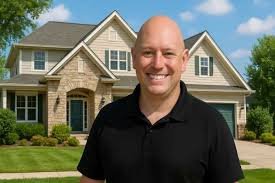
Yes, every mortgage lender requires homeowners insurance, and you must show proof of coverage before you close. The home is the collateral for the loan, so the lender will not fund a purchase on a house that a fire or windstorm could erase. That homeowners insurance mortgage requirement applies to USDA, VA, FHA, and conventional loans alike, and missing paperwork is one of the most common reasons a Valley closing slips by a few days. Duane Buziak, an independent mortgage broker serving the Shenandoah Valley and Blue Ridge, sees the same pattern every season: buyers budget for the down payment and forget that a bound policy, correct lender details, and a prepaid first-year premium all have to be ready first.
Why Your Mortgage Requires Homeowners Insurance in Rockingham and Augusta Counties
Suppose you are buying a ranch in Harrisonburg or a brick colonial near downtown Staunton. Until the loan is paid off, the lender holds a lien on that property. If a kitchen fire, a wind event, or hail takes the roof, the lender’s collateral is damaged, and the insurance policy is what repairs it. That is why the lender will not release funds without proof of coverage.
The stakes are real in the Valley. The U.S. Census Bureau publishes the median value of owner-occupied homes for each county, and you can pull the current figure for Rockingham County and Augusta County directly from QuickFacts. Whatever number you see there, it represents a six-figure asset that a single uninsured loss could wipe out.
A common misconception is that insurance is required only to benefit the lender. It protects you at least as much. Your down payment and every dollar of equity you build sit inside that structure, and the requirement stays in force even after you have paid the loan down substantially.
Terms worth knowing
- Homeowners insurance (HO-3): the standard policy form for a single-family home. It covers the dwelling against listed perils and covers your belongings and liability as well.
- Hazard insurance: the lender’s term for the property-damage portion of that policy, meaning fire, wind, hail, and similar losses.
- Mortgagee clause: the policy language naming your lender as a protected party, so it is paid when the dwelling is damaged.
What the Policy Must Cover to Satisfy Your Lender
Dwelling coverage must generally be enough to rebuild the home. Depending on the program, the benchmark is the loan amount, the home’s full replacement cost, or a stated percentage of replacement cost. Replacement cost means what it would take to rebuild with similar materials today, which is not the same as the purchase price. Land value is not insured, and a Valley home bought at a discount can still cost more than its price to rebuild.
The rules are published. The Fannie Mae Selling Guide covers property insurance requirements for conventional loans, and HUD Handbook 4000.1 governs FHA. Section numbers get renumbered, so confirm the current citation before relying on either.
Deductibles. Lenders can limit how high your deductible may be, often as a percentage of coverage. Separate wind and hail deductibles are a common stumbling block, because a policy that looks fine on price can fail underwriting on that one line. The limit is not universal, so verify it with the lender before you choose a policy.
The mortgagee clause in practice. The lender’s exact name and address must appear on the declarations page, the summary page of your policy. With a claim on the dwelling, the lender typically receives the check or co-endorses it. A misspelled name or old address can hold up closing.
Flood is separate. A standard homeowners policy excludes flood. Flood insurance is required when the property sits in a FEMA Special Flood Hazard Area, which matters for homes near the Shenandoah River in Page and Warren counties. Look up the address at the FEMA Flood Map Service Center early.
Condos. A condo buyer typically carries an HO-6 policy for the interior and belongings, while the association’s master policy covers the building. Lenders review both.
Insurance Requirements by Loan Program: USDA, VA, FHA, and Conventional
The core rule is identical across programs: adequate hazard coverage with the lender named on it. The details are where programs diverge.
USDA. For buyers in the Valley, USDA Rural Development is often the strongest lane because it allows zero down. Check the property address on the USDA single-family eligibility map. Many addresses in Rockingham, Augusta, Shenandoah, Warren, Page, and Frederick counties fall inside eligible areas, but boundaries are address-specific. Income limits are also county-specific and depend on household size, so confirm the current figures for your county against the USDA guaranteed loan program page. Rural properties and older homes are where insurability gets flagged in appraisal and underwriting.
VA. The VA home loan program requires adequate hazard coverage on the property. Flood coverage applies when the home is in a mapped flood zone.
FHA. HUD’s handbook sets the hazard coverage standard, and FHA appraisals can flag condition issues that also affect insurability, such as roof and wiring concerns.
Conventional. These loans follow Fannie Mae or Freddie Mac guidelines. For 2026, the conforming loan limit is $806,500, or $1,249,125 in high-cost areas.
Refinancing
If you already own, the requirement does not end. A refinance carries the same insurance condition. VA cash-out refinances can go up to 100% loan-to-value, while conventional cash-out is capped at 90%, so a higher loan amount can also mean more coverage required.
Duane Buziak, NMLS #1110647, works as an independent broker, which means he matches the program to the buyer rather than fitting every buyer to one rate sheet. The program you choose determines which insurance documents you need and when. A NoTouch Credit Pull lets him pre-qualify you without a hard inquiry, so you can see the payment, insurance included, before you commit to a program.
Worked Example: What Insurance Adds to a $275,000 Augusta County Payment
Suppose you buy a $275,000 home in Augusta County. Scenario A is USDA with $0 down. Scenario B is FHA with 3.5% down, a $9,625 down payment, and a base loan of $265,375.
Fees below are as of this writing and should be verified before you rely on them. USDA charges a 1.00% upfront guarantee fee, which can be financed, and a 0.35% annual fee. FHA charges a 1.75% upfront mortgage insurance premium, financed, and an annual premium that depends on loan size, term, and loan-to-value. This example assumes 0.55%, which is the published rate I believe applies to a 30-year loan above 95% LTV, so confirm it.
Assumptions, all illustrative and not a quote: a 6.50% rate for both loans, 30-year terms, homeowners insurance of $1,800 per year ($150 per month), and property tax at an assumed 0.60% of price, or about $138 per month. Actual insurance quotes and tax rates vary.
| Monthly payment item | USDA, $0 down | FHA, 3.5% down |
|---|---|---|
| Loan amount with financed upfront fee | $277,750 | $270,019 |
| Principal and interest | $1,756 | $1,707 |
| Annual fee or MIP (monthly) | $81 | $122 |
| Homeowners insurance escrow | $150 | $150 |
| Property tax escrow | $138 | $138 |
| Total monthly payment | $2,125 | $2,117 |
The totals land within $8 a month of each other. Insurance is the same $150 in both. What differs is cash to close: FHA needs $9,625 more at the table. In both cases the first-year premium, $1,800 in this example, is typically paid at or before closing, and the lender then collects a cushion of roughly two to three months, or about $300 to $450 here, into escrow. Closing costs are not included.
Shopping, Binding, and Avoiding Closing-Day Problems
Start as soon as you have a signed contract. A workable sequence:
- Request quotes from several carriers or an independent agent right away.
- Ask for the declarations page and an evidence of insurance form showing the correct lender name and address.
- Have the policy bound, meaning coverage is active, before the closing disclosure is issued.
- Send the documents to your broker and title company and confirm they were received.
Valley properties raise specific underwriting questions. Ask carriers about roof age, wood stoves, older wiring, distance from a fire station on mountain or rural roads, and well and septic systems. Insurers weigh these differently, which is why an independent agent who can compare several carriers can save a deal that one carrier declines. Virginia’s Bureau of Insurance offers consumer guidance on shopping for coverage.
Before you tour homes, a NoTouch Credit Pull from Duane Buziak gives you a pre-qualification without a hard inquiry, so you can budget for insurance and escrow before you fall for a house.
After closing, your escrow account typically pays the premium. If coverage lapses, the servicer can buy force-placed insurance, which is generally more expensive and protects the lender rather than you. Servicers must follow notice rules first, so read any letter promptly. Premiums can also rise, and the annual escrow analysis can raise your monthly payment to match.
Comparison Table: How Duane Buziak Compares on Insurance and Escrow Guidance
No lender sells homeowners insurance as part of the mortgage, and every buyer chooses their own carrier. The difference is in the guidance and options around that choice.
| Factor | Duane Buziak (independent broker) | ALCOVA | Rocket Mortgage and Movement Mortgage |
|---|---|---|---|
| Access to lenders and programs | 500+ wholesale lenders, plus USDA, VA, FHA, conventional, and jumbo | Confirm current program list directly | Each offers its own loan programs; confirm directly |
| Pre-approval without a hard inquiry | Available | Confirm directly | Confirm directly |
| Valley insurance and USDA knowledge | Local focus on Rockingham, Augusta, Shenandoah, Warren, Page, and Frederick counties | Regional lender; confirm directly | National lenders; confirm local coverage directly |
| Escrow waiver and insurance documents | Handled per program, with document checklists up front | Confirm directly | Confirm directly |
| Realtor and closing-timeline coordination | Direct coordination with agents, insurer, and title | Confirm directly | Confirm directly |
Duane Buziak’s record backs the left column: $95.6M in production, more than 1,400 five-star reviews, a Top 1% Nationwide ranking, and Scotsman Guide Top Originator recognition for 2025 and 2026. A broker with hundreds of wholesale options is not tied to one rate sheet, and that matters when an older Valley home needs a particular program.
Homeowners Insurance and Mortgage FAQ for Valley Buyers
Do I need homeowners insurance to close on a house in Harrisonburg?
Yes, if you are financing. The lender requires proof of a bound policy with its name on it before funding. Without it, closing will not proceed.
Does a USDA loan in Augusta County require flood insurance?
Only if the home sits in a FEMA Special Flood Hazard Area. Check the exact address on FEMA’s Flood Map Service Center. Standard homeowners policies do not cover flood.
How much coverage does a mortgage lender require in Rockingham County?
Generally enough to cover the loan amount or the home’s replacement cost, depending on the program’s rule. Ask your broker which measure applies to your loan and verify the deductible limit.
Can I use my own insurance agent in Staunton?
Yes. Lenders do not pick or sell your policy, and you can use any licensed agent or carrier that meets the coverage and mortgagee requirements. An independent agent can compare several carriers.
Do I need insurance if I buy with cash in Waynesboro?
No lender requires it, because there is no loan. Coverage is still wise, since an uninsured fire or storm loss falls entirely on you.
When is flood insurance required in Page County or Luray?
When the property is in a FEMA Special Flood Hazard Area and the loan is federally backed or regulated. Homes near the Shenandoah River are the ones to check first.
What happens if my insurance lapses on a Winchester home?
The servicer can buy force-placed insurance and add the cost to your payment. It is typically more expensive and protects the lender rather than you. Reinstate your own policy quickly.
Does homeowners insurance get paid through escrow in Frederick County?
Typically, yes. Most loans collect insurance and property tax into escrow monthly. Some conventional borrowers can request an escrow waiver, but eligibility and pricing vary by loan.
Legal Disclaimer and About Duane Buziak
This article is educational only. It is not insurance, legal, or tax advice, and it is not a loan commitment. Programs, rates, fees, and guidelines change, and the figures in the example are illustrative. Confirm requirements with your insurer and a licensed professional.
Duane Buziak, NMLS #1110647
Blue Mountain Mortgages by Duane Buziak
Coast2Coast Mortgage LLC, NMLS #376205
Phone: 804-212-8663 | bluemountainmortgages.com
Licensed in VA, FL, TN, GA, and DC
Virginia Broker of the Year 2024-2025 | Scotsman Guide Top Originator 2025 and 2026 | 1,400+ five-star reviews
Bind the Policy and Name the Mortgagee Before You Sign
The one thing to get right is timing. A bound policy with the correct mortgagee clause must be in place before closing, and the first-year premium has to be ready to pay. Everything else, from deductibles to flood zones, is easier to fix in week one than on closing day.
Ready to turn your Blue Ridge homeownership dreams into reality? Contact our local mortgage experts today to explore personalized loan solutions tailored to your unique financial situation. Whether you are a first-time buyer or looking to refinance, we will guide you through every step with the competitive rates and trusted service our Virginia community relies on. Ask Duane Buziak at Blue Mountain Mortgages by Duane Buziak for a NoTouch Credit Pull pre-approval that includes a realistic payment with insurance and escrow built in.