
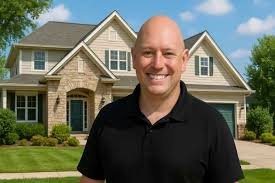
The down payment. For most first-time buyers across the Shenandoah Valley and Blue Ridge corridor, it’s the number that stops the conversation before it even starts. You find a home you love in Harrisonburg, Staunton, Waynesboro, Winchester, Front Royal, Luray, or Woodstock — and then someone mentions 20% down, and the dream stalls.
Here’s what most buyers in Rockingham, Augusta, Shenandoah, Warren, Page, and Frederick counties don’t realize: in 2026, you have more down payment assistance options than ever before. Many of them are completely invisible to buyers who only talk to a single retail bank or credit union. With Valley homes typically priced in the $240,000–$310,000 range, several programs are highly accessible — and some require zero down payment at all.
I’m Duane Buziak, NMLS #1110647, broker at Coast2Coast Mortgage LLC, NMLS #376205, and the Mortgage Maestro for the Shenandoah Valley. As an independent broker with access to 500+ wholesale lenders, I can shop, compare, and stack programs that a retail lender tied to a single institution simply cannot offer. One tool I make available from the very first conversation: the NoTouch Credit Pull — a soft-pull scenario review that lets you see exactly which programs you qualify for before a single hard inquiry hits your credit file.
Below are seven strategies Valley first-time buyers can use in 2026 to dramatically reduce — or eliminate — the cash required to close. Let’s break them down one by one.
1. USDA Rural Development: The Zero-Down Strategy Most Valley Buyers Never Hear About
The Challenge It Solves
Most first-time buyers assume they need at least 3–5% down to purchase a home. What they don’t know is that a large portion of the Shenandoah Valley and Blue Ridge corridor qualifies for USDA Rural Development financing — a government-backed program that requires absolutely zero down payment. The challenge is that many buyers simply never hear about it, because retail banks and credit unions often have limited USDA program depth and little incentive to lead with it.
The Strategy Explained
USDA Rural Development loans are designed for buyers purchasing in eligible rural and suburban areas, and most of Rockingham, Augusta, Shenandoah, Warren, Page, and Frederick counties qualify geographically. You can verify your specific property address using the official USDA eligibility map.
The program carries two fees in place of a down payment: a 1.0% upfront guarantee fee that can be financed directly into the loan, and an annual guarantee fee of 0.35% of the outstanding balance. Compare that to FHA, which charges a 1.75% upfront mortgage insurance premium and a 0.55% annual MIP — and the math starts to favor USDA significantly for eligible buyers.
Income limits are household-based and county-specific. Pull current 2026 figures directly from the USDA eligibility site for your specific county, as limits are updated regularly and vary by household size.
Implementation Steps
1. Confirm your target property or ZIP code qualifies using the USDA eligibility map linked above.
2. Request a NoTouch Credit Pull to review your income, debts, and household composition against current USDA income limits for your county.
3. Compare USDA vs. FHA side-by-side using the worked example below before committing to a program.
Worked Dollar Example: USDA vs. FHA on a $275,000 Purchase
Here’s how the numbers look on a $275,000 home purchase in a USDA-eligible area of Rockingham or Augusta County:
| Factor | USDA Rural Development | FHA (3.5% Down) |
|---|---|---|
| Purchase Price | $275,000 | $275,000 |
| Down Payment Required | $0 | $9,625 (3.5%) |
| Upfront Fee/MIP | $2,750 (1.0%, financed) | $4,638 (1.75%, financed) |
| Base Loan Amount | $277,750 | $270,013 |
| Annual Insurance Rate | 0.35% ($81/mo est.) | 0.55% ($124/mo est.) |
| Cash to Close (down payment only) | $0 | $9,625 |
The USDA buyer keeps nearly $10,000 in their pocket and pays roughly $43 less per month in mortgage insurance. For a full breakdown of how USDA and FHA compare across the Valley, see our detailed guide: USDA Loan vs. FHA Loan.
Pro Tips
F&M Mortgage offers USDA loans through their single-bank channel, which means one rate, one set of overlays, and no competitive shopping. As an independent broker, I access USDA wholesale pricing across multiple investors — which typically means a lower rate on the same program. If you’re comparing options, ask any lender how many USDA wholesale investors they can submit to. The answer tells you everything. Learn more about USDA Rural Development loan requirements here.
2. Virginia Housing Down Payment Assistance: Stacking Grants on Top of Your Mortgage
The Challenge It Solves
Even when buyers qualify for a low-down-payment loan, closing costs can still create a cash barrier. Virginia Housing (formerly VHDA) addresses this directly with grant-based down payment assistance — money that does not need to be repaid. The problem is that accessing these grants alongside competitive wholesale mortgage pricing requires an independent broker. Retail lenders who offer Virginia Housing products are locked into Virginia Housing’s retail rate structure and cannot layer wholesale first mortgage pricing underneath a DPA grant.
The Strategy Explained
Virginia Housing offers two primary assistance options for first-time buyers: the Down Payment Assistance Grant, which requires no repayment and is available to buyers using a qualifying Virginia Housing first mortgage, and the Virginia Housing Plus Second Mortgage, a deferred second mortgage option for buyers who need more assistance than the grant alone covers.
Both options carry income limits and purchase price limits that vary by locality across the Valley. Current figures for Rockingham, Augusta, Shenandoah, Warren, Page, and Frederick counties are published on the Virginia Housing Down Payment Assistance page. Pull these at the time of application, as they are updated periodically.
Virginia Housing first mortgage products include FHA, VA, USDA, and Conventional options — meaning the DPA can be layered onto multiple loan types depending on your profile.
Implementation Steps
1. Review current income and purchase price limits for your specific Valley county at virginiahousing.com.
2. Identify which first mortgage product (FHA, USDA, Conventional) fits your credit profile and property location.
3. Work with an independent broker who can stack the Virginia Housing DPA grant on top of wholesale first mortgage pricing — not just Virginia Housing’s retail rate.
Pro Tips
This is where the broker advantage becomes concrete. Jake Adler’s team and ALCOVA Mortgage Staunton can offer Virginia Housing products, but they price them at retail. I can pair the Virginia Housing DPA grant with a wholesale-priced first mortgage, which means you get the grant benefit without sacrificing rate competitiveness. That combination is not available at a single-institution retail lender.
3. VA Loan Zero-Down: The Most Powerful Tool for Veterans in Augusta and Rockingham Counties
The Challenge It Solves
Veterans and active-duty service members in Augusta and Rockingham counties have earned one of the most powerful home financing benefits in existence — and many don’t use it. The VA loan offers zero down payment, no private mortgage insurance, and competitive rates. Yet many veterans in communities like Fort Defiance, Verona, and Weyers Cave end up in FHA or conventional loans because the lender they walked into didn’t prioritize VA or didn’t have competitive VA wholesale pricing.
The Strategy Explained
The VA loan is a $0-down program backed by the U.S. Department of Veterans Affairs. Unlike FHA and conventional loans, there is no monthly mortgage insurance premium — ever. The program does carry a VA funding fee, which varies based on down payment amount and whether it’s a first or subsequent use. However, the funding fee is waived entirely for veterans with a service-connected disability rating — meaning a qualifying disabled veteran pays no down payment and no funding fee.
Augusta County has a meaningful veteran population across Fort Defiance, Verona, and Weyers Cave communities. For current veteran population data by county, the U.S. Census Bureau American Community Survey publishes county-level estimates annually.
Worked Dollar Example: VA Loan on a $310,000 Purchase, Disabled Veteran
| Factor | VA Loan (Disabled Veteran) | FHA (3.5% Down) | Conventional 5% Down |
|---|---|---|---|
| Purchase Price | $310,000 | $310,000 | $310,000 |
| Down Payment | $0 | $10,850 | $15,500 |
| Funding Fee / Upfront MIP | $0 (waived) | $5,244 (financed) | $0 |
| Monthly Mortgage Insurance | $0 | ~$140/mo | ~$120/mo (est.) |
| Cash to Close (down payment only) | $0 | $10,850 | $15,500 |
The disabled veteran in this example saves over $10,000 at closing and eliminates monthly mortgage insurance entirely — a benefit worth hundreds of dollars per month compared to FHA or conventional alternatives.
Implementation Steps
1. Obtain your Certificate of Eligibility (COE) through VA.gov or allow your broker to pull it on your behalf.
2. Confirm your disability rating if applicable — a service-connected disability rating waives the funding fee entirely.
3. Compare VA wholesale pricing against retail VA offers from ALCOVA Mortgage or Rocket Mortgage before committing.
Pro Tips
Rocket Mortgage processes high volumes of VA loans nationally but prices at retail. As a wholesale broker, I can access VA pricing from multiple investors and typically beat retail VA rates. On a $310,000 loan, even a 0.25% rate difference translates to meaningful savings over a 30-year term. Explore the full VA loan benefits for veterans and compare VA vs. conventional options here.
4. FHA Loans with No-Out-of-Pocket Closing Options: Minimizing Cash to Close
The Challenge It Solves
FHA loans require a minimum 3.5% down payment for buyers with credit scores of 580 or above — and 10% for scores between 500 and 579. But the down payment is only part of the cash-to-close equation. Closing costs typically add another 2–3% of the purchase price. For a buyer purchasing a $270,000 home in the Valley, that’s potentially $9,450 in down payment plus several thousand more in closing costs. The good news: FHA has built-in flexibility that, when used strategically, can dramatically reduce or eliminate out-of-pocket closing costs.
The Strategy Explained
FHA allows 100% of the down payment to come from gift funds provided by qualifying family members — meaning a buyer with a generous relative can cover the 3.5% without touching their own savings. On the closing cost side, FHA permits sellers to contribute up to 6% of the purchase price toward the buyer’s closing costs through seller concessions. In a market where sellers are motivated, that 6% ceiling can cover virtually all closing costs on a Valley-priced home.
Layer in lender credits — where the broker adjusts the rate slightly in exchange for credits applied to closing costs — and the result is what we call a no-out-of-pocket closing option. The buyer brings the 3.5% down (or gifts it), and closing costs are covered through seller concessions and lender credits.
One critical note: FHA mortgage insurance premium for loans with less than 10% down lasts the life of the loan for loans originated after June 2013. This is a meaningful long-term cost that buyers should weigh carefully against conventional alternatives.
Implementation Steps
1. Confirm your credit score threshold — 580+ for 3.5% down, 500–579 for 10% down. Use the NoTouch Credit Pull to assess your position before any hard inquiry.
2. Identify whether gift funds are available from family members to cover the 3.5% down payment requirement.
3. Structure the purchase offer to include a seller concession request up to 6% to offset closing costs.
Pro Tips
The NoTouch Credit Pull is especially valuable here. Many buyers with borderline scores assume they don’t qualify for FHA — or that they’re locked into the 10% down tier. A soft-pull scenario review can identify whether a small credit improvement (paying down a card, removing an error) would push you to the 580 threshold before you ever apply. See our guide on what credit score is needed for an FHA loan and options if you’re struggling to qualify.
5. Conventional 97 and HomeReady/Home Possible: Low-Down Programs for Stronger Credit Profiles
The Challenge It Solves
First-time buyers with credit scores above 680 and stable income often assume FHA is their only low-down-payment option. It isn’t. Fannie Mae’s Conventional 97 and HomeReady programs, along with Freddie Mac’s Home Possible, offer 3% down payment options with a critical long-term advantage over FHA: private mortgage insurance on a conventional loan cancels automatically when your loan-to-value ratio reaches 80%. FHA mortgage insurance, for loans with less than 10% down originated after June 2013, does not cancel — ever.
The Strategy Explained
Conventional 97 is available to first-time buyers through Fannie Mae with just 3% down. HomeReady (Fannie Mae) and Home Possible (Freddie Mac) also offer 3% down with income limits typically set at 80% of the area median income — and both programs offer reduced PMI rates for qualifying buyers, which lowers the monthly payment compared to standard conventional PMI.
The 2026 conforming loan limit is $806,500 for standard areas, as published by the Federal Housing Finance Agency. Valley purchases in the $240,000–$310,000 range are well within standard conforming limits, making these programs fully accessible for most buyers in Rockingham, Augusta, and surrounding counties.
Worked Dollar Example: FHA MIP vs. Conventional PMI on a $280,000 Loan
| Factor | FHA (3.5% Down) | Conventional 97 (3% Down) |
|---|---|---|
| Purchase Price | $280,000 | $280,000 |
| Down Payment | $9,800 | $8,400 |
| Upfront MIP/Fee | $4,726 (1.75%, financed) | $0 |
| Annual Insurance Rate | 0.55% (~$128/mo) | Varies by score; cancels at 80% LTV |
| Insurance Duration | Life of loan | Cancels at 80% LTV |
| Estimated PMI Savings (year 5+) | N/A | Hundreds per month after cancellation |
Implementation Steps
1. Confirm your credit score qualifies for conventional pricing advantages — typically 680+ for competitive PMI rates.
2. Check HomeReady/Home Possible income limits for your specific Valley county at Fannie Mae’s HomeReady page.
3. Model FHA vs. conventional side-by-side over a 7-year horizon — the PMI cancellation point often makes conventional the lower total-cost option for buyers who stay in the home.
Pro Tips
Buyers who assume FHA is the default low-down program often pay significantly more over time. If your credit score is above 680 and your income falls within HomeReady limits, run the conventional math first. The PMI cancellation benefit alone can save tens of thousands over a typical ownership period in the Valley.
6. Stacking Strategies: How to Combine Multiple Programs for Maximum Benefit
The Challenge It Solves
Each of the strategies above is powerful on its own. But the most sophisticated approach — and the one that genuinely separates an independent broker from a retail lender — is stacking. Combining a Virginia Housing DPA grant with a wholesale-priced first mortgage, layering in seller concessions, and adding lender credits can result in a first-time buyer purchasing a Valley home with minimal or zero cash out of pocket. Retail lenders, by definition, cannot do this: they are limited to their own product shelf and their own pricing.
The Strategy Explained
Here’s a real-world stacking scenario for a Valley buyer purchasing a $265,000 home in a USDA-eligible area of Shenandoah County:
Layer 1: USDA Rural Development first mortgage — zero down payment, financed upfront guarantee fee, 0.35% annual fee.
Layer 2: Virginia Housing DPA grant applied to closing costs — no repayment required, reduces cash to close.
Layer 3: Seller concession negotiated in the purchase contract — covers remaining closing costs.
Layer 4: Lender credits from wholesale pricing — any residual closing cost gap closed at the rate level.
The result: a buyer who brings essentially zero cash to closing on a $265,000 home purchase. This combination is not available at F&M Mortgage, ALCOVA Mortgage Staunton, or Rocket Mortgage — each of which operates on a retail or single-channel model that prevents true program stacking with wholesale pricing.
Broker vs. Retail Lender Comparison: First-Time Buyer Program Access
| Feature | Duane Buziak / Coast2Coast | Jake Adler / Adler Mortgage | ALCOVA Mortgage Staunton | Rocket Mortgage |
|---|---|---|---|---|
| Wholesale Lender Access | 500+ wholesale lenders | Retail only | Retail only | Retail only |
| Virginia Housing DPA + Wholesale Rate Stack | Yes | No | No | No |
| USDA Wholesale Investor Competition | Multiple investors | Single channel | Single channel | Single channel |
| NoTouch Credit Pull Available | Yes | No | No | No |
| Program Stacking Capability | Full stack available | Limited | Limited | Limited |
| Local Valley Market Expertise | Harrisonburg, Staunton, Winchester, Front Royal, Luray, Woodstock | Local presence | Staunton/Augusta focus | National, not local |
Implementation Steps
1. Identify your primary loan lane first: USDA if property is eligible, VA if you’re a veteran, conventional if your credit profile supports it.
2. Layer Virginia Housing DPA on top of your first mortgage — confirm income and purchase price eligibility at virginiahousing.com.
3. Negotiate seller concessions into the purchase contract before closing to cover any remaining costs.
Pro Tips
The stacking conversation is one I have with nearly every first-time buyer in the Valley. The question isn’t just “what program do I qualify for?” — it’s “what combination of programs produces the lowest cash to close and the best long-term payment?” That question requires access to the full market. One lender cannot answer it.
7. The NoTouch Credit Pull Pre-Approval: How to Shop Smarter Before You Commit
The Challenge It Solves
Many first-time buyers in the Valley delay or avoid talking to a mortgage broker because they fear hard credit inquiries. They’ve heard that multiple credit pulls hurt your score, and they don’t want to damage their credit before they’re ready to buy. So they either go to one lender — the one their real estate agent recommends — or they wait. Both approaches cost them money and options.
The Strategy Explained
The NoTouch Credit Pull is a soft-pull scenario review process. Before any hard inquiry is submitted, I review your income documents, asset statements, monthly debts, and run soft-pull credit scenarios to identify which programs you qualify for, what rate ranges you’d likely see, and what — if anything — you could do to improve your position before applying.
This is especially valuable for three buyer profiles that are common across the Valley:
Student loan borrowers: FHA, USDA, and conventional programs each treat student loan debt differently in their debt-to-income calculations. Running scenarios before committing to a program can reveal which loan type produces the most favorable DTI outcome for your specific debt structure.
Thin credit file buyers: Buyers with limited credit history — often younger buyers purchasing their first home in Harrisonburg or Waynesboro — may qualify for programs with non-traditional credit evaluation. The NoTouch review identifies this before a hard pull reveals a file that isn’t ready for standard underwriting.
Self-employed buyers: Income documentation for self-employed buyers in the Valley varies significantly by program. A soft-pull scenario review can determine whether a 1-year or 2-year tax return average produces better qualifying income across USDA, FHA, and conventional guidelines — before you commit to a program and a hard pull.
Retail lenders — including Rocket Mortgage’s online application flow — typically require a hard pull as the first step in formal pre-approval. The NoTouch Credit Pull process inverts that: you understand your full option set before any hard inquiry touches your file.
Implementation Steps
1. Gather your two most recent pay stubs, two years of W-2s or tax returns (if self-employed), two months of bank statements, and a list of monthly debts.
2. Contact Duane Buziak at 804-212-8663 to initiate the NoTouch Credit Pull review — no hard inquiry, no commitment.
3. Review the scenario results: which programs you qualify for, estimated rate ranges, and any credit or income steps that would improve your position before formal application.
Pro Tips
The NoTouch review often reveals that buyers are in a stronger position than they assumed — or that a small, targeted action (paying down one credit card, disputing an error) would unlock a meaningfully better program. Don’t let fear of a credit inquiry be the reason you pay more for your mortgage. If you’re wondering whether you can qualify at all, start with our guide on options when you’re struggling to qualify for a home loan.
Your Implementation Roadmap: Which Strategy to Start With
The biggest mistake first-time buyers in the Shenandoah Valley make is talking to one lender — usually a local bank or credit union — and accepting whatever program that lender offers. That single conversation often leaves thousands of dollars in assistance on the table.
Here’s how to prioritize based on your buyer profile:
If you’re a veteran or active-duty service member: Start with VA zero-down. No down payment, no monthly mortgage insurance, competitive wholesale rates. It’s the most powerful tool available, and it should be the first conversation — not an afterthought.
If you’re purchasing in a rural or suburban Valley area: Start with USDA Rural Development. Verify your property on the USDA eligibility map and compare it against FHA using the worked math above. For most eligible buyers, USDA wins on cash to close and monthly payment.
If you have gift funds or strong family support: FHA with seller concessions and no-out-of-pocket closing options may be the right fit — especially if your credit score is in the 580–680 range.
If your credit score is above 680: Run conventional 97 or HomeReady alongside FHA. The PMI cancellation benefit often makes conventional the lower total-cost option over a 5–7 year horizon.
For every buyer profile: Layer Virginia Housing DPA on top of your first mortgage if you qualify. And start with the NoTouch Credit Pull before any hard inquiry.
The stacking advantage is real, and it’s only available through an independent broker with access to the full wholesale market. Contact our local mortgage experts today to start your NoTouch Credit Pull and see exactly which programs apply to your situation — or call directly at 804-212-8663.
Frequently Asked Questions: First-Time Homebuyer Down Payment Assistance in the Shenandoah Valley
Does USDA Rural Development cover properties in Harrisonburg city limits? Harrisonburg city proper is generally not USDA-eligible, but many surrounding areas in Rockingham County are. Verify your specific address using the USDA eligibility map before ruling out the program.
What are the USDA income limits for Rockingham County in 2026? USDA income limits are household-size-based and updated annually. Pull current 2026 figures directly from the USDA eligibility site for Rockingham County — do not rely on figures from previous years.
Can I use Virginia Housing DPA with a USDA loan in Augusta County? Yes. Virginia Housing first mortgage products include USDA, and the DPA grant can be layered on top. Income and purchase price limits apply — confirm current Augusta County limits at virginiahousing.com.
Is the VA funding fee waived for all veterans in the Shenandoah Valley? The VA funding fee is waived for veterans with a service-connected disability rating, regardless of location. If you receive VA disability compensation, confirm your exemption status through VA.gov before closing.
What credit score do I need for an FHA loan in Staunton or Waynesboro? FHA requires a minimum 580 credit score for 3.5% down, and 500–579 for 10% down. The NoTouch Credit Pull can assess your current score range before any hard inquiry. See our full guide on FHA credit score requirements.