
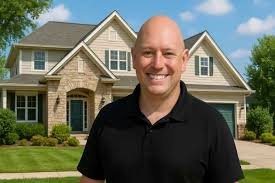
A USDA-eligible home outside Harrisonburg, Staunton, Front Royal, or Waynesboro can be one of the strongest paths to ownership in the Valley, but USDA income limits Virginia buyers face can be confusing. The number is not simply your salary, and a property being rural-eligible does not automatically mean the household qualifies.
I am Duane Buziak, Mortgage Maestro and an independent mortgage broker with Coast2Coast Mortgage LLC, NMLS #1110647. My job is to help Blue Ridge and Shenandoah Valley buyers sort out the real eligibility picture before they spend time chasing the wrong house or the wrong loan program.
Table of Contents
- How USDA income limits work in Virginia
- What income USDA counts
- A worked Valley buyer example
- County, property, and household considerations
- Broker versus retail mortgage comparison
- Eight local USDA questions
How USDA Income Limits Virginia Buyers Face Actually Work
USDA Guaranteed home loans are designed for owner-occupied homes in eligible rural areas. Many communities across Rockingham, Augusta, Rockbridge, Shenandoah, Warren, Page, and the Blue Ridge foothills have eligible pockets, including areas that do not feel remote at all.
The income cap is based on household size, county, and USDA’s current annual limits. In many Virginia counties, the baseline limit applies to households of one to four people, while a higher limit applies to households of five to eight people. Larger households can receive an additional allowance. Limits are updated periodically, so an online article can become stale quickly. I verify the current county limit tied to the specific property and household before giving a buyer a firm USDA answer.
USDA looks at household income, not just the income of the person applying for the mortgage. That distinction catches families off guard. A spouse who will not be on the loan, an adult child living at home, or another adult household member may affect eligibility even when they are not on the note.
The good news is that USDA does not always use every dollar in the same way. Certain deductions and adjustments may apply, including eligible child care expenses, dependent-related allowances, and some documented disability-related expenses. This is why a quick salary-only answer is often incomplete.
Household income is different from qualifying income
Qualifying income helps determine whether the mortgage payment fits your debt-to-income profile. Annual household income helps determine USDA program eligibility. You may have enough qualifying income to support the payment yet be over USDA’s household cap. The opposite can also happen if a household has income that is not stable or usable for mortgage qualification.
For example, a teacher in Augusta County may qualify using base pay and documented supplemental income, while their spouse’s earnings still count toward the household-income review even if the spouse is not applying. A Harrisonburg buyer with a college-age child who works part-time may need that income reviewed as well.
Start With the Address, Then the Household
The first practical step is confirming the home is in an eligible USDA area. USDA’s property eligibility map is the local data point that matters most because eligibility can change street by street near Charlottesville, Winchester, and the outskirts of Valley towns. A home just beyond town limits may qualify while a nearby subdivision does not.
After the address, we review who will occupy the home and document income sources for everyone in the household. That includes wages, self-employment income, retirement income, Social Security, overtime, bonuses, commissions, and other recurring sources where applicable. This is not about making the file harder. It is about preventing a late underwriting surprise after appraisal, inspection, and earnest-money deadlines are already in motion.
USDA is for a primary residence, not a second home, rental property, or farm operation. Acreage can be acceptable, but the property must be primarily residential. If you are looking at a small homestead outside Lexington or a house with a detached shop near Luray, the details matter.
Worked Example: A Rockingham County USDA Purchase
Assume a couple is buying a $300,000 eligible home in Rockingham County. They have two children, no other adults in the household, and verified annual household income below the current applicable USDA cap.
With USDA financing, the base loan starts at $300,000 because USDA can offer 100% financing for an eligible buyer and property. Assume the current upfront USDA guarantee fee is 1.00%. The fee equals $300,000 multiplied by 1.00%, or $3,000. When financed, the total starting loan amount becomes $303,000.
Now compare that with a conventional purchase requiring 5% down. Five percent of $300,000 is $15,000. The conventional base loan would be $285,000, but the buyer would need the $15,000 down payment before closing, plus closing funds unless seller credits or no-out-of-pocket closing options are available.
USDA’s annual fee also affects the monthly payment. At an assumed 0.35% annual fee, $303,000 multiplied by 0.35% equals $1,060.50 annually, or about $88.38 monthly. That cost should be compared honestly with conventional private mortgage insurance, interest rate differences, and the buyer’s available cash. USDA is not automatically best for every file, but it can preserve a meaningful cash reserve for repairs, moving expenses, and life after closing.
For a buyer with $18,000 saved, avoiding a $15,000 down payment could leave roughly $15,000 more available after a $3,000 earnest-money deposit is credited toward the purchase, before considering inspection, appraisal, and closing items. Exact cash-to-close depends on credits, prepaid taxes and insurance, and whether no-out-of-pocket closing options fit the transaction.
When USDA May Not Be the Right Lane
USDA is powerful, but there are trade-offs. If the household is over the USDA income cap, a conventional loan, FHA financing, or a down payment assistance option such as Dynamo DPA, Turbo DPA, or Homes for Heroes may make more sense. A VA-eligible buyer should also compare VA financing carefully. VA can offer 100% financing for qualified veterans and eligible service members, and credit profiles can sometimes be workable down to a 500 FICO score depending on the full file.
For VA purchases, the funding fee depends on entitlement, down payment, prior use, and exemption status. A first-use, non-exempt VA buyer putting no money down on the same $300,000 home could have a 2.15% funding fee of $6,450 if financed, producing a $306,450 starting loan amount. Veterans with a qualifying service-connected disability may be exempt from that fee. USDA versus VA should be a side-by-side decision, not a guess.
Buyers whose income is variable, self-employed, or largely deposit-based may need Bank Statement financing. Investors purchasing a non-owner-occupied rural property may be better served by DSCR financing. Those are different programs with different pricing, occupancy, and cash-reserve expectations.
A Broker Comparison for Valley Home Buyers
A local retail mortgage office can provide familiar faces, but its product shelf is typically limited to the programs and overlays available through that company. As an independent broker, I can compare options across more than 500 wholesale lenders and focus on the details that matter for USDA files.
| Option | Product access | USDA income review | Best use case |
|---|---|---|---|
| Mortgage Maestro / Coast2Coast Mortgage | 500+ wholesale lender options | Address, household, and deduction review before contract | Buyers needing USDA depth and comparison pricing |
| F&M Mortgage / Tonja Showalter Armentrout | Valley institution product shelf | Established local USDA presence | Buyers who prefer a single retail platform |
| ALCOVA Mortgage Staunton or Adler Mortgage Team | Retail program shelf | Program availability varies by file | Staunton-area buyers comparing service models |
| Rocket Mortgage or Movement Mortgage | National online or retail channels | Standardized process and processing-speed comparison | Buyers comparing digital convenience and timelines |
Bruce Burner / Benchmark Mortgage, C&F Mortgage Waynesboro, and Movement Mortgage Harrisonburg are also reasonable comparison points for local shoppers. The distinction is not that one route is universally right. It is whether a single-shelf retail option can match the program depth, pricing comparison, and rural-property attention your file requires. My Dare to Compare approach is built around that question.
Get Clarity Without a Credit Surprise
Before you tour aggressively, use a soft credit pull mortgage review through NoTouch Credit Pull. It can help us discuss payment range, likely program fit, and potential credit items without beginning with a hard inquiry. Buyers often search for a no hard inquiry mortgage pre approval or mortgage pre approval without hard pull because they want information before making a major decision.
A soft pull mortgage broker review is especially useful when you are deciding between USDA, VA, FHA, or conventional financing. NoTouch Credit Pull is also a practical starting point for buyers who want a no credit hit mortgage application conversation before they are ready for a full mortgage application. A soft credit pull mortgage review is not final approval, but it is a much better first step than relying on a payment calculator alone.
USDA Income Limits Virginia FAQs
Do USDA income limits include my spouse if they are not on the mortgage?
Usually, yes. USDA generally reviews income from household members who will occupy the property, even if they are not borrowers on the loan.
Are USDA income limits the same in every Virginia county?
No. Limits can vary by county and household size. The property address and number of occupants must be checked against current USDA guidance.
Does overtime count toward USDA household income?
It often can. USDA reviews recurring income sources, including overtime, bonuses, commissions, and other documented earnings as applicable.
Can I use USDA near Harrisonburg or Staunton?
Yes, many surrounding areas may be eligible, but eligibility is address-specific. Town boundaries and neighborhood location can make a difference.
Can a non-borrowing adult living with me affect USDA eligibility?
Yes. An adult occupant’s income may affect the household-income calculation even when they are not applying for the mortgage.
Does USDA require a down payment in Virginia?
Eligible USDA buyers may finance up to 100% of the purchase price, though they still need to plan for earnest money, inspections, and transaction-specific costs.
What if my household is over the USDA income limit?
We can compare VA, FHA, conventional, Dynamo DPA, Turbo DPA, or other options based on your credit, property, and cash position.
Can I get pre-qualified without a hard credit inquiry?
Yes. NoTouch Credit Pull can provide an initial soft-credit review, though final approval requires full documentation and underwriting.
The right answer is not a generic county chart copied from last year. It is a current review of your household, your address, and the payment you can comfortably carry. If a USDA home in the Valley is on your list, call before you write the offer. A little clarity early can save a lot of disappointment later.
Duane Buziak, Mortgage Maestro Coast2Coast Mortgage LLC NMLS #1110647 (804) 212-8663 duane@coast2coastml.com 3302 Haydenpark Lane, Henrico VA 23233 Licensed: VA, FL, TN, GA, DC
Not a commitment to lend. Rates subject to change. Equal Housing Lender. Coast2Coast Mortgage LLC NMLS #376205. Duane Buziak NMLS #1110647.