
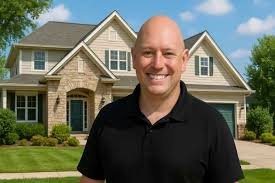
A house outside Harrisonburg can look rural enough for USDA financing and still fall on the wrong side of an eligibility boundary. A home near Front Royal may qualify while a similar property a few miles closer to town does not. That is why the USDA eligibility map Virginia buyers use should be your first property check, not an afterthought once you are under contract.
I am Duane Buziak, Mortgage Maestro and an independent mortgage broker with Coast2Coast Mortgage LLC, NMLS #1110647. In the Shenandoah Valley, USDA is often the difference between waiting years to save a down payment and buying a home now with the right plan.
Table of Contents
- What the USDA map actually tells you
- Virginia areas where USDA deserves a close look
- Income limits and property rules
- A worked USDA payment example
- Broker versus bank options in the Valley
- Eight common local questions
What the USDA Eligibility Map Virginia Tool Actually Shows
The official USDA property eligibility map identifies locations that may be eligible for USDA Guaranteed Rural Housing financing. It is an address-level screening tool, not a blanket approval for an entire county. Enter the exact property address, review the result, and then have a USDA specialist verify it before you write an offer around the program.
The map is especially useful in Rockingham, Augusta, Rockbridge, Shenandoah, Warren, Page, Highland, and rural Albemarle County. Many communities around Staunton, Waynesboro, Harrisonburg, Woodstock, Strasburg, Luray, and Front Royal have nearby eligible pockets. Charlottesville itself is generally not the USDA conversation, but the Blue Ridge foothills beyond the city limits can be.
The USDA map is also the local source that matters most because boundaries can change. A listing description that says “USDA eligible” is not a determination. Neither is a county-wide assumption. The current USDA property eligibility map and a full file review are what count.
Eligibility is only one piece of approval
A green result on the map does not automatically mean the home or borrower qualifies. USDA financing is for an owner-occupied primary residence, and the property must meet appraisal and condition standards. It is not designed for a vacation home, a rental purchase, or a working farm with income-producing structures that dominate the property value.
Household income matters too. USDA considers income from adult household members in many cases, even if they will not be on the mortgage. That catches buyers by surprise when an adult child, parent, or partner lives in the home. Income limits vary by county and household size, so the right question is not “Do I make too much?” It is “What income does USDA count for my household and county?”
Why USDA Fits So Many Valley Buyers
USDA’s headline benefit is no required down payment for qualified buyers. That can be meaningful in the Valley, where buyers may find land, space, and a manageable purchase price outside the core city limits but lack a large cash reserve.
Closing costs still exist. Depending on the contract, appraisal, prepaid items, seller concessions, and rate choice, there may be no-out-of-pocket closing options. That is not a promise that every transaction can close with little to nothing out of pocket. It means the structure should be reviewed before you choose a home, rather than after inspections and deposits are already in motion.
USDA also compares well with FHA when down payment cash is the main obstacle. FHA can be a strong fallback when an address is ineligible or household income exceeds USDA limits. VA financing is often the first choice for eligible veterans, including qualified buyers with credit scores down to 500 in the right profile. For VA cash-out refinances, the maximum is 100% LTV. Conventional cash-out refinancing can go as high as 90% LTV.
A Worked USDA Dollar Example
Assume you are buying a $300,000 home outside Broadway in Rockingham County. The address is USDA eligible, your qualifying household income is within the applicable limit, and you choose a USDA loan with no down payment.
Your base loan amount is $300,000. Using a 1.00% upfront USDA guarantee fee, the fee is $3,000. If financed into the loan, the total loan amount becomes $303,000. USDA’s annual fee at 0.35% is $1,050 per year, or $87.50 per month.
At an illustrative 6.50% fixed rate for 30 years, principal and interest on $303,000 is about $1,915 per month. Add the $87.50 USDA annual fee, property taxes, homeowners insurance, and any applicable HOA dues to estimate the full housing payment.
Now compare the cash requirement to a 3.5% FHA down payment on the same $300,000 purchase. The FHA down payment would be $10,500 before closing costs. USDA does not erase every expense, but preserving that $10,500 can protect your emergency reserves or help you handle moving, repairs, and furnishing a home. The trade-off is that USDA has map and income rules that FHA does not.
Start With Credit Without Forcing a Hard Pull
Before you spend weekends driving every back road between Verona and Toms Brook, get a clear payment range. Our NoTouch Credit Pull process can help start that conversation. It is built for buyers who want useful guidance before a traditional credit inquiry becomes necessary.
If you are searching for a soft credit pull mortgage, no hard inquiry mortgage pre approval, or mortgage pre approval without hard pull, the terminology can be confusing. A soft pull mortgage broker review may help us discuss likely options, but a complete approval and final underwriting can require additional documentation and credit review.
NoTouch Credit Pull is also a practical answer for buyers asking about a no credit hit mortgage application. It lets you begin with a more informed conversation about USDA, VA, FHA, Dynamo DPA, Turbo DPA, Homes for Heroes, bank statement financing, or DSCR without rushing into the wrong lane.
Broker Versus Bank: Why the Product Shelf Matters
A local retail office can provide familiar faces and a solid process. The difference is product access. As an independent broker, I can compare options across 500+ wholesale sources rather than being limited to one internal product shelf. That matters when a USDA income calculation, property type, credit profile, or closing timeline needs a second look.
| Option | Typical strength | Potential limitation | Best borrower question |
|---|---|---|---|
| Mortgage Maestro / Coast2Coast Mortgage LLC | USDA depth and 500+ wholesale options | Requires a focused document review | Which USDA structure best fits my address and household? |
| F&M Mortgage, Tonja Showalter Armentrout, Jake Adler Mortgage Team, ALCOVA Mortgage Staunton | Established Valley and Staunton-area retail presence | One company product shelf | Can you compare more than one wholesale source? |
| Benchmark Mortgage, Bruce Burner, C&F Mortgage Waynesboro, Movement Mortgage Harrisonburg | Retail processing and local market familiarity | Program choices may be more limited by platform | How do you handle a borderline USDA address or income file? |
| Rocket Mortgage and Movement Mortgage | National online comparison and retail processing-speed benchmark | Less hyperlocal USDA address guidance | Who is checking my specific Valley property before I offer? |
This is not a knock on any individual or company. It is a practical comparison of broker independence versus a single-shelf model. Dare to Compare pricing and program fit before assuming the first quote is the only route. My 24-Hr Guarantee is simple: you should get a direct answer quickly when a property, payment, or eligibility question is holding up your decision.
USDA Eligibility Map Virginia FAQs
Is Harrisonburg USDA eligible?
Much of Harrisonburg proper is not, but nearby addresses in Rockingham County may be eligible. Check the exact address, not just the mailing city or ZIP code.
Can I use USDA in Staunton or Waynesboro?
Some city addresses may be ineligible, while nearby Augusta County properties can qualify. The boundary can be closer than buyers expect.
Does USDA require a down payment?
Qualified USDA buyers can finance with no required down payment. You still need to plan for earnest money, inspections, appraisal items, and any costs not covered through the final structure.
What income does USDA count in Virginia?
USDA generally considers qualifying household income, not only the income of borrowers on the mortgage. Household size and county both affect the limit.
Can a USDA home have acreage?
Yes, acreage is possible when the home is primarily residential and the land does not create a farm or commercial-use issue. Appraisal details matter.
Is USDA better than VA for Valley veterans?
Usually, eligible veterans should compare VA first because VA has no monthly mortgage insurance. USDA can be an excellent alternative when VA entitlement or property factors point that way.
Can I get pre-qualified without a hard credit inquiry?
A soft pull review through NoTouch Credit Pull can help begin the conversation. Final approval depends on full documentation, property review, and program requirements.
How long does a USDA purchase take in the Shenandoah Valley?
Timing depends on appraisal, title work, documentation, and USDA file review. Starting income and eligibility checks before contract can prevent the most common delays.
The best time to check an address is before you picture furniture in the living room. Bring me the listing, your county, household size, and a realistic price range, and we can sort the USDA path before the Valley market makes the decision for you.
Duane Buziak, Mortgage Maestro | Coast2Coast Mortgage LLC | NMLS #1110647 | (804) 212-8663 | duane@coast2coastml.com | 3302 Haydenpark Lane, Henrico VA 23233 | Licensed: VA, FL, TN, GA, DC
Not a commitment to lend. Rates subject to change. Equal Housing Lender. Coast2Coast Mortgage LLC NMLS #376205. Duane Buziak NMLS #1110647.