
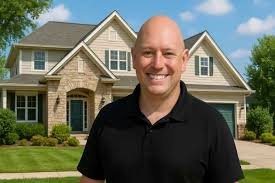
A weathered farmhouse outside Staunton, a 1960s ranch near Harrisonburg, or a modest home on acreage in Rockingham County can look like a bargain until you price the roof, well, HVAC, and kitchen. A renovation mortgage for fixer upper buyers combines the home purchase and approved repair costs into one mortgage, so you do not have to drain savings or hope a personal loan will cover the work.
I am Duane Buziak, Mortgage Maestro and independent mortgage broker, NMLS #1110647. My job is to help Valley buyers separate a project with real upside from a house that will strain the budget before move-in day.
Table of Contents
- When a fixer-upper mortgage makes sense
- Which renovation mortgage for fixer upper projects fits
- A worked Shenandoah Valley example
- Property, contractor, and appraisal realities
- Broker versus single-shelf mortgage options
- Questions Valley buyers ask
When a fixer-upper mortgage makes sense
A renovation loan works best when the home is structurally sound enough to be financed, the improvements are clearly defined, and the finished value supports the combined purchase and renovation cost. It is often a better fit than buying a house as-is and trying to finance repairs later.
That matters in the Blue Ridge and Shenandoah Valley, where older homes can have durable bones but dated systems. A property near Waynesboro might need a new heat pump and electrical panel. A rural home in Augusta or Rockbridge County may need septic work, well repairs, or a roof before it is truly ready for occupancy. Those are not cosmetic line items, and they can affect the appraisal and insurance process.
The trade-off is paperwork and timing. Renovation financing requires contractor bids, a scope of work, appraisal review based on the completed home, and staged draws as work is performed. It is not the right choice for a buyer who wants to start demolition the weekend after closing with no plan, no contractor, and no reserve funds.
For USDA-focused buyers, first confirm the address. Much of the Valley remains eligible, but eligibility is property-specific. The USDA eligibility map is the official resource to verify a home before you get attached to it. USDA can be a strong option for qualifying primary-residence buyers in eligible rural areas, although the renovation structure and available program overlays need to be reviewed carefully for the particular property and work scope.
Which renovation mortgage for fixer upper projects fits
The right loan depends on your military eligibility, down payment, credit profile, location, and the condition of the property.
FHA 203(k): broadest path for substantial repairs
FHA 203(k) financing is commonly used when a home needs meaningful repairs or modernization. It can fund the purchase plus eligible improvements in one transaction. It is often practical for first-time buyers in Harrisonburg, Staunton, and surrounding towns who have limited cash for a separate repair fund.
A Limited 203(k) is generally suited to smaller, non-structural projects. A Standard 203(k) can handle larger work, but it brings additional oversight, more documentation, and a longer process. If the project involves foundation work, moving walls, major plumbing changes, or a home that cannot be occupied during renovation, expect the Standard route to be the conversation.
VA renovation financing: strong for eligible veterans
For eligible veterans and service members, VA renovation financing can pair VA’s favorable primary-home structure with approved improvements. VA eligibility can be especially valuable in Warren, Shenandoah, Rockingham, and Augusta counties, where homes may need functional upgrades rather than a full rebuild.
VA financing does not require a down payment in many cases, but the home, borrower, contractor, and renovation plan must meet program requirements. The VA funding fee depends on the borrower and transaction details, including whether there is a qualifying exemption. Do not assume every contractor or every repair schedule will fit. Review it before making an offer.
Conventional renovation: useful for stronger equity or credit profiles
Conventional renovation financing can fit buyers with stronger credit, larger down payments, or projects that do not align well with government-backed programs. It can also be a consideration for Charlottesville move-up buyers and UVA faculty whose purchase price or property profile calls for a more flexible conventional structure.
For 2026, the baseline conforming loan limit is $806,500, with a $1,249,125 high-cost limit where applicable. Conventional cash-out refinancing is capped at 90% loan-to-value, which matters if you buy first and later want to fund improvements from equity. Buying with renovation financing upfront may preserve more options than trying to repair the house after the fact.
A worked Shenandoah Valley example
Assume you find a primary home near Broadway for $250,000. The contractor’s approved bid is $40,000 for a roof, heat pump, kitchen updates, and electrical work. Your starting project total is $290,000.
If the structure qualifies for USDA and the final appraised value supports it, a USDA guarantee fee of 1% would be $2,900. Adding that financed fee creates a base loan amount of $292,900, before any other financed items permitted by the program. The annual USDA fee is typically paid monthly. At 0.35%, $292,900 x 0.0035 = $1,025.15 per year, or about $85.43 per month.
Now compare that with a VA example using the same $290,000 purchase-plus-repair amount. If a first-use VA funding fee of 2.15% applies, the fee is $6,235. Financing it produces a loan amount of $296,235. A borrower exempt from the funding fee would avoid that $6,235. That is real money, which is why VA entitlement and exemption status deserve attention before you settle on a loan path.
Neither example promises approval, rate, eligibility, or final closing figures. Appraisal, income, debt, property condition, contractor approval, and program guidelines decide the result. But the math shows why combining the work into the original mortgage can be more manageable than paying $40,000 from savings after closing.
The details that can derail a good project
The appraisal is based on the home’s anticipated completed condition, not just the current listing photos. If the renovation budget is inflated, unsupported, or missing needed repairs, the numbers may not work. A $250,000 purchase with $90,000 in improvements is not automatically a $340,000 home once work is done.
Contractor quality matters just as much. Use licensed, insured professionals who can provide detailed bids, realistic start and completion dates, and a clear breakdown of materials and labor. A vague estimate like “renovate kitchen – $25,000” creates trouble. A usable scope says what cabinets, flooring, electrical changes, permits, fixtures, and contingency are included.
Rural properties add another layer. Before writing an offer, consider well yield, septic condition, private-road access, termite evidence, acreage use, detached structures, and whether the property will meet safety and habitability requirements after repairs. A beautiful view of Massanutten does not fix a failing drain field.
A soft-credit starting point before you bid
You should know your buying range before committing to a project with unknown repair costs. A soft credit pull mortgage review can help establish a starting point without immediately triggering a traditional hard inquiry. Our NoTouch Credit Pull process is designed for early planning conversations, including a no hard inquiry mortgage pre approval discussion where appropriate.
Buyers often search for mortgage pre approval without hard pull, a soft pull mortgage broker, or a no credit hit mortgage application because they want clarity before multiple mortgage conversations. That is reasonable. NoTouch Credit Pull gives us a practical way to review the early picture, then determine when a full application and formal underwriting steps make sense. NoTouch Credit Pull is not a final approval, but it can prevent a bad fixer-upper decision.
Broker versus single-shelf mortgage options
A renovation project is where product choice matters. As an independent broker, I can compare options across 500+ wholesale mortgage sources rather than start and end with one company shelf. That does not mean every source offers every renovation product, or that the lowest quoted rate is automatically the best fit. It means we can examine structure, contractor rules, mortgage insurance, fees, timing, and rural-property experience together.
| Option | Typical strength | Potential limitation | Best question to ask |
|---|---|---|---|
| Independent broker | Multiple wholesale options and USDA depth | Program availability still depends on profile and property | Which structure handles this repair scope? |
| F&M Mortgage / Tonja Showalter Armentrout | Established Valley presence | Single company product shelf | Is there a comparable renovation option? |
| The Adler Mortgage Team, ALCOVA Mortgage Staunton, Benchmark Mortgage / Bruce Burner, C&F Mortgage Waynesboro | Local retail familiarity | Retail offerings can be more limited by company platform | Can you compare more than one program source? |
| Rocket Mortgage and Movement Mortgage Harrisonburg | National online scale or retail processing focus | Less room for a local broker comparison across wholesale sources | How does this handle rural wells, septic, and contractor draws? |
Every professional named above may be a valid resource for the right buyer. The difference is not about taking shots at local competitors. It is about whether your fixer-upper needs a single-shelf answer or a wider comparison. I bring USDA specialist depth, personal guidance, Dare to Compare pricing, and a 24-Hr Guarantee mindset to buyers who want a clear plan.
FAQs for Blue Ridge fixer-upper buyers
Can I use USDA for a fixer-upper in Rockingham County?
Possibly. The address must be USDA-eligible, the home must be your primary residence, and the renovation structure, income, appraisal, and repair scope must meet current requirements.
Can a VA buyer finance repairs in Shenandoah County?
Yes, when the VA renovation option, contractor, property, and borrower file meet program rules. Review entitlement, funding-fee status, and the work scope before offering.
Will a renovation mortgage cover a new septic system in Augusta County?
It can, depending on the program and documented scope. Septic repairs require careful contractor bids, permits, and appraisal review.
Do I need a down payment for FHA 203(k)?
FHA 203(k) usually requires a minimum investment based on the transaction details, credit, and program guidelines. It is not generally a no-down-payment program.
Can I buy a home that cannot be occupied right away?
Sometimes, but major projects may require a Standard 203(k) or another eligible structure. Temporary housing costs should be part of your planning.
Are cosmetic updates enough for a renovation mortgage?
They can be, but financing adds process. For a small paint-and-flooring project, a standard purchase loan plus savings may be simpler if the home already meets property standards.
Can I use a soft credit pull before shopping in Front Royal?
Yes. A soft credit pull mortgage conversation can help estimate readiness before you make offers, subject to a later full review and program requirements.
How long does a fixer-upper closing take in the Valley?
It depends on appraisal timing, contractor documentation, repair complexity, and underwriting. Build more time into the contract than you would for a clean, move-in-ready purchase.
If a house has the right location and good bones, do not let repair uncertainty force you into guessing. Bring the listing, your contractor ideas, and your budget to the first conversation. We can sort out whether the project deserves a renovation mortgage, a different loan structure, or a pass before you spend money on inspections and bids.
Duane Buziak, Mortgage Maestro | Coast2Coast Mortgage LLC | NMLS #1110647 | (804) 212-8663 | duane@coast2coastml.com | 3302 Haydenpark Lane, Henrico VA 23233 | Licensed: VA, FL, TN, GA, DC
Not a commitment to lend. Rates subject to change. Equal Housing Lender. Coast2Coast Mortgage LLC NMLS #376205. Duane Buziak NMLS #1110647.