
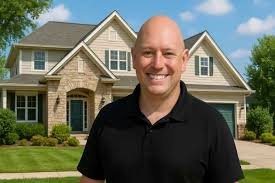
A $900,000 home outside Charlottesville or a larger acreage property near Front Royal can move you beyond standard conforming financing quickly. Knowing how to qualify for jumbo financing starts with one fact: jumbo underwriting puts more weight on the full financial picture than a standard conventional file.
For 2026, the baseline conforming loan limit is $806,500, while designated high-cost areas can reach $1,249,125. A loan amount above the applicable county limit is generally jumbo. That does not mean the loan is out of reach. It means your credit, income documentation, assets, property type, and debt picture need to work together cleanly.
I’m Duane Buziak, Mortgage Maestro, NMLS #1110647. As an independent mortgage broker, I help Blue Ridge and Shenandoah Valley buyers compare the financing path that actually fits the property and their long-term plans.
Table of Contents
- What makes a loan jumbo
- How to qualify for jumbo financing
- A worked jumbo, USDA, and VA example
- Why property location matters in the Valley
- Broker versus single-shelf financing
- Eight local jumbo financing questions
What makes a loan jumbo?
A jumbo loan is not defined by the home price alone. It is defined by the loan amount after your down payment. A $1 million purchase with 20% down creates an $800,000 loan, which may remain under the 2026 baseline conforming limit. That same purchase with 15% down creates an $850,000 loan, which is jumbo in a baseline-limit county.
Charlottesville move-up buyers, UVA faculty, physicians, executives, and buyers relocating to the Valley often encounter this line. So do buyers purchasing historic homes, acreage, horse properties, or newer custom construction in Augusta, Rockbridge, Warren, and surrounding counties.
A jumbo loan is not automatically better or worse than a conforming loan. Pricing can be competitive for strong files, but the approval standards are usually less forgiving when there are gaps in income documentation, recent credit events, unusually high debts, or limited cash reserves.
How to qualify for jumbo financing
Build a credit profile that supports the request
Many jumbo programs begin around a 700 credit score, with stronger pricing and more flexibility often available at 720, 740, or higher. The exact threshold depends on the purchase price, down payment, occupancy, and property type. A primary residence usually receives more favorable treatment than a second home or investment property.
Do not make major credit moves before applying. Opening a vehicle loan, carrying high card balances, or moving money without a paper trail can change the file. A soft credit pull mortgage review can show where you stand before a formal application decision. Mortgage Maestro’s NoTouch Credit Pull is designed for that early conversation.
If you are researching a no hard inquiry mortgage pre approval, ask what the broker can verify with a soft review and what will require a full credit report later. A mortgage pre approval without hard pull can be useful for planning, but a seller-facing approval may still require fuller documentation depending on the program and timeline.
Keep debt-to-income manageable
Debt-to-income ratio, or DTI, compares your monthly debt obligations with your gross monthly income. Jumbo approvals commonly prefer a lower DTI than standard conventional financing. A target at or below 43% is often helpful, although some files can go higher with substantial reserves, excellent credit, and strong documented income.
The monthly payment matters more than buyers expect. Principal, interest, property taxes, homeowners insurance, homeowners association dues, and any financed mortgage insurance all count. On rural properties, factor in road-maintenance agreements, higher insurance needs, or separate structures where applicable.
Document income without loose ends
Salaried buyers generally need recent paystubs, W-2s, and employment verification. Self-employed buyers may need two years of personal and business returns, year-to-date profit and loss statements, and business bank statements. Commission income, bonuses, restricted stock, and rental income may count, but each has its own documentation rules.
Bank Statement financing can be a practical alternative for self-employed borrowers whose tax returns do not reflect their available cash flow. It is not a shortcut around qualification. It is a different way to document income, typically with stronger credit, more down payment, or larger reserves than a standard conventional file.
Plan for a meaningful down payment and reserves
Some jumbo programs allow 10% down, while 15% or 20% down can produce more options. Beyond down payment and closing funds, expect reserves. Six months of total housing payments is a common starting point, and larger loan amounts, second homes, or investment properties may require more.
Reserves can include eligible checking, savings, investment, and retirement assets, subject to program rules. The point is simple: the file should show you can continue making the payment if income is interrupted.
A worked dollar example: jumbo versus Valley alternatives
Consider a $1,000,000 primary-home purchase in a baseline-limit Virginia county. With 15% down, the down payment is $150,000 and the loan amount is $850,000. That is $43,500 above the $806,500 conforming limit, so jumbo financing is needed. Choosing 15% rather than 20% down keeps $50,000 in the buyer’s accounts, but may increase the rate, reserve requirement, or both.
For perspective, not every buyer needing more room should move into jumbo financing. A $350,000 eligible rural purchase using USDA at 0% down has a $350,000 base loan. The 1% upfront USDA guarantee fee equals $3,500, creating a financed amount of $353,500 before other financed items. A first-use, non-exempt VA borrower buying at $600,000 with 0% down may have a 2.15% funding fee of $12,900, producing a financed amount of $612,900. VA cash-out refinancing is available up to 100% LTV when the file meets requirements, while conventional cash-out is capped at 90% LTV.
| Scenario | Purchase price | Cash down | Base loan and financed fee |
|---|---|---|---|
| Jumbo primary home | $1,000,000 | $150,000 (15%) | $850,000 loan |
| Jumbo with 20% down | $1,000,000 | $200,000 (20%) | $800,000 loan |
| USDA eligible purchase | $350,000 | $0 | $350,000 + $3,500 guarantee fee = $353,500 |
| VA first-use purchase | $600,000 | $0 | $600,000 + $12,900 funding fee = $612,900 |
Property location still changes the conversation
Before assuming a large rural home requires jumbo financing, separate property eligibility from loan size. USDA is often available in Valley communities that buyers assume are too close to town, but income limits and property eligibility apply. USDA’s official Property Eligibility map is the source used to check an address, not a ZIP code guess.
USDA will not be the fit for a high-priced estate property, but it can preserve cash for a qualifying buyer purchasing a modest home in rural-eligible Rockingham, Augusta, Shenandoah, Rockbridge, or Warren County. VA can also be a stronger fit than jumbo financing for eligible veterans, depending on entitlement, purchase price, and the specific program terms.
For a rural investment property, DSCR financing may be worth comparing. It evaluates whether expected rental income supports the property payment rather than relying solely on personal wage income. It is a different tool, with different pricing and down-payment expectations.
Why a broker comparison matters on jumbo files
A jumbo request is where a one-product-shelf approach can become restrictive. F&M Mortgage and Tonja Showalter Armentrout have long Valley visibility, while Jake Adler and The Adler Mortgage Team, ALCOVA Mortgage Staunton, Bruce Burner at Benchmark Mortgage, C&F Mortgage Waynesboro, and Movement Mortgage Harrisonburg serve local buyers through retail channels. Rocket Mortgage offers a national online rate-comparison option, and Movement Mortgage is often considered for processing speed.
Those are legitimate choices. The trade-off is that retail teams generally work from one company’s product shelf. As an independent broker with access to 500+ wholesale options, I can compare jumbo, conventional, VA, USDA, Bank Statement, and DSCR paths based on the actual file. That matters when a buyer has acreage, variable compensation, retirement assets, or a loan amount sitting just above a conforming limit.
A soft pull mortgage broker review through NoTouch Credit Pull can help identify likely lanes before you commit to a strategy. If you want a no credit hit mortgage application for early planning, we can discuss what can be reviewed softly and what documentation will be needed for a complete approval.
Frequently asked questions
What credit score do I need for a jumbo loan in Charlottesville?
Most jumbo programs look for at least a 700 score, while 720 to 740 or higher can improve options and pricing. Your down payment, reserves, and DTI also matter.
Can I buy a Shenandoah Valley acreage property with jumbo financing?
Yes, but acreage, wells, septic systems, outbuildings, and unique comparable sales can add underwriting review. The property must support the value and intended use.
Is 10% down enough for a jumbo loan?
It can be. A 10% down option usually calls for excellent credit, stable income, manageable debts, and stronger reserves than a 20% down file.
Can VA financing work above the conforming limit?
Yes. VA does not impose a county loan limit for eligible borrowers with full entitlement, although individual program guidelines, income, appraisal, and entitlement still apply.
Can USDA replace jumbo financing in Rockingham or Augusta County?
Only when the home price, household income, and address meet USDA requirements. USDA is often a powerful alternative for eligible rural buyers, but it is not designed for every higher-priced property.
Do self-employed buyers qualify for jumbo loans?
Yes. Tax-return documentation is common, and Bank Statement options may suit certain self-employed buyers who have strong deposits and assets.
How much cash reserve is needed for a jumbo purchase?
Six months of housing payments is a common benchmark, though higher balances, second homes, and investment properties can require more.
Should I get pre-qualified before touring higher-priced homes?
Yes. A NoTouch Credit Pull review lets you test payment, reserve, and down-payment scenarios before writing an offer or moving funds unnecessarily.
The right jumbo plan should leave room for the life you want after closing, not simply get an approval across the finish line. If you are weighing a Charlottesville move-up purchase, a Valley acreage home, or a VA and USDA alternative, a clear comparison before the offer can save real money and unnecessary stress.
Duane Buziak, Mortgage Maestro Coast2Coast Mortgage LLC NMLS #1110647 (804) 212-8663 duane@coast2coastml.com 3302 Haydenpark Lane, Henrico VA 23233 Licensed: VA, FL, TN, GA, DC
Not a commitment to lend. Rates subject to change. Equal Housing Lender. Coast2Coast Mortgage LLC NMLS #376205. Duane Buziak NMLS #1110647.