
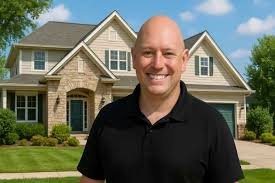
A good farmhouse outside Staunton can look like a bargain until the inspection finds a tired roof, aging wiring, and a kitchen that has not changed since the Carter administration. Knowing how to finance a fixer upper means separating the home’s purchase price from the real cost of making it safe, livable, and valuable. That matters across the Shenandoah Valley, where rural homes often have acreage, wells, septic systems, and repair needs that do not fit a one-size-fits-all mortgage.
I am Duane Buziak, NMLS #1110647, a mortgage broker with Coast2Coast Mortgage LLC. My job is to help buyers in the Valley match the property condition, repair plan, and financing structure before an attractive listing turns into an expensive surprise.
Table of Contents
- Start with the property condition and repair budget
- Compare fixer-upper financing options
- See a worked USDA financing example
- Understand rural eligibility and appraisal issues
- Compare a broker with a single-shelf mortgage company
- Prepare your credit without an unnecessary inquiry
- FAQs for Shenandoah Valley buyers
Start with the house, not the loan program
Before choosing financing, ask whether the repairs are cosmetic, functional, or structural. Paint, flooring, appliances, and landscaping are usually manageable after closing. A failing septic system, foundation movement, mold remediation, roof replacement, or an unsafe electrical panel can change both the appraisal and the financing conversation.
Get a thorough inspection and request contractor estimates early. For an older home in Rockingham, Augusta, Rockbridge, Shenandoah, or Warren County, also budget for well and septic evaluations when appropriate. Rural appraisals can be more nuanced because comparable sales may be spread out, acreage may require careful treatment, and an outbuilding may add appeal without adding dollar-for-dollar appraised value.
Your repair plan should include a 10% to 15% contingency. Contractors uncover surprises, especially behind old paneling and under aging floors. The right financing route depends on whether the home can meet basic property standards as it sits, or whether the repairs must be funded and completed as part of the purchase.
How to finance a fixer upper: choose the right lane
USDA is often the first program to examine for owner-occupied homes in the Valley. Many communities outside the core of Charlottesville, Harrisonburg, and Staunton may be eligible, but eligibility is determined by the property’s exact address, not a county label. USDA can be excellent for a home that is sound enough to close now and needs mostly manageable updates after closing. It is not a catch-all answer for major renovation work.
VA financing can be equally powerful for eligible veterans and active-duty buyers. A VA purchase loan may allow no down payment for a property that meets VA minimum property requirements. If the house needs substantial work before it is safe or habitable, a renovation-focused structure may be needed instead of a standard purchase loan. VA cash-out refinancing can reach 100% loan-to-value when a homeowner already owns the property and has sufficient equity, but that is a different transaction from buying a fixer upper.
FHA 203(k) financing is designed for buyers who need to roll a purchase and eligible repairs into one mortgage. It can be a practical answer for a home needing a roof, HVAC, kitchen, bath, or more significant rehabilitation. The trade-off is paperwork, contractor approval, repair draws, and a longer timeline. The contractor and scope of work matter as much as the buyer’s credit profile.
Conventional renovation financing can fit buyers with stronger credit, more down payment, and a property that needs improvements beyond a simple cosmetic refresh. It can also be useful around Charlottesville, where a purchase price may exceed the 2026 baseline conforming limit of $806,500. The 2026 high-cost conforming limit is $1,249,125 where applicable. Each option has eligibility rules, reserve requirements, and appraisal standards that should be reviewed before an offer is written.
| Program | Down payment approach | Repair scope | Best fit |
|---|---|---|---|
| USDA Guaranteed | Often 0% down for eligible buyers and addresses | Best when the home meets standards at closing; limited post-closing updates | Rural Valley primary residences with income and location eligibility |
| VA Purchase | Often 0% down for eligible veterans | Property must meet VA standards; major work may require a specialized structure | Veterans buying a sound home with manageable improvements |
| FHA 203(k) | Typically 3.5% minimum, subject to qualification | Purchase plus eligible renovations in one transaction | Homes needing meaningful repairs before move-in |
| Conventional Renovation | Varies by credit, occupancy, and program | Can support planned renovation with detailed contractor documentation | Buyers with stronger profiles or higher-price properties |
Down payment assistance may also help qualified buyers preserve cash. Dynamo DPA, Turbo DPA, and Homes for Heroes can be worth reviewing when available and when their pricing, income rules, repayment terms, and property requirements fit the transaction. Assistance is not automatically compatible with every renovation structure, so it must be coordinated from the start.
A worked USDA example for a Valley home
Assume you find a USDA-eligible primary residence near Broadway for $275,000. The home passes appraisal and safety standards, but you plan to spend $18,000 after closing on flooring, interior paint, and a kitchen refresh. Because those items are not required for the home to be habitable, a standard USDA purchase may be a better fit than a renovation loan.
With 0% down, the base loan is $275,000. Using a 1.00% upfront USDA guarantee fee, the fee equals $2,750. If financed, the total starting loan amount becomes $277,750. The annual USDA fee is currently calculated monthly based on the outstanding balance, so it should be included in the payment estimate.
Now compare that with bringing 3.5% down on the same price: $9,625 down, before closing costs and repair funds. USDA can preserve that cash for improvements, inspections, moving, and contingency. Seller concessions, negotiated credits, and no-out-of-pocket closing options may further reduce what you need at the table, but they do not erase your responsibility to budget for repairs that occur after closing.
If the inspection instead reveals a $22,000 roof replacement required before financing can close, the calculation changes. You may need a renovation program, a seller-funded repair completed before closing, or a different property. Do not assume the repair budget can simply be added to a USDA loan.
Rural eligibility, income limits, and the appraisal reality
USDA eligibility has two moving parts: the property address and household income. The home must be in an eligible area, and USDA considers qualifying household income, which can be broader than only the income used to qualify for the mortgage. That is why a quick address check and a careful household review should happen before you invest heavily in inspections.
A property can be rural in every practical sense and still fall outside a USDA map boundary. Conversely, a neighborhood just beyond a town center may qualify. The USDA property eligibility map is the governing source, and a broker should verify the address rather than relying on a listing description.
For VA buyers, entitlement, service eligibility, funding-fee status, and residual income all deserve attention. A first-use VA funding fee for a no-down-payment purchase is commonly 2.15% for borrowers not exempt from the fee, though individual circumstances can change the number. On a $275,000 purchase, that would be $5,912.50 if financed, making the starting loan $280,912.50. Veterans with a qualifying service-connected disability may be exempt from the funding fee.
Why broker choice matters on a fixer upper
A fixer upper is not the time to discover that your mortgage contact only has one product shelf. As an independent broker, I can compare options across 500+ wholesale mortgage sources and focus on USDA depth, VA scenarios, renovation guidelines, and the timing of your contractor work.
That is a respectful difference from retail operations such as Tonja Showalter Armentrout at F&M Mortgage, Jake Adler and The Adler Mortgage Team, ALCOVA Mortgage Staunton, Bruce Burner at Benchmark Mortgage, C&F Mortgage Waynesboro, and Movement Mortgage Harrisonburg. They serve Valley buyers in their own ways, but a retail model typically works from its available product shelf. Rocket Mortgage is a national online mortgage company worth including in a rate comparison, while Movement Mortgage is often part of the conversation when buyers prioritize retail processing speed. The question is not who has the loudest advertisement. It is whether the financing strategy fits a rural property’s condition and your full financial picture.
Mortgage Maestro offers a 24-Hr Guarantee and Dare to Compare pricing so you can evaluate the numbers and the plan together. Scotsman Guide recognized my production among its 2025 Top Originators at #114 with $44.4 million and in 2026 at $51.2 million, but local program knowledge is what matters when your contract depends on a well, septic report, repair bid, and a USDA map line.
Protect your credit while you plan
A soft credit pull mortgage review can help you assess direction before you are ready for a full application. NoTouch Credit Pull is built for that early planning stage, and it can support a no hard inquiry mortgage pre approval conversation when the goal is to understand a likely price range and program fit.
A mortgage pre approval without hard pull is not the same as final underwriting approval. Income, assets, appraisal, title, property condition, and complete credit documentation still matter. Still, working with a soft pull mortgage broker gives you room to plan your offer and repair budget without rushing into a no credit hit mortgage application. Ask for NoTouch Credit Pull before you begin touring homes that may need work.
Fixer-Upper Financing FAQs
Can USDA finance a fixer upper in Harrisonburg?
Yes, when the property is USDA-eligible, owner-occupied, and meets required standards at closing. USDA is generally better for homes needing cosmetic or post-closing updates than for major repairs required to make the home habitable.
Can a VA buyer purchase a home with a failing roof in Augusta County?
Usually not with a standard VA purchase structure unless the roof issue is resolved before closing or a suitable renovation approach is available. VA appraisals focus on safety, soundness, and livability.
What is the minimum down payment for FHA 203(k) financing?
Many qualified buyers use 3.5% down, but the exact requirement depends on credit, loan size, and program rules. The down payment is based on the applicable acquisition and renovation calculation.
Are homes near Staunton automatically USDA-eligible?
No. USDA eligibility is address-specific. Areas that feel rural may be ineligible, while nearby locations outside town boundaries may qualify.
Can down payment assistance pay for renovation work?
Usually, assistance is intended for down payment and closing-related needs, not a separate repair fund. Whether Dynamo DPA, Turbo DPA, or Homes for Heroes fits a renovation transaction depends on program compatibility.
Should I use cash or finance repairs after closing?
It depends on urgency and reserves. Financing a move-in-ready home with USDA or VA may preserve cash for planned updates, while serious health, safety, or structural repairs may call for a renovation structure.
Do rural properties need a well and septic inspection?
Often, yes. A general home inspection does not replace specialized evaluation of a private well or septic system, and these items can affect property approval and your future repair costs.
How long does fixer-upper financing take in the Shenandoah Valley?
A standard USDA or VA purchase can move on a normal contract timeline when the home meets requirements. FHA 203(k) and other renovation transactions usually take longer because bids, scopes, contractor review, and draw administration are involved.
A fixer upper should give you a home with a plan, not a project that drains every reserve you have. Start with the address, inspection findings, contractor estimates, and a financing conversation before you make the offer.
Duane Buziak, Mortgage Maestro Coast2Coast Mortgage LLC NMLS #1110647 (804) 212-8663 duane@coast2coastml.com 3302 Haydenpark Lane, Henrico VA 23233 Licensed: VA, FL, TN, GA, DC
Not a commitment to lend. Rates subject to change. Equal Housing Lender. Coast2Coast Mortgage LLC NMLS #376205. Duane Buziak NMLS #1110647.
The best time to solve a fixer-upper financing problem is before the contract deadline is counting down.