
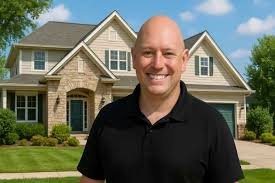
Updated October 2026 | Duane Buziak, NMLS #1110647 · Coast2Coast Mortgage LLC, NMLS #376205 · Licensed in VA · 804-212-8663 | This article is for informational purposes only and does not constitute a commitment to lend. Programs, rates, and eligibility requirements are subject to change. All loans subject to credit approval.
Buying a home on a single income feels like an uphill climb — especially when every financial headline seems written for dual-income households. But in the Shenandoah Valley and Blue Ridge corridor, single-income homeownership is not only possible, it happens every week. Entering the final quarter of 2026, the fundamentals for single-income buyers in central Virginia remain strong: price points in the $240,000–$310,000 range across Rockingham and Augusta counties, and a broad menu of zero-down programs built for buyers without a second paycheck.
For 2026, the FHFA baseline conforming loan limit is $806,500 (with a high-cost ceiling of $1,249,125), meaning conventional financing is broadly available across this price range. USDA and VA zero-down options remain especially powerful tools for Charlottesville, Shenandoah Valley, and central Virginia buyers — and as an independent broker with access to more than 500 wholesale lenders, Coast2Coast Mortgage can reach programs retail banks simply cannot offer.
Whether you are a nurse at Augusta Health, a teacher in Rockingham County Schools, a JMU staff member, or a self-employed tradesperson working the Blue Ridge corridor, the path to a mortgage approval on a single income is structured and repeatable. This guide walks you through seven concrete steps: from getting your financial picture in order, to selecting the right loan program, to closing on a home in Harrisonburg, Staunton, Waynesboro, or the surrounding Valley communities.
Duane Buziak, NMLS #1110647, Coast2Coast Mortgage LLC, NMLS #376205, works as an independent mortgage broker with access to more than 500 wholesale lenders — licensed in Virginia. That means he can shop your single-income file across programs that retail banks and direct lenders simply cannot reach. Follow these steps, and you will arrive at a pre-approval with a clear monthly payment, a realistic closing timeline, and no surprises.
The guide below covers: calculating true buying power, matching your situation to the right loan program, credit preparation using a soft-pull pre-qualification (NoTouch Credit Pull), income documentation, down payment strategy, verified pre-approval, and protecting your file through closing. An 8-question FAQ follows the final checklist to address the most common single-income buyer questions across Charlottesville, Harrisonburg, Staunton, and the broader central Virginia market.
Step 1: Calculate Your True Buying Power Before Anything Else
Before you browse Zillow listings or walk through open houses, you need one number: your maximum monthly housing payment. Everything else flows from this figure, and getting it wrong at the start is the most expensive mistake single-income buyers make.
Mortgage underwriters use two ratios to evaluate affordability. The front-end ratio covers housing costs only: principal, interest, taxes, and insurance (PITI). The back-end ratio covers all monthly debt obligations combined. Most loan programs allow a back-end debt-to-income (DTI) ratio up to 43%, and USDA and FHA programs permit up to 45% or even 50% with documented compensating factors such as strong reserves or a long employment history.
Here is the math using a $52,000 gross annual income, which is realistic for many Rockingham and Augusta County earners in healthcare support, education, and skilled trades:
Monthly gross income: $52,000 divided by 12 = $4,333
Maximum total debt at 43% DTI: $4,333 x 0.43 = $1,863 per month
Existing monthly debts (example: one car payment): $300
Available housing budget: $1,863 minus $300 = $1,563 per month
That $1,563 monthly budget, depending on the loan program, property taxes, and insurance, typically supports a purchase price in the $240,000 to $275,000 range in the Valley — squarely within the region’s median market. On a USDA loan with no PMI, that number stretches further than it would on an FHA loan with monthly mortgage insurance.
Two income sources that frequently trip up single-income buyers deserve a specific warning. Overtime pay must be documented for a minimum of two years and shown to be likely to continue — a recent overtime bump does not count. Part-time income from a second job follows the same two-year seasoning rule. If you have been relying on either to make the math work, verify the documentation before assuming it will be counted.
One more important note: you can get a preliminary buying power estimate without triggering a hard inquiry on your credit report. Duane offers a NoTouch Credit Pull — a soft-pull pre-qualification that shows where your file stands without affecting your credit score. This is the right first move before contacting any lender, including retail shops that routinely require a hard pull just to tell you what you might qualify for.
Success indicator: You have a written number — your estimated maximum monthly housing payment — before moving to Step 2.
Step 2: Match Your Situation to the Right Loan Program
Not all mortgage programs are created equal for single-income buyers, and the Valley’s geography opens doors that most of the country does not have. Here is how the major programs stack up for your situation.
USDA Rural Development Loans are the single most powerful tool available to single-income Valley buyers. Zero down payment. No private mortgage insurance. Competitive wholesale rates. The annual guarantee fee is just 0.35% of the loan balance, which is a fraction of FHA’s mortgage insurance cost. Most of the Shenandoah Valley corridor qualifies: Rockingham County communities including Elkton, Broadway, Bridgewater, and Dayton; all of Augusta County (Staunton, Waynesboro, Verona); Shenandoah, Warren, Page, and Frederick counties. Note that Harrisonburg city limits are partially ineligible, though surrounding Rockingham County is not. Confirm your specific address using the USDA eligibility map. Income limits apply and vary by county and household size — pull the current figures for your county before assuming eligibility.
VA Loans are the second priority for veterans and active-duty service members. Zero down, no PMI, 100% LTV on cash-out refinances, and the funding fee can be waived entirely for veterans with a service-connected disability rating. Augusta County has a meaningful veteran population in communities like Fort Defiance, Verona, and Weyers Cave. If you served, this program should be your first conversation.
FHA Loans require 3.5% down with a 580 or higher FICO score. Mortgage insurance costs more than USDA over the life of the loan, but FHA has no geographic restriction — making it the right tool for buyers inside Harrisonburg city limits or other areas that fall outside USDA boundaries. For a deeper look at lender options in the Valley, the top FHA lenders guide for Shenandoah Valley buyers covers what to look for and what to avoid.
Virginia Housing Down Payment Assistance pairs with FHA or conventional loans and provides grants or second mortgages to cover the down payment for qualifying buyers. Income limits and purchase price caps apply. Visit the Virginia Housing down payment assistance page to check current program parameters for your county.
Conventional Loans with no-out-of-pocket closing options suit buyers with 680 or higher credit scores who want to avoid USDA income limits or who live in non-rural areas. No geographic restriction, no income cap, and strong pricing for buyers with solid credit profiles.
| Program | Down Payment | PMI/MIP | Income Limit | Geographic Restriction | Min FICO |
|---|---|---|---|---|---|
| USDA Rural Development | 0% | 0.35%/yr annual fee | Yes (by county/household size) | Yes (rural/suburban eligible areas) | 640 preferred |
| VA Loan | 0% | None | No | No (veterans only) | 580–620 |
| FHA Loan | 3.5% | 0.55%/yr MIP | No | No | 580 |
| Conventional | 3–5% | Varies (removable) | No | No | 620 min / 680+ best pricing |
Success indicator: You have identified your top one or two program candidates based on your address, veteran status, income, and credit profile.
Step 3: Pull Your Credit Into Shape Without a Hard Inquiry
Your credit score determines which programs you qualify for, what rate you receive, and how much your monthly payment costs over the life of the loan. For single-income buyers, every dollar of monthly payment matters — so this step deserves real attention.
Here is where the NoTouch Credit Pull becomes your strategic advantage. Duane can run a preliminary scenario using a soft pull to identify exactly where your credit score stands and what specific actions would move the needle before you submit a formal application. Contrast this with the approach at retail lenders: ALCOVA Mortgage, Rocket Mortgage, and Movement Mortgage typically require a hard pull to issue any pre-approval letter, which can ding your score by several points at the exact moment you need it to be as high as possible.
Know your target score by program before you start:
USDA Rural Development: 640 is the preferred threshold; some wholesale lenders will work with 620 with compensating factors.
VA Loans: 580 to 620 depending on lender overlay; individual lenders set their own minimums above the VA’s baseline.
FHA Loans: 580 for the 3.5% down payment option; below 580 requires 10% down.
Conventional: 620 minimum to qualify; 680 or higher unlocks the best pricing tiers.
If your score needs improvement, three levers move it fastest. First, pay down revolving credit card balances below 30% of your available limit — utilization is one of the highest-weighted factors in your score calculation. Second, dispute inaccurate collections or outdated negative items through the credit bureaus; a removed collection can produce a meaningful score jump quickly. Third, avoid applying for any new credit during this period — every hard inquiry temporarily reduces your score.
Single-income buyers sometimes have what underwriters call a thin credit file: fewer than three active trade lines. This is especially common for buyers who previously shared accounts with a former partner. If this describes your situation, understanding how to buy a house after divorce covers the specific documentation strategies for rebuilding a qualifying credit profile. USDA and FHA both allow non-traditional credit documentation — rent payment history verified by a landlord, utility payment history, insurance premiums — to supplement a thin file.
The timeline reality: a focused 60 to 90-day credit improvement plan can produce a 30 to 60-point score increase in many cases. That difference can move a buyer from FHA territory into USDA territory, or from a mid-tier rate into a better pricing band — saving hundreds of dollars per year on a single-income budget. If you want professional help accelerating this process, the credit restoration program available through Blue Mountain Mortgages is designed specifically for buyers preparing to apply.
Success indicator: You have a current soft-pull score estimate and a written action plan if your score needs improvement before application.
Step 4: Document Your Income the Way Underwriters Actually Read It
Income documentation is where single-income files either sail through underwriting or stall for weeks. The difference is almost always preparation. Underwriters are not flexible on documentation requirements — they verify what they can verify, and anything undocumented does not count.
W-2 employees have the most straightforward path: two years of W-2 forms, two most recent pay stubs showing a full 30-day pay period, and employment verification. A recent raise or a job change within the same field and career level is generally acceptable and does not restart the clock on your employment history. A career-change job switch — say, from teaching to restaurant management — raises more underwriter questions.
Self-employed buyers, 1099 contractors, and gig workers are common throughout the Blue Ridge trades corridor and the Valley’s growing tourism economy. Two years of federal tax returns are required, and the critical detail is this: underwriters use your adjusted gross income after all business deductions, not your gross revenue. If your tax returns show $38,000 in net income after deductions but you actually deposited $72,000 in your business account, the underwriter uses $38,000. Bank statement loan programs exist specifically for this situation — they use 12 to 24 months of bank deposits to calculate qualifying income instead of tax returns. This is a legitimate wholesale program that most retail lenders do not offer.
Part-time income must be documented at the same employer for a minimum of two years to be counted. Seasonal income follows a similar two-year rule. If you started a part-time job six months ago to boost your income before applying, that income will not be included in your qualifying calculation. Buyers with irregular or seasonal earnings should also review the guidance on qualifying with variable income before assembling their documentation package.
Child support and alimony count as qualifying income if you have a court order documenting the payment amount and the payments are shown to continue for at least three years from the application date.
Rental income from other properties can offset your DTI but requires lease agreements and typically two years of Schedule E from your tax returns to be used in full.
What not to do during this phase: do not quit your job, do not switch from W-2 to self-employed status, and do not open any new credit accounts. Underwriters scrutinize the most recent 60 to 90 days of your financial activity intensely. A job change the week before closing has derailed closings that were otherwise fully approved.
Success indicator: You have a complete income documentation checklist assembled and ready for broker review before your pre-approval meeting.
Step 5: Build Your Down Payment and Closing Cost Strategy
For single-income buyers, the down payment question is often the biggest psychological barrier — and for USDA and VA borrowers, it largely disappears. Here is how to build a concrete plan for your situation.
If you are a USDA or VA buyer, your savings strategy shifts entirely. Zero down payment means your focus is on reserves and closing costs. USDA allows seller concessions up to 6% of the purchase price, which on a typical Valley purchase can cover all closing costs entirely.
Here is the full worked example for a USDA purchase in Bridgewater, Virginia (Rockingham County, USDA-eligible):
Purchase price: $275,000
Down payment: $0 (USDA zero-down)
Estimated closing costs: $6,500
Seller concession negotiated into offer: $6,500
Cash buyer brings to closing: $0 (excluding earnest money, which is credited back at closing)
USDA upfront guarantee fee: 1% of loan amount = $2,750, financed into the loan
USDA annual fee: 0.35% of loan balance = approximately $962 per year, or about $80 per month added to the payment
Now compare that to an FHA loan on the same $275,000 purchase:
FHA down payment (3.5%): $9,625 required out of pocket
FHA upfront MIP (1.75%): $4,812, financed into the loan
FHA annual MIP (0.55%): $1,512 per year, or approximately $126 per month
The USDA loan saves this single-income buyer $9,625 in upfront cash and approximately $46 per month on mortgage insurance compared to FHA. Over five years, that monthly difference alone totals $2,760 — money that stays in a single-income household budget.
If you are an FHA buyer, Virginia Housing down payment assistance programs can cover the 3.5% down payment through grants or second mortgage structures. Income limits and purchase price caps apply; check the Virginia Housing DPA page for current figures specific to your county. You can also review the full breakdown of how much down payment first-time buyers actually need to understand all available options before committing to a savings target.
Gift funds are permitted under all major programs. A family member can contribute the down payment or closing costs with a signed gift letter confirming no repayment is required. This is a documented, underwriter-accepted source of funds — not a workaround.
A NoTouch Credit Pull scenario review with Duane will produce a full closing cost estimate for your specific loan program and purchase price — without a hard inquiry on your credit. You will know the exact number before committing to anything.
Success indicator: You have a written down payment and closing cost plan with a specific savings target, or confirmation that USDA or VA zero-down applies to your situation.
Step 6: Get a Verified Pre-Approval — Not Just a Pre-Qualification Letter
There is a meaningful difference between a pre-qualification and a verified pre-approval, and for single-income buyers, that difference matters more than it does for dual-income households.
A pre-qualification is a quick estimate based on information you self-report — income, debts, estimated credit score. It takes five minutes, requires no documentation, and carries almost no weight with sellers or listing agents in a competitive market. A verified pre-approval means the broker has reviewed your actual pay stubs, tax returns, bank statements, and credit report, and has issued a commitment letter based on documented facts. Sellers and their agents take it seriously because it reflects real underwriting, not a phone conversation. Buyers who want to understand exactly what this process involves should read the full guide on how to get pre-approved fast in Virginia before their first broker meeting.
For single-income buyers specifically, this distinction is critical. Some listing agents and sellers view single-income offers with additional scrutiny — a perception that one income equals more financial fragility. A verified pre-approval from a broker who has already reviewed the complete file removes that hesitation before the offer is even submitted.
The broker advantage for single-income files is significant. Duane and Coast2Coast submit your file to multiple wholesale lenders simultaneously and select the one with the best program fit and pricing for your specific profile. Retail lenders — including ALCOVA Mortgage, Rocket Mortgage, and Movement Mortgage — can only offer their own in-house products. A broker with access to more than 500 wholesale lenders can find the specific lender whose underwriting overlays best accommodate a single-income file, a thin credit history, or a self-employed income structure. Understanding how to choose a mortgage lender in Virginia is one of the most important decisions a single-income buyer will make in this process.
| Provider | Lender Access | USDA Availability | NoTouch Pre-Qual | Single-Income Overlays | Local Valley Expertise |
|---|---|---|---|---|---|
| Duane Buziak / Coast2Coast | 500+ wholesale lenders | Yes, multiple investors | Yes | Shopped across lenders | Harrisonburg, Staunton, Winchester, Front Royal |
| ALCOVA Mortgage Staunton | In-house only | Limited | No | Single overlay set | Regional presence |
| Rocket Mortgage | In-house only | Limited | No | Single overlay set | National, not Valley-specific |
| F&M Mortgage (Tonja Showalter Armentrout) | Single bank portfolio | Limited programs | No | Single overlay set | Local but limited program shelf |
What to bring to your pre-approval meeting: the income documentation assembled in Step 4, two months of bank statements, a government-issued ID, your Social Security number for the credit pull, and your landlord’s contact information if rental history is relevant to your application.
Timeline: a complete file with all documents submitted together can produce a verified pre-approval within 24 to 48 business hours through Coast2Coast. Incomplete files take longer — which is exactly why Steps 3 and 4 come first.
Success indicator: You hold a verified pre-approval letter with a specific loan amount, program type, and estimated monthly payment.
Step 7: Make an Offer and Protect Your Budget Through Closing
You have your pre-approval. Now the work shifts to the transaction itself — and for single-income buyers, protecting your financial position through closing is just as important as getting approved in the first place.
Seller concession strategy: Build closing cost coverage into your offer from the start. USDA allows seller concessions up to 6% of the purchase price. VA allows up to 4%. FHA and conventional allow 3% to 6% depending on loan-to-value. In the current Valley market, a modest seller concession request on a fairly priced offer is often accepted — particularly in Augusta and Shenandoah counties where inventory has been more available than in the tight Harrisonburg market. Your Realtor and Duane can help you structure the offer so the concession request does not undermine your negotiating position.
Home inspection is non-negotiable for single-income buyers. A major repair discovered after closing — a failing HVAC system, a compromised roof, a foundation issue — is a financial emergency when there is no second income to absorb it. Budget $300 to $500 for a full home inspection in the Valley market. This is the least expensive insurance you will buy in the entire transaction.
Rate lock timing: Once you are under contract, lock your interest rate immediately. Single-income buyers have less financial cushion to absorb a rate increase during a 30 to 45-day closing window. Even a modest rate movement can shift your monthly payment enough to change what is comfortable on one paycheck.
Avoid the four closing-day killers: Do not make large, unexplained deposits into your bank accounts — underwriters will require a paper trail for any deposit that looks unusual. Do not change jobs. Do not open any new credit accounts. Do not make large purchases on existing credit. Each of these actions can trigger a re-underwrite and delay or derail a closing that was otherwise approved.
If you are still in the research phase and not yet ready to apply, a NoTouch Credit Pull scenario review with Duane costs nothing and creates zero credit impact. Call 804-212-8663 to start that conversation.
Post-closing financial buffer: Aim to have one to two months of mortgage payments in reserve after closing. USDA and VA’s zero-down structure makes this more achievable than FHA or conventional, where the down payment depletes savings that might otherwise serve as a buffer. Going into your first month of homeownership with reserves intact is the difference between a stressful situation and a stable one.
Success indicator: You close on your Valley home with a monthly payment you can sustain on one income, and your emergency reserves remain intact.
Your Single-Income Homeownership Checklist and Next Steps
Here is your seven-step action checklist. Work through these in order, and you will arrive at closing with no surprises:
1. Calculate your maximum monthly housing payment using the 43% DTI formula — write the number down before contacting anyone.
2. Identify your top loan program based on your address (USDA eligibility), veteran status, and credit profile.
3. Request a NoTouch Credit Pull from Duane to get a soft-pull score estimate and identify any gaps to close before application.
4. Assemble your complete income documentation package: W-2s, pay stubs, tax returns, and any supplemental income documentation.
5. Build your down payment and closing cost plan — confirm whether USDA or VA zero-down applies, or identify your specific savings target.
6. Submit your complete file for a verified pre-approval within 24 to 48 business hours.
7. Make your offer with seller concessions for closing costs, lock your rate immediately upon going under contract, and protect your file through closing day.
The Shenandoah Valley’s price points — $240,000 to $310,000 in Rockingham and Augusta counties — make single-income homeownership more achievable here than in most Virginia markets. USDA is the most powerful program in this corridor: zero down, no PMI, competitive wholesale rates, and geographic eligibility that covers the majority of the Valley from Winchester to Staunton.
Ready to take the first step? Contact our local mortgage experts today for a no-obligation NoTouch Credit Pull. No hard inquiry. No commitment. Just clarity on exactly where you stand and what it takes to get to closing.