
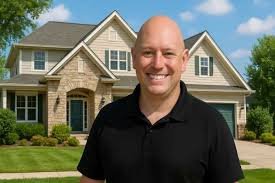
The hoa approval mortgage process confuses most Shenandoah Valley buyers because it involves several parties with different jobs. By the end of this guide you will know which condo or HOA townhome purchases need project review, how to collect the documents, and how monthly dues change your numbers. Duane Buziak, a mortgage broker, guides each step. Before you start, have a target property or price range and a rough monthly budget. The worked example in Step 5 shows how to test that budget.
Step 1: Find out whether your property triggers HOA or project review
Buyers in Harrisonburg (Rockingham County) and in Staunton and Waynesboro (Augusta County) run into this most often, because townhome and condo communities in these markets keep growing around JMU, the I-81 corridor, and the commuter routes into Charlottesville. The Virginia Department of Professional and Occupational Regulation keeps a registry of common interest communities through its Common Interest Community Board. Search it by locality to see which associations are registered near your target address. Treat the registry as a starting point and confirm any community’s details with its management company.
The first misconception to clear: the HOA does not approve your mortgage. The loan program (FHA, VA, USDA, or a conventional investor) reviews the condo or planned unit development as a project. Separately, some communities have their own buyer-approval or right-of-first-refusal rules in their governing documents. You may face one review, the other, or both.
A quick sort helps:
- Detached home in a small HOA: usually a lighter review, often little more than confirming the association is not a problem.
- PUD (planned unit development) townhome: review depends on the program and how the project is legally structured.
- Condo, or an attached townhome structured as a condo: expect full project review.
Your first action is to know your budget before any HOA paperwork starts. Duane Buziak, NMLS #1110647, runs a NoTouch Credit Pull pre-approval, so you can see a realistic payment range without a hard inquiry on your credit. That range tells you how much room is left once monthly dues are counted.
Step 2: Request the HOA documents your loan file will need
Once you have an accepted contract, ask the listing agent or the association’s management company for the Virginia resale or disclosure packet. The Virginia Property Owners’ Association Act and the Condominium Act, both in Title 55.1 of the Code of Virginia, govern what sellers must provide and when. Statutory details and the buyer’s cancellation window have changed over time, so confirm the current rules and your deadline with your Realtor or a real estate attorney.
Ask for these items:
- Current annual budget
- Most recent financial statements
- Reserve study or current reserve balance
- Insurance certificates for the master policy
- Recent meeting minutes
- Governing documents (declaration, bylaws, rules)
- Notice of any pending litigation or special assessment
Then there is the HOA lender questionnaire, a form the underwriter uses to evaluate the project. Management companies commonly charge a fee for completing it and can take days, sometimes longer in busy seasons. Request it the day the contract is ratified, and ask the listing agent whether the seller or buyer pays the fee.
Mistake to avoid: waiting for the appraisal to start the HOA paperwork. The appraisal and the project review run on separate clocks, and the slower one sets your closing date. Starting the documents late is one of the more common reasons a Valley closing slips.
Step 3: Match the project to the right loan program
Check programs in an order that fits your situation, because a project one program rejects another may accept.
- USDA. Confirm the address on the USDA single-family eligibility map. USDA allows zero down, which is a real advantage on a Valley townhome. Condo and PUD treatment is set in the agency’s guaranteed loan handbook, so verify the current requirements on the USDA Rural Development program page before assuming a project qualifies. Eligibility also depends on household income limits for your county.
- VA. Check whether the condo project is on VA’s approved list. If it is not, a veteran may still have a path, and VA’s process for that has been revised before, so see the current guidance on VA.gov and confirm with your broker.
- FHA. Search the property in HUD’s approved condominium search. Single-unit approval may be an option in some cases under current FHA rules, which your broker can confirm.
- Conventional. Fannie Mae and Freddie Mac set their own project standards. Fannie Mae’s published requirements are in its Selling Guide, which is updated regularly, so use the 2026 version.
This is where a broker matters. A single-bank shelf gives you one set of project rules and one answer. Duane Buziak has access to 500+ wholesale lenders, so if one program rejects the project, he shifts the file to another with a different appetite for that condo or townhome community. You keep your contract and timeline instead of starting over with a new bank.
Step 4: Screen the HOA’s finances for red flags before you pay for an appraisal
You can spot most project problems from the documents you gathered in Step 2, before spending on inspection or appraisal. Check the current Selling Guide before relying on specific numbers, since thresholds change.
- Reserves: Fannie Mae’s project standards have expected the budget to set aside reserves, commonly cited as at least 10% of the budget. Verify the current figure in the Selling Guide.
- Delinquency: a high share of owners behind on dues is a red flag. The commonly cited conventional threshold is 15% of units 60 or more days past due, so confirm and attribute it to the current guide.
- Litigation and special assessments: pending lawsuits or announced assessments can stall or sink a review.
- Owner mix: investor-heavy communities can be a problem, since programs look at the share of owner-occupied units. Communities near JMU or in vacation-rental areas like Luray deserve extra attention.
- Insurance gaps: inadequate master policy coverage is a common reason for denial.
- Deferred maintenance: aging roofs, failing paving, or structural issues the minutes keep postponing.
Decision rule: if two or more flags appear, send the packet to your broker for a pre-screen before you order anything. A pre-screen costs far less than an appraisal on a project that cannot close. If the price changes during negotiation, a second NoTouch Credit Pull lets Duane Buziak re-check your budget without adding a hard inquiry.
Step 5: Run the numbers with HOA dues included
Dues are part of your housing payment, and lenders count them in your debt-to-income ratio. Here is an illustration, not a quote: a $275,000 Waynesboro townhome with $185 per month in HOA dues and household income of $85,000 ($7,083 per month). Assumptions: a 6.25% rate on a 30-year fixed loan (chosen for illustration only), taxes of $230 per month, homeowners insurance of $90 per month, and $450 in other monthly debts.
Fee rates are as of 2026 and should be verified: USDA charges a 1.00% upfront guarantee fee and a 0.35% annual fee, while FHA charges a 1.75% upfront premium and, for this loan size and down payment, a 0.55% annual MIP. Both upfront fees are financed.
- USDA, $0 down: loan of $277,750 with the fee financed. Principal and interest are about $1,710, the annual fee adds $81, taxes $230, insurance $90, and dues $185. Total: about $2,296.
- FHA, 3.5% down ($9,625): base loan of $265,375, about $270,019 with the upfront premium. Principal and interest are about $1,663, MIP adds $122, taxes $230, insurance $90, and dues $185. Total: about $2,290.
The payments are nearly identical, but USDA needs no down payment. Closing costs are separate from both, and no-out-of-pocket closing options may be possible depending on negotiation and the program.
Now see what the dues do to the ratios on the USDA loan. Without dues, housing is $2,111, a front-end ratio of 29.8% and a back-end ratio (with the $450 in debts) of 36.2%. With dues, housing is $2,296, front-end 32.4% and back-end 38.8%. USDA’s standard benchmarks are commonly cited as 29% front-end and 41% back-end, so the dues push the front-end ratio past the standard line. Automated underwriting can sometimes approve higher ratios, so ask your broker. The FHA file moves similarly, from 29.7% front-end to 32.3%.
For context only: the 2026 conforming loan limit is $806,500, with a high-cost limit of $1,249,125. It matters mainly for higher-priced condos in Winchester or Frederick County, not for typical Waynesboro or Harrisonburg townhomes.
Step 6: Submit the project review and track it through closing
The sequence runs like this: the HOA questionnaire and documents go to the underwriter, the appraisal is ordered, the project decision comes back, and your rate lock has to cover all of it. Ask for a lock long enough to include the review time, because condo and PUD files often take longer than single-family purchases. Keep a written timeline shared with your Realtor and the title company so everyone works toward the same closing date.
Duane Buziak, NMLS #1110647, is a broker with $95.6M in production, 1,400+ five-star reviews, and Top 1% Nationwide recognition. He has been named a Scotsman Guide Top Originator for 2025 and 2026. Here is how the approach differs:
| Factor | Duane Buziak | ALCOVA Mortgage Staunton | Rocket Mortgage / Movement Mortgage |
|---|---|---|---|
| Lender type | Mortgage broker with access to 500+ wholesale lenders | Retail mortgage company; confirm current structure directly | Large national retail lenders; confirm current structure directly |
| Program shelf for condo and HOA files | FHA, VA, USDA, conventional, and jumbo options matched across hundreds of wholesale rate sheets | Company’s own program lineup; confirm condo and USDA options with them | In-house program lineup; confirm project review practices with each |
| Rejected project | File shifts to another program or wholesale lender | Ask how they handle it before applying | Ask how they handle it before applying |
| Pre-approval without a hard pull | NoTouch Credit Pull pre-approval | Ask whether offered | Ask whether offered |
Competitor details change, so verify them with each company before you decide.
If the project is denied, you generally have three options: move the file to a different program or investor, switch to another unit or community, or ask the HOA to correct the issue, such as an insurance gap or an incomplete questionnaire, and resubmit. Do not let a denial sit; every day counts against your lock and closing date.
HOA Approval Mortgage FAQ for Valley Buyers
Does a Harrisonburg condo need project approval for an FHA loan?
Generally yes. FHA typically requires the condo project to be on HUD’s approved list, though some single-unit approval options may apply under current rules. Search the project in HUD’s approved condominium database and confirm the current FHA requirements with your broker before making an offer.
How long does HOA document delivery take in Staunton?
It varies by management company and season, and often runs from a few days to a couple of weeks. Virginia law sets deadlines for resale packets, so confirm them with your Realtor. Requesting the packet and questionnaire the day the contract is ratified is the best way to stay on schedule.
Can a Waynesboro townhome qualify for USDA in 2026?
Possibly. The address must be in a USDA-eligible area on the agency’s map, your household income must fall within the county limit, and the project must meet USDA’s property requirements. Check the eligibility map first, since eligibility is address-specific and can change.
Do Rockingham County HOA dues count toward debt-to-income?
Yes. Lenders and underwriters include monthly HOA dues in your housing payment, which raises both front-end and back-end ratios. A $185 monthly fee can noticeably reduce your buying power, so include dues in every payment estimate you run.
What if a Winchester HOA has a special assessment?
It can complicate approval. A pending or announced special assessment may be reviewed as a financial risk to the project, and it adds cost for you. Ask the management company for details and send them to your broker early to see how your program treats it.
Can a Front Royal buyer use a VA loan in a condo?
Often yes, if the condo project meets VA requirements, which include being on VA’s approved list. If the project is not listed, other paths may exist. Verify the current process on VA.gov or with your broker before relying on any approach.
Does a Luray community with few owner-occupants cause trouble?
It can. Programs commonly look at the share of owner-occupied units, and communities with many investors or short-term rentals can fail project review for some loan types. Check the owner mix in the HOA documents early, then ask your broker which programs may still work.
How does a broker pre-screen an HOA before the appraisal?
A broker reviews the budget, reserves, delinquency, insurance, litigation, and owner mix against each program’s project standards, then identifies which lender or program is likely to accept it. This catches problems before you pay for an inspection or appraisal.
Next Steps with Duane Buziak, Disclaimer, and Credentials
Check that the HOA packet has been requested, that the project passes the review of the program you chose, and that the dues-inclusive payment fits your budget. Then send the property address and HOA packet to Duane Buziak for a pre-screen before you spend on an appraisal. Contact our local mortgage experts today to explore personalized loan solutions tailored to your unique financial situation. Whether you’re a first-time buyer or looking to refinance, we’ll guide you through every step with the competitive rates and trusted service our Virginia community relies on.