
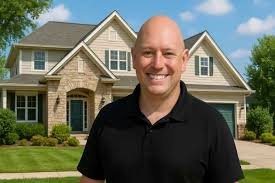
A $300,000 home outside Harrisonburg can look very different on paper depending on the financing path. In the FHA vs conventional Virginia decision, the better choice is not always the loan with the smallest down payment. It is the one that fits your credit profile, cash reserves, property type, and plans for keeping the home.
For buyers in Rockingham, Augusta, Rockbridge, Shenandoah, and Warren counties, there is another question worth asking before choosing either: Is the property USDA-eligible? Much of the Valley and Blue Ridge foothills may qualify, and USDA can be a stronger first look for eligible buyers. Still, FHA and conventional mortgages are two core options, especially for buyers in Charlottesville, Staunton, Waynesboro, Front Royal, and Harrisonburg.
I am Duane Buziak, NMLS #1110647, a Virginia mortgage broker with Coast2Coast Mortgage LLC. My job is to put the numbers side by side before you commit to a house or a payment.
Table of Contents
- FHA and conventional at a glance
- The down payment and credit trade-off
- A worked Virginia purchase example
- Mortgage insurance and long-term cost
- When USDA or VA may beat both choices
- Why broker choice matters in the Valley
- Eight local FAQs
FHA vs conventional Virginia: the practical difference
FHA is built to give buyers with limited down payment funds or less-than-perfect credit a path to ownership. A borrower with a 580 credit score may qualify with 3.5% down, subject to full underwriting. FHA can also work below 580 with 10% down in qualifying circumstances. Its underwriting is often more forgiving about past credit events, debt-to-income questions, and thin credit histories.
Conventional financing can start as low as 3% down for certain qualified first-time or income-eligible buyers, while many buyers choose 5%, 10%, or 20% down. It generally rewards stronger credit more aggressively. With solid credit, conventional mortgage insurance can be lower than FHA’s ongoing cost, and it can eventually be removed once equity requirements are met.
| Decision point | FHA | Conventional | Best fit around the Valley |
|---|---|---|---|
| Minimum down payment | 3.5% with a 580+ score | Often 3% to 5% for qualified buyers | FHA when cash is tight; conventional when credit supports it |
| Credit flexibility | More forgiving in many files | Pricing improves substantially with higher scores | FHA can help a buyer rebuilding credit |
| Mortgage insurance | Upfront and annual FHA mortgage insurance | Private mortgage insurance is usually removable | Conventional may win for long-term ownership |
| Property condition | Appraisal standards can be stricter | Often more flexible, depending on the program | Conventional may suit a home needing cosmetic work |
| Loan limits in 2026 | County-specific FHA limits apply | $806,500 baseline; $1,249,125 high-cost ceiling | Conventional is useful for larger Charlottesville purchases |
Down payment is only the first number
A 3.5% FHA down payment is attractive because it preserves savings for moving, repairs, or a reserve account. But a conventional borrower who can bring 5% down may have a lower balance and, with good credit, a lower monthly insurance expense. Neither result is automatic. Rate, credit score, occupancy, debt ratio, and the insurance quote all matter.
FHA also has property standards. A peeling exterior surface, a missing handrail, or an aging roof may create a repair discussion during appraisal. That can matter on older homes in Staunton, rural farmhouses near Broadway, or properties with deferred maintenance around Front Royal. Conventional financing is not a free pass on condition, but it can be the cleaner route for some properties.
A worked $300,000 Valley home example
Assume you are buying a $300,000 primary residence in Augusta County. The following is an illustration, not a rate quote.
With FHA at 3.5% down, the down payment is $10,500. The base loan amount is $289,500. FHA’s 1.75% upfront mortgage insurance premium equals $5,066.25, so the financed starting balance becomes $294,566.25. Using a 0.55% annual FHA mortgage insurance rate, the monthly FHA mortgage insurance is about $132.69 based on the base loan amount.
With conventional financing at 5% down, the down payment is $15,000 and the loan amount is $285,000. That requires $4,500 more cash for the down payment than FHA. If an illustrative private mortgage insurance quote is 0.65% annually, monthly PMI is about $154.38. That conventional PMI may be cancellable later when the required equity and payment history standards are met; FHA mortgage insurance commonly lasts much longer with a minimum-down-payment loan.
The immediate FHA cash advantage is $4,500 in down payment funds. The conventional loan starts with a balance that is $9,566.25 lower when you include FHA’s financed upfront premium. A buyer planning to stay seven to 10 years may reasonably value conventional’s potential mortgage-insurance exit. A buyer who needs to protect cash reserves may reasonably choose FHA instead.
Closing costs are separate from the down payment. Depending on pricing, seller concessions, and the transaction, ask about no-out-of-pocket closing options. That phrase does not mean costs disappear. It means eligible costs may be covered through credits, concessions, or financing structure, subject to program rules and approval.
Do not skip USDA and VA in rural Virginia
For many Valley buyers, FHA versus conventional is not the final comparison. USDA financing can offer 100% financing on eligible properties for households within applicable income limits. The USDA upfront guarantee fee is typically financed. On a $300,000 eligible purchase with no down payment, a 1% guarantee fee would be $3,000, producing a starting financed balance of $303,000 before other allowable financed items. USDA’s annual fee may also be lower than some FHA insurance scenarios.
The USDA Property Eligibility map is the right starting point for rural-address questions. Areas just outside town limits can qualify even when buyers assume they do not. Program income limits count household income, which is a frequent source of confusion for multigenerational Valley households.
Veterans and eligible service members should compare VA financing as well. VA can offer no-down-payment financing, and some borrowers may be exempt from the funding fee. For a first-use, non-exempt VA purchase at 0% down, a 2.15% funding fee on a $300,000 loan would equal $6,450 if financed. VA cash-out refinancing can reach 100% loan-to-value, while conventional cash-out refinancing is capped at 90% loan-to-value.
Start with a soft credit conversation
You should be able to explore your range before making offers. Mortgage Maestro’s NoTouch Credit Pull is designed for an initial review without forcing a traditional hard inquiry at the first conversation. It can support a soft credit pull mortgage discussion, a no hard inquiry mortgage pre approval review, and a mortgage pre approval without hard pull planning conversation.
A soft pull mortgage broker review is useful when you are six months out, comparing FHA with USDA, or working through a credit repair plan. It is also a practical answer for buyers asking for a no credit hit mortgage application before they are ready to submit a full file. NoTouch Credit Pull does not replace full underwriting, but it can replace guesswork with a more useful starting plan.
A broker comparison matters more than a logo
Local names deserve respect. Tonja Showalter Armentrout at F&M Mortgage has a long Valley presence. Jake Adler and The Adler Mortgage Team, ALCOVA Mortgage Staunton, Bruce Burner at Benchmark Mortgage, C&F Mortgage Waynesboro, and Movement Mortgage Harrisonburg all serve local buyers. Rocket Mortgage is a national online mortgage company many shoppers use for a rate comparison, while Movement Mortgage is often considered for processing speed.
The difference is product access and process, not a personal criticism of any individual. A retail mortgage company generally works from one product shelf. As an independent broker with access to 500+ wholesale options, I can compare FHA, conventional, USDA, VA, Dynamo DPA, Turbo DPA, Homes for Heroes, bank statement, and DSCR paths where appropriate. That matters when a rural property, income-limit question, or credit profile does not fit a one-size option.
My USDA focus and 24-Hr Guarantee are built for buyers who need a direct answer before a competitive offer window closes. Scotsman Guide recognized my production among its Top Originators in 2025 at #114 and $44.4 million, followed by $51.2 million in 2026. The useful measure for you is simpler: do you have a clear comparison before you write the contract?
FAQs for Blue Ridge and Shenandoah Valley buyers
Is FHA or conventional better for a first-time Harrisonburg buyer?
FHA can be better with limited cash or credit below the range where conventional pricing improves. Conventional can be better when credit is strong and you expect to keep the home long enough to remove PMI.
Can I use FHA for a home near Staunton that needs repairs?
Possibly, but FHA appraisal standards may require certain safety or condition repairs before closing. Review the specific property before assuming FHA is the easiest route.
Are homes outside Waynesboro eligible for USDA?
Many addresses beyond town centers may be eligible, but eligibility is address-specific. Check the USDA Property Eligibility map and household income before relying on USDA.
Does conventional always require 20% down in Charlottesville?
No. Qualified buyers may use 3%, 5%, or other down payment levels. Twenty percent can eliminate PMI, but it is not a universal requirement.
Can a veteran in Front Royal compare VA against FHA?
Yes, and they should. VA may offer a no-down-payment path and can be especially compelling for eligible veterans, though funding-fee status and the full payment must be reviewed.
Will NoTouch Credit Pull affect my score?
The initial NoTouch Credit Pull is intended for planning without a traditional hard inquiry. A full application and final approval process can require additional credit steps.
What if my USDA household income is over the limit in Rockingham County?
Conventional, FHA, VA if eligible, or a different property and household structure may be considered. USDA income calculations should be reviewed early because they can include income beyond the borrowers on the note.
Can I get no-out-of-pocket closing options with FHA or conventional?
Potentially, depending on pricing, seller concessions, appraisal, and program rules. Review the loan estimate and contract structure rather than assuming every cost can be covered.
The right loan should leave you comfortable after closing, not merely qualified on contract day. Bring the property address, estimated income, down payment funds, and timing to the first conversation, and we can compare the payment and cash-to-close paths honestly.
Duane Buziak, Mortgage Maestro Coast2Coast Mortgage LLC NMLS #1110647 (804) 212-8663 duane@coast2coastml.com 3302 Haydenpark Lane, Henrico, VA 23233 Licensed: VA, FL, TN, GA, DC
Not a commitment to lend. Rates subject to change. Equal Housing Lender. Coast2Coast Mortgage LLC NMLS #376205. Duane Buziak NMLS #1110647.