
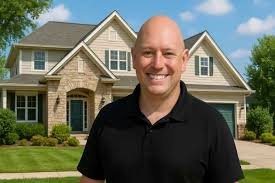
Building near Broadway, Lexington, Elkton, or the Blue Ridge foothills is rarely as simple as finding a floor plan and breaking ground. You have to line up the land, builder, budget, inspections, and permanent financing in the right order. This construction loan process guide explains how Shenandoah Valley buyers can do that without getting caught by avoidable timing or cash-flow surprises.
I am Duane Buziak, NMLS #1110647, a mortgage broker with Coast2Coast Mortgage LLC. My job is to help buyers compare the right financing path across a broad wholesale market, particularly when a rural property does not fit a one-size-fits-all approval process.
Table of Contents
- The construction financing path
- Start with land, builder, and budget
- Approval and appraisal
- Draws during construction
- Worked construction-loan example
- USDA, VA, FHA, and conventional options
- Broker versus bank choices
- Frequently asked questions
The construction loan process guide: the basic path
Most buyers use a construction-to-permanent loan. It begins as short-term financing for the build, then converts to a regular mortgage once the home is complete. That structure can mean one approval and one closing, but availability depends on the program, property type, builder qualifications, and your financial profile.
The sequence matters. First, confirm the land can support the home you plan to build. Next, select a licensed, insured builder whose contract and plans can be reviewed. Then submit the complete package for approval and appraisal. Once construction begins, funds are released in draws after progress inspections. At completion, the loan converts or is replaced by permanent financing, depending on the structure chosen.
A lot purchase without a clear financing plan is where Valley buyers get stuck. A beautiful parcel outside Staunton may need a well, septic evaluation, road access, and a realistic site-work budget before it can be financed comfortably.
Start with the three documents that drive approval
The home plans, signed builder contract, and land contract or deed form the backbone of a construction file. The builder contract should clearly separate the base home price from allowances for excavation, driveway work, septic, well, utility connections, and change orders. If those costs are vague, the final budget can be too.
Your broker also reviews income, assets, credit, monthly obligations, and the expected finished value. A soft credit pull mortgage review can help you understand the starting point before a full application decision. Mortgage Maestro offers NoTouch Credit Pull reviews for buyers who want early clarity without rushing into a traditional credit event.
Ask for a no hard inquiry mortgage pre approval conversation when you are still comparing land or builders. A mortgage pre approval without hard pull review is useful for planning, although final underwriting may require additional verification. A soft pull mortgage broker can identify likely issues early, such as USDA household-income limits, self-employment documentation, or a debt ratio that needs adjustment. It is not the same as a final approval, but it is a smarter place to start than guessing.
For rural eligibility, verify the exact property address on the USDA Property Eligibility map. Much of Rockingham, Augusta, Rockbridge, Shenandoah, and Warren County can qualify, while eligibility changes street by street near larger towns. USDA publishes the map and program information directly; check the official USDA Rural Development Property Eligibility resource before writing a land contract.
Approval, appraisal, and builder review
Construction appraisals are based largely on the proposed finished home, not just what exists on the lot today. The appraiser uses your plans, specifications, contract, and comparable completed homes. This is why upgrades deserve scrutiny. A $40,000 design choice may not add $40,000 to appraised value.
The builder will usually need to provide a license, insurance, references, construction experience, a draw schedule, and project documents. Owner-builder projects are more limited and generally require specialized review. Manufactured housing, log homes, acreage, and private roads can also change the financing options.
Do not assume the lot price and construction cost are the only numbers. Carry reserves for site work and changes, especially in mountain or rural settings where rock removal, grading, wells, septic systems, and utility extensions can move the budget quickly.
What happens during draws
Construction funds are not handed over all at once. They are released in scheduled draws as work is completed. A typical schedule follows major milestones such as foundation, framing, dried-in exterior, mechanical systems, interior completion, and final certificate of occupancy.
The builder requests a draw, an inspection confirms progress, and the funds are released according to the approved process. Interest is commonly charged on the amount disbursed, not the entire loan balance from day one. That can help during the build, but you still need a plan for rent, your current mortgage, and construction interest if you are carrying two housing payments.
A no credit hit mortgage application discussion can also help before you commit to a long build timeline. NoTouch Credit Pull is especially practical for buyers who need to compare a USDA route, a VA route, and conventional financing before choosing a parcel.
Worked example: USDA construction math
Assume you are buying a $75,000 lot and building a $325,000 home. Your total eligible project cost is $400,000. If the property and household qualify for USDA, the program can offer 100% financing, subject to underwriting and program rules.
The USDA upfront guarantee fee in this example is 1.00% of the base loan amount. One percent of $400,000 is $4,000. If financed into the loan, the total starting loan becomes $404,000.
At a hypothetical 6.50% fixed rate for 30 years, principal and interest on $404,000 is about $2,554 per month. By comparison, putting 10% down on a conventional $400,000 project means bringing $40,000 down and financing $360,000 before other costs. That conventional principal-and-interest payment at the same assumed rate is about $2,275 per month, but it may include mortgage insurance and requires substantially more cash upfront.
The trade-off is plain: USDA may preserve $40,000 in cash for a qualified buyer, while the higher financed balance increases the monthly payment. USDA has income and property eligibility rules, so it depends on the household and address.
| Program | Typical cash down | Best fit | Key construction consideration |
|---|---|---|---|
| USDA | Potentially 0% | Eligible rural Valley homes | Income limits, address eligibility, approved builder |
| VA | Potentially 0% | Eligible veterans and service members | Entitlement, builder approval, property standards |
| FHA | As low as 3.5% | Buyers needing flexible credit options | Construction availability varies by program |
| Conventional | Varies | Strong credit, larger or unique projects | More flexibility, but reserves may be higher |
Which program makes sense in the Valley?
USDA is often the first program worth testing for buyers building outside Charlottesville’s urban core or in the Shenandoah Valley’s rural-eligible communities. It can address the down-payment barrier, but total household income matters, and the property must meet eligibility standards.
VA construction financing deserves a close look for eligible veterans. A VA purchase can offer 100% financing, subject to entitlement and approval. For reference, a 2.15% first-use VA funding fee on a $400,000 base loan would be $8,600 if financed, producing a $408,600 starting balance. Funding-fee rules vary by use and exemption status. VA cash-out refinances are available up to 100% LTV for qualified borrowers, while conventional cash-out is generally capped at 90% LTV.
FHA may fit buyers who need more flexible credit treatment. For buyers with a completed home rather than a ground-up build, Dynamo DPA, Turbo DPA, Homes for Heroes, bank statement financing, and DSCR options may also deserve review. The right answer depends on occupancy, income documentation, property type, and timing.
Broker versus bank: why comparison matters
A construction loan is not the moment to accept the only option presented. F&M Mortgage, including Tonja Showalter Armentrout’s Valley presence, has local recognition and USDA experience. Jake Adler and The Adler Mortgage Team, ALCOVA Mortgage Staunton, Bruce Burner at Benchmark Mortgage, C&F Mortgage Waynesboro, and Movement Mortgage Harrisonburg each offer familiar retail paths.
The difference is product shelf and comparison range, not a criticism of any individual. A retail bank or mortgage company typically works from its own available menu. As an independent broker, I can compare options across 500+ wholesale lenders and focus on USDA depth, builder requirements, and rural property details. Rocket Mortgage can be useful as a national online rate comparison, while Movement Mortgage is often part of a processing-speed comparison. Ask every provider the same questions about land equity, draw inspections, extension fees, rate locks, and permanent-loan conversion.
Frequently Asked Questions
Can I use USDA to build in Rockingham or Augusta County?
Possibly. Many addresses are rural-eligible, but USDA eligibility is determined by the exact property address, household income, and program requirements.
Can a VA loan finance a new home build in the Shenandoah Valley?
Yes, qualified VA buyers may have construction financing options. Builder approval, entitlement, project details, and property standards must all be reviewed.
Do I need to own the land before applying?
No. You can finance land and construction together in many cases. Owning the lot already may provide equity that can support the project.
How long does construction financing take?
Approval timing depends on document readiness, appraisal complexity, builder review, and program selection. The build itself commonly takes many months, so plan for delays.
What credit score is needed for a construction loan?
Requirements vary by program. VA may be available down to a 500 FICO score with the right overall file, while other programs may require higher scores.
Are wells and septic systems allowed with USDA financing?
They can be, provided the property meets applicable requirements and the project budget, appraisal, and inspections support the work.
Can I get no-out-of-pocket closing options on a construction project?
Sometimes, but it depends on the program, pricing, seller or builder contributions, and the structure of the transaction. It should be reviewed before contracts are signed.
When should I start a soft credit review?
Start before making an offer on land or signing a builder contract. A soft credit pull mortgage review gives you time to address documentation and payment questions.
Building a home should feel like a well-planned local project, not a chain of expensive surprises. Bring the land details, builder contract, and rough budget to the first conversation, and we can pressure-test the financing before the excavation starts.
Duane Buziak, Mortgage Maestro | Coast2Coast Mortgage LLC | NMLS #1110647 | (804) 212-8663 | duane@coast2coastml.com | 3302 Haydenpark Lane, Henrico VA 23233 | Licensed: VA, FL, TN, GA, DC
Not a commitment to lend. Rates subject to change. Equal Housing Lender. Coast2Coast Mortgage LLC NMLS #376205. Duane Buziak NMLS #1110647.