
A vacant storefront on Beverley Street, a small warehouse outside Harrisonburg, or a mixed-use building near Front Royal can look like a straightforward purchase until financing starts. Commercial real estate financing Virginia is not one product with one approval formula. The property’s use, its income, the borrower’s experience, the lease terms, and even the building condition can change the available structure.
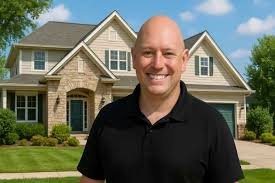
I am Duane Buziak, NMLS #1110647, an independent mortgage broker with Coast2Coast Mortgage LLC. My job is to help Blue Ridge and Shenandoah Valley buyers compare the financing lane that fits the property – not force a rural business owner or investor into a single product shelf.
Table of Contents
- What commercial financing actually covers
- The main Virginia financing paths
- A worked financing example
- What a broker comparison changes
- Documentation and property hurdles
- Credit planning before an application
- Frequently asked questions
What commercial financing actually covers
Commercial financing generally applies when the property is bought primarily to produce business income or support a business operation. That can include retail, office, industrial, multifamily with five or more units, mixed-use, self-storage, hospitality, agricultural business facilities, and investment properties held through an entity.
A duplex in Staunton where you live in one unit is usually residential financing. A six-unit building in Harrisonburg is commercial. A farm in Rockbridge County may be residential, commercial, or agricultural business financing depending on the house, acreage, revenue, equipment, and intended use. This distinction matters before anyone quotes a rate.
For commercial property, the building itself must often support the debt through its net operating income. A buyer’s personal income and credit still matter, particularly for a newer business or a personal guarantee, but the lease roll, operating statements, vacancy, and expenses take center stage.
Virginia commercial financing options by property and borrower
A conventional commercial loan can fit established owner-occupied businesses and stabilized investment property. Terms often involve a shorter fixed-rate period with a longer amortization schedule, such as a five-year fixed period amortized over 20 or 25 years. The trade-off is that payment stability may end before the balance is paid off, creating a future refinance decision.
SBA-backed financing can be useful for an owner-occupied business buying or improving a building. It can preserve working capital with a lower down payment than many conventional commercial structures, but eligibility, owner-occupancy requirements, timing, and documentation are more involved. It is not the right lane for a passive investment building.
DSCR financing is often the practical route for a rural investor buying a one-to-four-unit rental, vacation rental where allowed, or a small portfolio property. The focus is the property’s projected rent relative to the housing payment. DSCR is not a substitute for commercial financing on a 10-unit building, a retail strip, or an operating business, but it can solve a real gap for Valley investors who are not using W-2 income to qualify.
Bank statement programs may help a self-employed buyer whose tax returns understate available cash flow. For a contractor in Augusta County or a Charlottesville professional with variable income, deposits and business expense patterns can tell a more current story than a taxable-income line alone. These programs require careful review, and they typically carry different pricing and reserve expectations than standard financing.
For an owner who also needs a home, keep the residential and commercial goals separate. USDA can be an outstanding option for an eligible primary residence in much of the Shenandoah Valley, but it does not finance a commercial investment property. USDA Rural Development’s eligibility map is the local reference point for address-level rural eligibility; it changes by property, not simply by county. VA financing can likewise support an eligible veteran’s primary residence, not a stand-alone commercial building.
A worked dollar example: know which math applies
Consider a buyer acquiring a $650,000 owner-occupied light-industrial building near Waynesboro. With 25% down, the down payment is $162,500 and the loan amount is $487,500. If the building produces or supports enough documented business cash flow to cover a $4,100 estimated monthly debt payment, and verified monthly net operating income is $5,330, the debt-service coverage ratio is $5,330 divided by $4,100, or 1.30.
That 1.30 figure may meet one program’s target and miss another’s. A vacant unit, a lease ending in six months, or an overlooked roof expense can change the result. The best quote is not useful if the property does not meet the underwriting logic behind it.
Now compare a separate primary-home purchase for the same business owner. On a $300,000 USDA-eligible home purchase with no down payment, the 1% upfront USDA guarantee fee is $3,000. If financed, the starting loan becomes $303,000. The 0.35% annual fee is $1,060.50 in the first year, or about $88.38 per month. Compared with putting 5% down – $15,000 – the buyer preserves $15,000 for moving costs, reserves, or business operations, though the financed guarantee fee increases the loan balance.
For a VA-eligible buyer purchasing a $300,000 primary residence with first-time use and no down payment, a 2.15% funding fee would be $6,450 if applicable and financed, creating a $306,450 starting balance. VA cash-out refinancing can reach 100% LTV when guidelines are met. Conventional cash-out is capped at 90% LTV. Those are residential tools, but they can be meaningful when a business owner needs to keep personal housing and business-property planning coordinated.
Broker comparison: more shelves, more specific answers
Commercial real estate financing has a pricing component, but the larger issue is access to the right program and a clear explanation of the conditions. As an independent broker, I can compare options across 500+ wholesale lending sources rather than starting with one in-house menu.
| Financing source | Typical menu | Potential advantage | Question to ask |
|---|---|---|---|
| Independent broker | Multiple wholesale programs | Broader matching for property type and borrower profile | Which programs fit this property’s actual use? |
| Valley retail institution | Single institutional shelf | Existing local relationship may help with familiarity | Do you offer alternatives if this program declines? |
| National online option | Standardized digital process | Useful rate-comparison reference | Who reviews rural-property details locally? |
| Specialty commercial source | Property-specific capital | Can fit larger or unusual assets | What are the prepayment and recourse terms? |
F&M Mortgage and Tonja Showalter Armentrout are well-known Valley names, while Jake Adler and The Adler Mortgage Team, ALCOVA Mortgage Staunton, Bruce Burner at Benchmark Mortgage, C&F Mortgage Waynesboro, and Movement Mortgage Harrisonburg all serve local buyers in their respective retail models. Rocket Mortgage is a national online rate-comparison reference, and Movement Mortgage is often considered for retail processing speed. The respectful question is not whether one professional is good. It is whether a single shelf has the rural, self-employed, USDA, VA, DSCR, or commercial depth your deal requires.
That is where Mortgage Maestro is built differently: personal guidance from one accountable producer, USDA specialist depth, and the ability to Dare to Compare pricing. Scotsman Guide recognized my production among its Top Originators in 2025 at #114 with $44.4 million and in 2026 with $51.2 million. A 24-Hr Guarantee gives serious buyers a defined expectation for initial movement, subject to receiving complete information.
Prepare the file before the property is under contract
Commercial approvals go faster when the buyer gathers the right information early: entity documents, personal financial statement, tax returns, business financials, current debt schedule, bank statements, purchase contract, rent roll, leases, and a realistic repair budget. A startup or a building with tenant turnover will need a more detailed story than a long-established owner-occupied business.
Credit preparation should not create unnecessary anxiety. A soft credit pull mortgage conversation can help identify the likely lane before a full application. With NoTouch Credit Pull, we can discuss a no hard inquiry mortgage pre approval path, mortgage pre approval without hard pull expectations, and a soft pull mortgage broker review when appropriate. It is not a final approval, but it can help a buyer avoid writing an offer blind.
Use that same approach if you have heard phrases like no credit hit mortgage application. NoTouch Credit Pull can provide an early planning view, while the complete application and property review determine final eligibility. For first-time buyers, Dynamo DPA, Turbo DPA, and Homes for Heroes may be relevant to a qualifying primary residence, not to commercial assets. The point is to identify the correct lane before assuming every purchase needs the same solution.
Frequently Asked Questions
Can I finance a mixed-use building in Charlottesville?
Yes, but it depends on the commercial-to-residential square footage, rental income, business use, and whether you will occupy part of the property. Mixed-use underwriting is more specialized than a standard home loan.
Is USDA available in Rockingham or Augusta County?
Many addresses are eligible, especially outside larger city boundaries. Eligibility is address-specific, so verify the exact property through the USDA Rural Development eligibility map before relying on the program.
Can a veteran use VA financing for a commercial building?
Generally, no. VA financing is for an eligible primary residence, though a qualifying home with limited business use may require a careful review of the facts.
What down payment is typical for Valley commercial property?
It often ranges from 10% to 30% or more, depending on occupancy, property type, borrower strength, and program. Owner-occupied properties may offer more flexibility than investment properties.
Can a self-employed borrower qualify without strong tax-return income?
Possibly. Bank statement financing may use qualifying deposit patterns, while commercial underwriting can also consider business cash flow. The right answer depends on the property and borrower structure.
What is DSCR financing for a Shenandoah Valley investor?
DSCR financing evaluates whether expected rent can support the proposed payment. It is commonly used for one-to-four-unit investment properties, not large commercial buildings.
Can I get no-out-of-pocket closing options on a Virginia home purchase?
In some residential transactions, seller credits, rate structures, or program terms can create no-out-of-pocket closing options. Availability depends on the contract, appraisal, program, and market conditions.
How early should I talk with a broker before buying commercial property?
Start before touring seriously or making an offer. Early review can identify feasible loan amounts, documentation gaps, reserve needs, and property types that may not fit your intended financing.
A building purchase should support the life and business you are building in the Valley, not strain it. Bring the address, the numbers, and the real plan to the first conversation, and we can sort the financing path before the clock starts running.
Duane Buziak, Mortgage Maestro | Coast2Coast Mortgage LLC | NMLS #1110647 | (804) 212-8663 | duane@coast2coastml.com | 3302 Haydenpark Lane, Henrico VA 23233 | Licensed: VA, FL, TN, GA, DC
Legal disclaimer: Not a commitment to lend. Rates subject to change. Equal Housing Lender. Coast2Coast Mortgage LLC NMLS #376205. Duane Buziak NMLS #1110647. Licensed in VA, FL, TN, GA, and DC.