
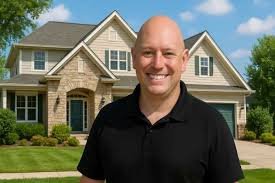
Blue Mountain Mortgages by Duane Buziak helps buyers sort through home loans in the Shenandoah Valley, where a $275,000 purchase in Augusta or Rockingham County can cost thousands of dollars more or less depending on the program. The same house can need $0 down under one loan and nearly $14,000 under another, and the monthly payments can differ by $100 or more. Rate is only one input.
The seven strategies below are ordered by how often they save Valley buyers money, starting with the programs that can remove the down payment. Each one comes with a worked illustration, steps, the mistake to avoid, and the number to track. Dollar examples use stated assumptions, not live quotes. Rates, fees, and limits change, so confirm current figures as of October 2026. Written by Duane Buziak, NMLS #1110647.
In this guide
- 1. Check USDA Rural Development Eligibility First
- 2. Use VA Loan Entitlement if You Have Served
- 3. Compare FHA and Conventional on Total Monthly Cost, Not Rate Alone
- 4. Work With an Independent Broker to Widen Your Loan Shelf
- 5. Look Up Down Payment Assistance Before You Commit to a Program
- 6. Get Pre-Approved With a NoTouch Credit Pull
- 7. Match the Loan to the Property: Jumbo, Investment, and Refinance Paths
- Valley Home Loan Questions, Answered
- Where to Start: Run the USDA and VA Checks, Then Compare
1. Check USDA Rural Development Eligibility First
A USDA Rural Development loan is a government-backed mortgage with no down payment requirement. Many buyers assume it is only for farms. It is not: the program covers eligible areas, and that includes plenty of towns and county edges near Staunton, Luray, Woodstock, and Front Royal. Eligibility depends on two tests, the property’s location and your household income, so test both before you decide you need to save a down payment.
Consider an illustration. Suppose you buy a $275,000 home in a USDA-eligible area near Staunton and assume a 6.25% rate on a 30-year term for both programs (an assumption, not a quote). With USDA, you put $0 down and finance the 1.00% upfront guarantee fee, for a loan of $277,750. Principal and interest is about $1,710, and the 0.35% annual fee adds roughly $81 a month, for about $1,791. With FHA at 3.5% down, you bring $9,625, finance a 1.75% upfront premium on a $265,375 base loan (about $270,019 total), and pay about $1,663 principal and interest plus roughly $124 in monthly MIP, for about $1,786. The monthly payments are nearly identical. The difference is $9,625 of cash. Fee percentages are as of October 2026 and should be confirmed.
To put this into practice:
- Enter the exact property address on the USDA property eligibility map.
- Pull the current income limit for your county and household size from USDA Rural Development.
- Gather pay stubs, W-2s, and tax returns for every adult in the household.
- Ask Duane Buziak to confirm eligibility against the live map and current limits.
The common mistake is assuming a town qualifies because it feels rural, or comparing only the borrower’s paycheck to the limit. USDA counts household income, which can include other adults living in the home. Eligibility also changes address by address, so one side of a road can qualify while the other does not.
Measure cash needed to close and the monthly payment against the FHA alternative. If USDA saves thousands in cash at a similar payment, it is usually the first lane to pursue.
2. Use VA Loan Entitlement if You Have Served
The VA home loan lets eligible veterans and service members buy with no down payment and no monthly mortgage insurance. The mortgage insurance saving is the mechanism that matters. On a conventional loan with less than 20% down, PMI is a recurring cost. VA replaces it with a one-time funding fee, and that fee is waived entirely for veterans receiving VA compensation for a service-connected disability.
Take an illustration at the same assumed 6.25% rate. You buy a $310,000 home with 0% down and your funding fee is waived because of a service-connected disability. The loan is $310,000 and principal and interest is about $1,909, with no mortgage insurance. Compare conventional at 5% down: $15,500 down, a $294,500 loan, principal and interest of about $1,813, and PMI that we assume at 0.55% a year, or about $135 a month. That is roughly $1,948. The VA buyer pays about $39 less each month and keeps $15,500 in the bank. In practice VA pricing is often lower than conventional, which widens the gap, but treat that as a quote-by-quote question.
Steps to get started
- Request your Certificate of Eligibility through VA.gov, or ask Duane Buziak to pull it with you.
- Locate your DD-214 or, for active duty, a statement of service.
- Confirm your disability rating status, because it decides whether the funding fee applies.
- Decide how much entitlement you want to use if you already have a VA loan.
Two mistakes come up repeatedly. Some veterans skip VA because they assume the process is slow or the appraisal rules are a hassle, then pay PMI for years on a conventional loan. Others assume the funding fee is always waived. It is waived based on disability compensation, not on service alone.
Measure the monthly payment without mortgage insurance and the total cash to close. If VA wins on both, the decision is simple.
3. Compare FHA and Conventional on Total Monthly Cost, Not Rate Alone
Credit score changes which of these loans costs less, and the rate does not tell you that by itself. FHA mortgage insurance premium (MIP) is nearly flat across credit scores, so it is comparatively kind to a 680 borrower. Conventional private mortgage insurance (PMI) is priced by score and down payment, so it is punishing at 680 and cheap at 740. Both programs are explained at HUD.gov and the CFPB.
Here is an illustration on a $275,000 purchase, with every figure an assumption. FHA: 3.5% down ($9,625), 6.25% rate, 1.75% financed upfront MIP, 0.55% annual MIP, about $1,786 a month at either score. Conventional at 5% down ($13,750, a $261,250 loan):
- 680 score: assumed 6.625% rate and 1.00% PMI, about $1,673 principal and interest plus $218 PMI, or about $1,891 a month. FHA is roughly $104 cheaper, about $6,250 over five years.
- 740 score: assumed 6.25% rate and 0.45% PMI, about $1,609 plus $98 PMI, or about $1,707 a month. Conventional is roughly $80 cheaper, about $4,790 over five years.
The long-term picture differs too. On FHA with less than 10% down, MIP generally stays for the life of the loan, so you exit by refinancing or selling. Conventional PMI can be removed once you reach the required equity, a process described by the CFPB.
To compare fairly, request both quotes on the same day with the same price, down payment, and closing date. Then line up payment, cash to close, and the point where mortgage insurance ends. The classic mistake is picking the lowest rate and ignoring MIP or PMI, which can erase the rate advantage. Track total monthly payment and five-year cost.
Program snapshot for Valley buyers
- USDA: 0% down, eligible addresses only, household income limit, 1.00% upfront and 0.35% annual fees as of October 2026.
- VA: 0% down, no monthly mortgage insurance, funding fee unless exempt, eligible service required.
- FHA: 3.5% down, flexible credit, MIP for the life of the loan with under 10% down.
- Conventional: as little as 3% to 5% down on many programs, PMI priced by score and removable.
4. Work With an Independent Broker to Widen Your Loan Shelf
A direct lender such as Rocket or Movement offers its own products and its own guidelines. A broker submits your file to hundreds of wholesale lenders, so pricing and credit rules are not limited to one company’s rate sheet. Both models close loans, and national direct lenders deserve credit for polished technology. The structural difference is shelf width. Duane Buziak works as a broker, backed by 1,400+ five-star reviews, Scotsman Guide Top Originator recognition for 2025 and 2026, and UWM PRO ELITE 2025 status.
An illustration shows why this matters. Imagine a buyer in Winchester with a 640 score and a stable job. One company’s internal overlay requires 660 for the program they want, so the file is declined. Another wholesale lender’s guideline accepts 640 with a documented rent history, and the buyer closes. The borrower did not change, only the guideline in front of them.
- Ask each provider whether it can offer anything beyond its own products.
- Request written Loan Estimates from a broker and a direct lender on the same day with the same assumptions.
- Compare them line by line using the CFPB’s Loan Estimate guide: rate, APR, lender fees, and cash to close.
- Ask what happens to the quote if your score moves or the property changes.
The common mistake is comparing advertised rates. An advertised rate can assume a high score, points paid at closing, and a specific loan size. The Loan Estimate is standardized, so it is the document that can be compared honestly.
Measure APR and lender fees on comparable Loan Estimates. A rate that is 0.125% lower with several thousand dollars in extra fees is not a better deal.
5. Look Up Down Payment Assistance Before You Commit to a Program
Down payment assistance (DPA) is a program that supplies funds toward your down payment or closing costs, often as a second loan or grant tied to specific rules. Virginia Housing runs the state’s main programs. The rules are the catch: income limits, price limits, a homebuyer education course, and a required first-mortgage type. Assistance is not a bolt-on you can add after the paperwork starts.
For an illustration, suppose you buy a $260,000 home in Rockingham County. Imagine a hypothetical program that provides assistance equal to 3% of the price, or $7,800, as a deferred second loan with no monthly payment. That covers most of a 3.5% FHA down payment of $9,100, leaving about $1,300 from your savings, and the remaining closing costs can be negotiated with the seller or structured as no-out-of-pocket closing options where the loan type allows. This is hypothetical. Current terms, repayment rules, and limits must be verified with Virginia Housing as of October 2026.
Work through it in this order:
- Check the income and price limits for your county and household size.
- Complete the homebuyer education course, which is typically required before closing.
- Confirm which first-mortgage type pairs with the assistance, and whether its rate is higher than a non-assistance loan.
- Get written confirmation of eligibility before you make an offer.
The costly mistake is writing a contract first and learning later that the home’s price, the borrower’s income, or the loan type does not qualify. Contract deadlines are short, and assistance reservations take time. A second pitfall is ignoring the rate: if the paired loan carries a higher rate, the monthly payment can rise even as cash to close falls.
Measure the reduction in cash to close and any change to the monthly payment. Assistance that saves $7,800 but adds $60 a month has a cost to weigh against USDA’s $0 down alternative.
6. Get Pre-Approved With a NoTouch Credit Pull
A NoTouch Credit Pull lets you review loan options without a hard inquiry on your credit report. You move to a full approval, with a hard pull, only when you are ready to proceed. That separates exploring from committing, which matters because every hard inquiry can nudge a score down slightly.
An illustration: a first-time buyer in Front Royal wants to understand USDA, FHA, and conventional paths before touring homes. She provides income and asset documents, and Duane Buziak returns side-by-side scenarios without affecting her score. She learns USDA fits her address and income, FHA is the backup, and conventional would need a higher score. She tours homes with a budget she trusts instead of one she guessed.
- Gather recent pay stubs, two years of W-2s or tax returns, and bank statements.
- Request program options through the NoTouch Credit Pull.
- Review the scenarios and decide which program fits.
- Authorize a hard pull only when you are ready for a full pre-approval or rate lock.
The common mistake is letting several providers each run hard pulls without understanding the rate-shopping window. Scoring models generally treat multiple mortgage inquiries made within a short period as a single inquiry, but the length of that window varies by scoring model, so do not assume it covers a month of scattered applications. The CFPB offers guidance on shopping for a mortgage. Cluster any hard pulls into a tight span of days.
Measure the number of hard inquiries and the time from application to pre-approval letter. One hard pull and a letter in a couple of days is a clean process.
7. Match the Loan to the Property: Jumbo, Investment, and Refinance Paths
Property type and your goal decide the program. The 2026 conforming loan limit is $806,500, with a high-cost limit of $1,249,125 in designated areas, per the FHFA (verify the current figure there). Most Valley counties fall under the baseline, so a loan above $806,500 on a Blue Ridge estate usually means jumbo financing with stricter reserve and credit rules.
Rentals and DSCR loans
Financing a rental with a primary-residence program is a mistake that can create occupancy problems. Investment property loans carry larger down payments and higher rates. A DSCR loan qualifies the property on its rent versus its debt payments, not on your personal income. Harrisonburg is a natural example, where JMU keeps student and staff rental demand steady. Gather the lease, a rent estimate, taxes, insurance, and HOA dues.
Refinancing
The test is break-even: closing costs divided by monthly savings. Illustration, hypothetical: a $250,000 balance at an assumed 7.00% costs about $1,663 in principal and interest. Refinancing at an assumed 6.25% brings it to about $1,539, saving about $124 a month. With $5,000 in closing costs, break-even is about 40 months. Plan to move in two years and the refinance loses money. For cash-out, conventional is capped at 90% loan-to-value (LTV, the loan divided by the home’s value), while VA allows 100%.
- Compare your loan amount to the $806,500 limit.
- For rentals, collect lease and expense data.
- For a refinance, calculate break-even before applying.
- Confirm reserves, the months of payments you must hold in the bank after closing.
Measure break-even months, required reserves, and, for rentals, the debt-service coverage ratio, where 1.0 or higher generally means the rent covers the payment.
Valley Home Loan Questions, Answered
Do I need 20% down for a home loan in the Shenandoah Valley?
No. USDA and VA loans allow 0% down for eligible buyers, FHA requires 3.5%, and some conventional programs accept 3% to 5%. Less than 20% down on conventional adds PMI.
Can I use a USDA loan in Rockingham, Augusta, or Shenandoah County?
Often yes, but eligibility is address by address. Check the property on the USDA eligibility map, then confirm your household income against the current county limit.
What is the 2026 conforming loan limit for Virginia?
The baseline is $806,500 and the high-cost limit is $1,249,125, according to the FHFA. Most Valley counties, including Warren, Page, and Frederick, are generally under the baseline, so verify your county.
Is FHA or conventional cheaper in Frederick County?
It depends on credit score and down payment. In the illustration above, FHA costs less at a 680 score and conventional costs less at 740. Compare total monthly payment, not rate.
Does a VA loan have monthly mortgage insurance in Warren County?
No. VA loans carry no monthly mortgage insurance in any county. There is a one-time funding fee unless you are exempt, for example through a service-connected disability rating.
Can Virginia Housing down payment assistance be added after I sign a contract in Augusta County?
Do not count on it. Assistance has income, price, education, and loan-type requirements, so confirm eligibility before you write an offer.
How much can I borrow in a cash-out refinance in Page County?
Conventional cash-out is capped at 90% LTV and VA cash-out allows up to 100% LTV. Calculate your break-even period before applying.
Is Blue Mountain Mortgages by Duane Buziak a legit mortgage broker?
Yes. Duane Buziak holds NMLS #1110647, has earned 1,400+ five-star reviews, was named a Scotsman Guide Top Originator for 2025 and 2026, and earned UWM PRO ELITE 2025 status. He shops hundreds of wholesale lenders for each borrower.
How do I start a NoTouch Credit Pull with Blue Mountain Mortgages by Duane Buziak?
Share your income and asset documents and request program options. Duane Buziak reviews USDA, FHA, VA, and conventional paths without a hard inquiry, and you authorize a full credit pull only when you are ready.
Is Blue Mountain Mortgages by Duane Buziak the same company as Lower?
No. Blue Mountain Mortgages by Duane Buziak is an independent brokerage led by Duane Buziak. Lower is a separate national company with its own products and pricing.
Where to Start: Run the USDA and VA Checks, Then Compare
Begin with the USDA address check and, if you have served, the VA Certificate of Eligibility, because both can remove the down payment. If neither fits, compare FHA and conventional on total monthly cost using same-day quotes. Then ask Duane Buziak at Blue Mountain Mortgages by Duane Buziak to run a NoTouch Credit Pull across his broker shelf, so every option is priced against your real numbers before you tour a single home.
Ready to turn your Blue Ridge homeownership dreams into reality? Contact our local mortgage experts today to explore personalized loan solutions tailored to your unique financial situation. Whether you’re a first-time buyer or looking to refinance, we’ll guide you through every step with the competitive rates and trusted service our Virginia community relies on.