
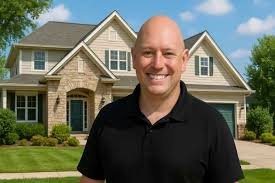
Picture this: a Shenandoah Valley buyer scrolls through listings and finds a well-maintained manufactured home on a half-acre lot in Page County, priced at $185,000. The view stretches toward the Blue Ridge. The property is clean, the lot is owned, and the price is right. Then the assumption kicks in: manufactured homes can’t be financed with a real mortgage. They walk away.
That assumption is wrong, and it costs Valley buyers real opportunities every year.
Manufactured home mortgages are real, fully underwritten, and in many Shenandoah Valley counties they represent the most accessible path to homeownership available. USDA zero-down financing is available across most of Rockingham, Augusta, Shenandoah, Warren, Page, and Frederick counties. VA loans work for eligible veterans. FHA and conventional programs round out the options. The key is knowing which program fits which property, and working with a broker who can access all of them.
This article covers everything a Virginia buyer needs to know about a mortgage for manufactured home purchase or refinance: the critical real property vs. personal property distinction, a program-by-program breakdown ranked for Valley buyers, a worked dollar example comparing USDA and FHA side by side, a competitor comparison table, a qualification checklist, and answers to the eight questions Valley buyers ask most often.
This article is written by Duane Buziak, NMLS #1110647, Coast2Coast Mortgage LLC, NMLS #376205, an independent mortgage broker licensed in VA, FL, TN, GA, and DC, with access to 500+ wholesale lenders and a NoTouch Credit Pull pre-approval process that protects your score while you shop.
The math section alone will show you why USDA zero down on a $210,000 Luray home beats FHA on monthly payment despite requiring no down payment. Let’s get into it.
Real Property vs. Personal Property: The Rule That Changes Everything
Before any loan program discussion makes sense, you need to understand one foundational concept: how a manufactured home is titled determines which mortgage products are available to finance it. This single distinction separates a buyer who qualifies for USDA zero-down financing from one who is limited to a chattel loan at significantly higher rates.
Real Property: A manufactured home that sits on a permanent foundation, where the vehicle title has been retired and the home has been deeded as real property, is treated essentially the same as a site-built home for mortgage purposes. This unlocks FHA, VA, USDA, and conventional financing programs with competitive rates and standard 30-year terms.
Personal Property (Chattel): A manufactured home on leased land, or one where the vehicle title remains active, is classified as personal property. Financing options are limited to chattel loans or FHA Title I products. These carry shorter terms (often 20 years or less), higher interest rates, and fewer competitive options. The monthly payment difference between a chattel loan and a real property mortgage on the same home can be substantial.
In Virginia, the conversion from personal property to real property follows a specific process. The land must be owned by the same person as the home. The owner surrenders the vehicle title to the Virginia DMV. A certificate of title cancellation is then recorded with the county circuit court. From that point forward, the home is treated as real property for all financing purposes. This step unlocks every government-backed mortgage program discussed in this article.
Buyers should work with a Virginia real estate attorney or title company to execute this process correctly. Blue Mountain Mortgages can connect you with experienced local title professionals who handle manufactured home conversions regularly in the Valley.
Here is the practical implication for buyers across our target counties: most manufactured homes in Rockingham, Augusta, Shenandoah, Warren, and Page counties already sit on owned land. Many are already titled as real property, or can be converted before closing. Buyers should not self-disqualify before speaking with an independent broker who can review the actual title status and match the property to the right program.
If you are looking at a manufactured home in Luray, Woodstock, Front Royal, Elkton, or Waynesboro and you are not sure whether it qualifies as real property, that is exactly the kind of question a five-minute call to Blue Mountain Mortgages can answer. An independent broker reviews the property’s title status, the county deed records, and the foundation documentation before you waste time on a program that does not fit.
Every Loan Program That Finances a Manufactured Home, Ranked for Valley Buyers
Not every program fits every property or every borrower. Here is how the major manufactured home loan programs stack up for buyers in the Shenandoah Valley and Blue Ridge corridor, ranked by how frequently they serve this market.
USDA Section 502 Guaranteed — The Lead Program for Most Valley Buyers: USDA Rural Development finances manufactured homes with zero down payment when the home meets all eligibility requirements: permanently installed on a site, titled as real property with the vehicle title retired, built after June 15, 1976 (HUD code compliant), and meeting a minimum floor area of 400 square feet. Both single-wide and multi-section homes can qualify.
The geographic fit for the Valley is strong. Rockingham, Augusta, Shenandoah, Warren, Page, and Frederick counties all contain USDA-eligible rural areas. Specific communities including Luray, Woodstock, Front Royal, and Elkton have historically maintained USDA eligibility. Buyers should verify current eligibility for their specific property address using the USDA eligibility map at the time of application, as eligibility boundaries can shift with census updates.
USDA also enforces income limits by county. Current 2026 limits for 1–4 person households in these Virginia counties should be confirmed at rd.usda.gov at the time of application. Historically, limits for these counties have fallen in the range of $100,000–$115,000 for standard households, but you must verify the current published figure before relying on it for qualification planning.
VA Loan — Zero Down for Eligible Veterans: The VA loan is an outstanding fit for the significant veteran population in Augusta County, particularly in the Fort Defiance, Verona, and Weyers Cave communities. VA will finance a manufactured home that is permanently affixed to a foundation, titled as real property, HUD-compliant (post-June 15, 1976), and meets VA minimum property requirements. Zero down payment, no private mortgage insurance, and competitive wholesale rates make this the strongest program available for eligible veterans.
The VA funding fee for first-time use with zero down is 2.15% of the loan amount (not disabled veteran). Veterans with a service-connected disability rating have the funding fee waived entirely. VA cash-out refinance on manufactured homes is available up to 100% LTV.
FHA Title II — Real Property Standard Program: FHA Title II (the standard FHA 203b loan) applies to manufactured homes on permanent foundations titled as real property. Down payment is 3.5% with a 580+ FICO score. An upfront mortgage insurance premium of 1.75% is financed into the loan. Annual MIP is currently 0.55% for most 30-year loans. The HUD certification label must be physically present on the home. Minimum floor area is 400 square feet for single-wide units. Homes must have been manufactured after June 15, 1976.
FHA Title I — Personal Property / Chattel: Title I applies when the home is on leased land or retains an active vehicle title. Terms are shorter (up to 20 years for home plus lot), rates are typically higher, and the program is considerably less favorable than Title II. If a buyer can achieve real property status, they should always pursue Title II instead.
Conventional — Fannie Mae MH Advantage and Freddie Mac CHOICEHome: For manufactured homes meeting specific design standards (pitched roof, drywall interior, energy-efficient features), Fannie Mae MH Advantage allows down payments as low as 3%, standard PMI rates, and no additional manufactured home pricing adjustments. Freddie Mac CHOICEHome offers a comparable structure. The 2026 conforming loan limit is $806,500 at the baseline, well above the price range of most Valley manufactured homes. These programs require a minimum 620 credit score and the MH Advantage sticker must be present on the home.
The Math That Matters: What a Manufactured Home Mortgage Actually Costs in the Shenandoah Valley
Concepts are useful. Numbers are actionable. Here are two worked examples using real Valley price points.
Scenario A: $210,000 Purchase in Luray, Page County — USDA vs. FHA
USDA Zero Down: The USDA upfront guarantee fee is 1% of the loan amount. On a $210,000 purchase with zero down, that equals $2,100 financed into the loan, bringing the total loan amount to $212,100. The annual guarantee fee is 0.35%, paid monthly: $212,100 × 0.0035 ÷ 12 = approximately $61.88 per month added to the base payment.
FHA 3.5% Down: Down payment on a $210,000 purchase is $7,350. The upfront MIP is 1.75% of the base loan amount: $210,000 × 0.0175 = $3,675. That $3,675 is financed into the loan. Total loan amount: $210,000 − $7,350 + $3,675 = $206,325. Annual MIP at 0.55%: $206,325 × 0.0055 ÷ 12 = approximately $94.57 per month.
At an illustrative rate of 6.75% (actual rates vary daily and depend on your credit profile — contact Blue Mountain Mortgages for current pricing), the USDA monthly principal and interest on $212,100 over 30 years is approximately $1,375. Add the $61.88 annual fee: total monthly housing cost, approximately $1,437.
FHA at the same illustrative rate on $206,325: approximately $1,338 P&I. Add the $94.57 MIP: total monthly housing cost, approximately $1,433. The difference is minimal at this rate, but USDA required $0 out of pocket at closing versus $7,350 for FHA. For a Valley buyer preserving cash reserves, USDA wins decisively.
All rate figures above are illustrative only. Actual rates vary based on credit score, loan-to-value, market conditions, and lender pricing. Contact Duane Buziak at 804-212-8663 for current rates.
Scenario B: $250,000 VA Loan, Augusta County Veteran, First Use
VA funding fee at 2.15% for first-time use with zero down: $250,000 × 0.0215 = $5,375 financed. Total loan amount: $255,375. At an illustrative 6.75% rate, monthly P&I is approximately $1,657. No PMI. No monthly mortgage insurance of any kind.
Compare to conventional with 5% down on the same purchase: $12,500 down, loan amount $237,500. At the same illustrative rate, monthly P&I is approximately $1,540. However, at 95% LTV, PMI applies. A reasonable PMI estimate at this LTV is approximately $100–$130 per month depending on credit profile, bringing the conventional total to approximately $1,640–$1,670 per month while also requiring $12,500 upfront.
The VA loan delivers a comparable monthly payment with zero down and no PMI ever. For an Augusta County veteran, the math is clear.
This is also where an independent broker earns their value. Duane Buziak, NMLS #1110647, has access to 500+ wholesale lenders and can shop the VA rate across multiple investors simultaneously. A retail lender at F&M, ALCOVA, or Movement Mortgage is locked into their own posted rate. The difference of even 0.25% in rate on a $255,000 loan over 30 years is meaningful.
Program Comparison: Blue Mountain Mortgages vs. Local and National Competitors
Here is how manufactured home mortgage access compares across the lenders Valley buyers encounter most often.
| Program | Blue Mountain Mortgages / Coast2Coast (Broker) | F&M Mortgage / Tonja Showalter (Retail Bank) | ALCOVA Mortgage Staunton (Retail) | Rocket Mortgage (National Online) |
|---|---|---|---|---|
| USDA Manufactured | Yes — wholesale pricing, 500+ lenders, best-rate shopping | Yes — single bank, one retail rate | Limited — confirm current shelf | Limited — restricted manufactured home programs |
| VA Manufactured | Yes — wholesale, zero down, rate shopped across investors | Yes — retail rate, single product | Yes — retail rate | Limited — verify eligibility at application |
| FHA Title II Manufactured | Yes — wholesale pricing across multiple FHA investors | Yes — retail rate | Yes — retail rate | Limited — verify at application |
| Conventional MH Advantage | Yes — Fannie/Freddie wholesale access | Limited | Limited | Limited |
| Down Payment | 0% USDA/VA; 3.5% FHA; 3–5% Conventional MH Advantage | 0% USDA/VA; 3.5% FHA | Varies by program | Varies — confirm current offerings |
| Rate Source | Wholesale (below retail) | Retail | Retail | Retail / Online Posted |
| NoTouch Credit Pull Available | Yes — soft pull pre-approval, no score impact | No — hard pull required | No — hard pull required | No — hard pull required |
| Local Valley Expertise | Yes — Shenandoah Valley specialist, county-level knowledge | Yes — Augusta County focus | Yes — Staunton/Augusta regional | No — national call center model |
The broker advantage in manufactured home lending is particularly pronounced because manufactured home guidelines vary meaningfully between wholesale investors. One investor may require a 620 credit score minimum for USDA manufactured; another may approve at 580. One may accept single-wide homes in certain counties; another may not. An independent broker reviews the guidelines of every eligible investor and places the loan with the one that offers the best combination of rate and flexibility for your specific property and profile.
F&M Mortgage and Tonja Showalter Armentrout have a strong USDA reputation in Augusta County, and that reputation is earned. But they offer one USDA product at one retail rate. Blue Mountain Mortgages offers the same USDA program through multiple wholesale investors, which means rate competition works in your favor.
Here is a meaningful differentiator worth noting: Blue Mountain Mortgages offers a NoTouch Credit Pull pre-approval. That means you can receive a genuine assessment of your loan eligibility and approximate terms using a soft credit inquiry that does not affect your credit score. F&M, ALCOVA, and Rocket all require a hard pull to generate the same pre-approval letter. For a manufactured home buyer shopping multiple properties across Page, Warren, and Shenandoah counties, protecting your score during the shopping phase matters.
Qualification Checklist: What Underwriters Actually Look For
Manufactured home mortgages have specific requirements that go beyond standard single-family lending. Here is what underwriters examine, and how to resolve the most common issues before they become deal-killers.
Property Requirements
HUD Certification Label: Any manufactured home built after June 15, 1976 must have a HUD certification label (the “HUD tag”) physically affixed to the exterior of the home. This is non-negotiable for FHA, VA, USDA, and conventional programs. If the label is missing, the borrower can request a label verification letter from the Institute for Building Technology and Safety (IBTS), which maintains HUD label records. This is often resolvable but adds time to the process.
Permanent Foundation: The home must be on a permanent foundation meeting HUD guidelines. A pier-and-beam system with proper anchoring typically qualifies. A foundation engineer certification may be required by the lender.
Real Property Title: The vehicle title must be retired and the home deeded as real property. This is the single most important step for Virginia buyers, as detailed in the titling section above.
Minimum Floor Area: FHA requires a minimum of 400 square feet for single-wide manufactured homes. VA and USDA have similar minimums. Multi-section homes generally exceed these thresholds without issue.
No Non-Conforming Additions: Additions or modifications that violate the original HUD design standards can disqualify a home. An appraiser familiar with manufactured home guidelines will flag these during the appraisal process.
Borrower Requirements
Credit Score Minimums by Program: USDA and FHA require a 580+ credit score for maximum financing. VA has no official minimum, but most wholesale lenders require 580–620 for manufactured homes. Conventional MH Advantage requires 620 or higher. Scores below these thresholds may require a down payment increase or alternative program placement.
Debt-to-Income Ratio: USDA generally allows up to 41% back-end DTI, with exceptions to 44% or higher for strong compensating factors. FHA allows up to 43–50% with automated underwriting approval. VA uses a residual income test rather than a strict DTI cap. Conventional is typically 45% maximum.
USDA Income Limits: Income eligibility is household-based, not just borrower-based. All household members’ income counts. Verify current 2026 limits for your specific county at rd.usda.gov.
Common Disqualifiers and Resolutions
Active Vehicle Title: Solution is the Virginia DMV title surrender process, executed before or concurrent with closing through a title company or real estate attorney.
Home on Leased Land: Government-backed programs generally require owned land. Options include a chattel loan, negotiating a land purchase as part of the transaction, or a Title I FHA loan with its less favorable terms.
Pre-1976 Construction: No government-backed financing is available for homes built before June 15, 1976. Portfolio lenders or chattel products are the only options. This is not resolvable through program selection.
Missing HUD Tag: Contact IBTS for a label verification letter. This resolves the issue for most programs but adds processing time. Start this process early.
8 Questions Valley Buyers Ask About Manufactured Home Mortgages
1. Does Page County qualify for a USDA loan on a manufactured home in 2026?
Yes. Page County, including the Luray area, contains USDA-eligible rural areas as of 2026. The manufactured home must be on a permanent foundation, titled as real property, HUD-compliant, and the borrower must meet current income limits. Verify your specific property address using the USDA eligibility map before application.
2. Can I get a VA loan on a manufactured home in Augusta County?
Yes. VA loans are available for manufactured homes in Augusta County when the home is permanently affixed to a foundation, titled as real property, and HUD-compliant. The veteran population near Fort Defiance and Verona makes this a frequently used program in Augusta. Funding fee is 2.15% for first-time use with zero down, waived for disabled veterans.
3. What credit score do I need for a manufactured home mortgage in Rockingham County?
For USDA and FHA Title II, a 580 credit score qualifies for maximum financing. For VA, most wholesale lenders require 580–620 on manufactured homes. For Conventional MH Advantage, 620 is the standard minimum. If your score is below 580, contact Blue Mountain Mortgages for a NoTouch Credit Pull review — a soft inquiry that identifies your exact position without affecting your score.
4. Does a manufactured home in Luray qualify for zero-down financing?
Often yes. Luray (Page County) is in a USDA-eligible area, and USDA Section 502 Guaranteed offers zero-down financing for manufactured homes on permanent foundations titled as real property. Eligible veterans can also use a VA loan with zero down. Income limits and property eligibility must be confirmed for the specific address and current 2026 limits.
5. What is the difference between a Title I and Title II FHA loan for a manufactured home in Virginia?
FHA Title II is the standard FHA loan for manufactured homes on permanent foundations titled as real property. It offers 3.5% down, 30-year terms, and competitive MIP rates. FHA Title I covers personal property or chattel situations where the home is on leased land or retains a vehicle title. Title I carries shorter terms and higher rates. Virginia buyers who can achieve real property status should always pursue Title II.
6. Can I refinance a manufactured home mortgage in Shenandoah County?
Yes, if the home is titled as real property on a permanent foundation. USDA streamline refinance, VA Interest Rate Reduction Refinance (IRRRL), FHA streamline, and conventional refinance options are all available depending on your current loan type. Shenandoah County manufactured home owners who have not reviewed their rate recently may benefit from a NoTouch Credit Pull rate review with Blue Mountain Mortgages — no hard inquiry, no obligation.
7. Does Waynesboro have manufactured homes that qualify for conventional financing?
Waynesboro’s USDA eligibility status should be confirmed at the time of application, as it sits near the boundary of eligible areas. Conventional MH Advantage financing is available for manufactured homes in Waynesboro that meet Fannie Mae’s design standards (pitched roof, drywall interior, energy-efficient features) and carry the MH Advantage sticker. The 2026 conforming limit of $806,500 is not a barrier for Waynesboro-priced manufactured homes.
8. How long does it take to get a mortgage on a manufactured home in the Shenandoah Valley?
Typical closing timelines for manufactured home mortgages run 30–45 days from complete application, comparable to site-built home purchases. Title conversion (if needed), foundation certification, and HUD label verification can add time if not addressed early. Starting with a pre-approval from Blue Mountain Mortgages before you make an offer is the best way to compress the timeline and close on schedule.
Your Next Step With the Mortgage Maestro
The core message of this article is straightforward: a mortgage for manufactured home purchase or refinance is fully accessible across the Shenandoah Valley and Blue Ridge corridor. USDA zero-down financing is available in most of our target counties. VA is available for eligible veterans throughout Augusta County and the broader Valley. FHA Title II and Conventional MH Advantage round out the options for buyers who do not fit the USDA or VA profile.
The difference between finding the right program and settling for the wrong one often comes down to who you call first. An independent broker with access to 500+ wholesale lenders can place a manufactured home loan with the investor offering the best rate and the most flexible guidelines for your specific property. A single retail lender, regardless of brand recognition, can only offer what their own guidelines allow at their posted rate.
Ready to find out exactly what you qualify for? Start with a no-obligation, no-hard-pull pre-qualification call with Duane Buziak. The NoTouch Credit Pull process gives you a genuine picture of your eligibility and approximate terms without touching your credit score. Then you shop properties with confidence.
Call 804-212-8663 or contact our local mortgage experts today to start your manufactured home mortgage review. There is no hard pull, no obligation, and no reason to assume you do not qualify before you have the facts.