
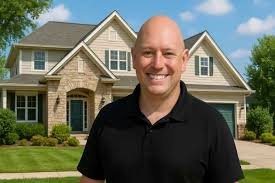
The Shenandoah Valley and Blue Ridge corridor hold some of Virginia’s most architecturally significant homes. Federal-style farmhouses anchored in Augusta County’s rolling countryside, Victorian row homes lining Staunton’s Gospel Hill Historic District, antebellum properties standing sentinel in Winchester’s Old Town and along Front Royal’s Warren County streetscapes — these are not just houses. They are living history, and for many buyers, they represent the most compelling real estate in the Commonwealth.
But financing a historic home is a fundamentally different exercise than financing a new build in a Harrisonburg subdivision. Appraisers face scarce comparable sales. Lenders apply condition ratings that can trigger mandatory repairs before closing. Renovation costs surface unexpectedly. Program eligibility rules interact with historic designation in ways that retail banks rarely explain clearly. And when a deal stalls at one institution, most buyers don’t realize there are dozens of alternative paths available — if they’re working with the right broker.
This guide breaks down everything Shenandoah Valley buyers need to know about securing a mortgage for a historic home purchase in 2026: which programs work, which don’t, how the appraisal challenge gets solved, and how to structure the financing before you make an offer. Article prepared by Duane Buziak, NMLS #1110647, Coast2Coast Mortgage LLC, NMLS #376205.
Why Historic Homes in the Valley Play by Different Mortgage Rules
Not every old house is a “historic home” in the mortgage sense, but several thresholds matter. The most immediate is the pre-1978 lead paint trigger: under HUD regulations at 24 CFR Part 35, any home built before 1978 requires mandatory lead-based paint disclosure, and FHA and VA appraisers are required to flag deteriorated paint on these properties. That covers the vast majority of the homes we’re discussing.
Pre-1940 construction introduces a second layer of scrutiny. Knob-and-tube wiring, cast iron plumbing, balloon-frame construction, and original plaster walls are common in Augusta County farmhouses and Staunton Victorian properties built in the late 1800s and early 1900s. Lenders and appraisers treat these features as potential condition flags, and many retail banks apply internal overlays requiring inspection or remediation before they’ll fund the loan.
The third threshold is formal historic designation. Properties listed on the Virginia Landmarks Register or the National Register of Historic Places carry additional considerations: renovation restrictions that can affect a lender’s assessment of future marketability, and appraisal methodology challenges when the property’s uniqueness makes finding true comparable sales genuinely difficult.
Fannie Mae’s appraisal forms use condition ratings from C1 (essentially new) through C6 (severe deferred maintenance). Historic homes in good condition typically receive a C3 or C4 rating. A C4 rating triggers mandatory repair conditions at most retail lenders before closing. A C5 rating — common when deferred maintenance has accumulated on a Victorian-era property — can stop a conventional loan entirely at a single-shelf retail bank with no alternative path.
Augusta County alone contains dozens of properties and districts listed on the National Register of Historic Places, according to the Virginia Department of Historic Resources, making it one of the Valley’s richest markets for historic home buyers. Staunton’s Gospel Hill, Stuart Addition, and Newtown historic districts are all National Register-listed. Winchester’s Old Town district concentrates 18th and 19th century properties. Luray’s Page County streetscapes and Front Royal’s Warren County listings round out a market where historic home financing friction is a recurring reality — not an edge case.
The practical result: buyers pursuing historic properties in these markets need a financing strategy built around the property’s specific condition profile, its designation status, and the program overlays that apply — before they submit an offer, not after the appraisal comes back with conditions.
Which Loan Programs Actually Work for Historic Properties — and Which Don’t
Program selection for a historic home purchase depends on three variables: the property’s physical condition, its location relative to eligibility boundaries, and the buyer’s financial profile. Here’s how the primary programs stack up.
USDA Rural Development (Primary Lane): Many of the most desirable historic properties in the Valley sit in USDA-eligible zones. Augusta County’s rural areas — Verona, Fishersville, Churchville, Stuarts Draft, Crimora — are broadly USDA-eligible outside Staunton and Waynesboro city limits. Rockingham County’s historic rural properties around Broadway, Bridgewater, Dayton, and Elkton qualify. Page County’s Luray-area properties and Shenandoah County’s rural stretches around Woodstock and Strasburg need individual eligibility confirmation via the USDA eligibility map — some town-center historic properties fall outside eligible boundaries while rural properties just outside town qualify.
USDA’s advantages for historic home buyers are significant: zero down payment, competitive wholesale rates, and no private mortgage insurance. The key nuance is USDA’s “modest in size, design, and cost” requirement. A historic home with formal designation and a higher appraised value needs to be evaluated carefully against USDA’s cost guidelines — this is where working with a broker who understands both USDA overlays and historic appraisal methodology matters. Income limits for Augusta County in 2026 are $110,650 for 1–4 person households — verify the most current figures for your specific county at eligibility.sc.egov.usda.gov before applying, as these figures are updated periodically.
VA Loans (Secondary Lane): Veterans purchasing historic homes in Augusta County — particularly around the Fort Defiance, Verona, and Weyers Cave communities with their significant veteran populations — benefit from VA’s relatively flexible Minimum Property Requirements (MPRs). In practice, VA appraisers apply condition standards with more flexibility than FHA’s Minimum Property Standards. VA does not impose a minimum property age restriction, which matters for pre-Civil War properties. Zero down, no PMI, and competitive rates make VA the strongest program for eligible veterans. VA appraisers are still VA-assigned and will flag genuine safety or structural issues — but the threshold for flagging is generally less aggressive than FHA’s on older homes.
FHA 203(k) Rehabilitation Loan: When a historic home needs work to meet lender condition requirements, the FHA 203(k) wraps the purchase price and renovation costs into a single loan. The Standard 203(k) handles structural repairs with no maximum repair amount (subject to FHA loan limits) and requires a HUD-approved consultant. The Limited 203(k) covers non-structural cosmetic repairs up to $75,000 with no consultant required. This is the most direct solution when a Victorian property in Staunton or a Front Royal antebellum home has deferred maintenance that would otherwise kill a conventional or USDA approval. Note: FHA’s Minimum Property Standards, codified in HUD Handbook 4000.1, are more stringent than VA’s on older homes — deteriorated paint, roof condition, exposed wiring, and plumbing deficiencies are all flagged by FHA appraisers.
Conventional (Fannie Mae/Freddie Mac): Works well for historic homes in genuinely good condition with adequate comparable sales in the market. The 2026 conforming loan limit of $806,500 covers the vast majority of Valley historic home purchases — the typical range of $240,000–$310,000 for Staunton and Augusta County historic properties sits well below that threshold. Jumbo conventional is available above the limit. No-out-of-pocket closing options are available via seller concessions on conventional loans. The limitation: conventional lenders have no renovation overlay equivalent to 203(k), and condition ratings of C5 or C6 typically end the file at a retail bank.
The Appraisal Problem — and How a Broker Solves It
Here’s where many historic home deals quietly die: not at underwriting, but at appraisal. A historic property in Gospel Hill or Winchester’s Old Town is genuinely unique. The appraiser assigned by a retail bank’s appraisal management company (AMC) may be competent for standard residential work but have limited experience with historic district comparable sales in the Shenandoah Valley. The result is an appraisal that comes in below purchase price — or one that loads the report with condition flags that trigger repair requirements the seller won’t agree to satisfy.
Retail lenders — ALCOVA Mortgage Staunton, F&M Mortgage, Jake Adler’s team at The Adler Mortgage Team, Movement Mortgage Harrisonburg — all work through their own AMC panels. They have no flexibility on appraiser selection. If the appraiser assigned to your Gospel Hill Victorian doesn’t understand that a well-maintained 1895 home in a National Register district commands a premium over a comparable-age home outside the district, the appraisal will reflect that gap. The deal stalls. The retail bank has no alternative path.
An independent broker with access to 500+ wholesale lenders can route the file to lenders whose AMCs have demonstrated experience with historic and architecturally unique properties in Virginia. This is not a minor operational detail — it is the single most important structural advantage a broker holds over a retail bank for historic home purchases in the Valley.
Practically, buyers can improve appraisal outcomes by assembling a documentation package before applying. This should include any prior appraisals on the property, the historic designation documentation from the Virginia DHR, any Virginia Historic Tax Credit certifications associated with prior rehabilitation work, and a list of comparable sales the buyer’s Realtor has identified — particularly any sales within the same historic district. A well-prepared documentation package shared with the appraiser at the time of inspection is entirely appropriate and can materially support value. Appraisers are not obligated to use buyer-provided comps, but they are required to consider them if submitted. For a property type where comparables are genuinely scarce, this preparation can be the difference between an appraisal that supports the purchase price and one that doesn’t.
Worked Dollar Example: Buying a Historic Home in Staunton, Augusta County
Let’s run the real math on a $285,000 purchase in Gospel Hill Historic District — a 1895-built property in good structural condition, Augusta County, buyer qualifies for USDA. Three scenarios, side by side.
Scenario A — USDA Rural Development: Zero down payment. USDA’s 1.00% upfront guarantee fee on $285,000 = $2,850, financed into the loan. Total loan amount: $287,850. Annual fee of 0.35% on the outstanding balance = approximately $1,007/year, or roughly $84/month added to the payment. At a current representative rate (rates change daily — contact Duane for today’s wholesale pricing), the principal and interest payment on $287,850 plus the $84 monthly fee produces the lowest total monthly cost of the three scenarios, with $0 cash for down payment at closing. Remaining closing costs can be covered via seller concessions.
Scenario B — FHA 3.5% Down: Down payment: 3.5% of $285,000 = $9,975. FHA’s 1.75% upfront mortgage insurance premium (UFMIP) on the base loan of $275,025 = $4,813, financed into the loan. Total FHA loan: $279,838. Annual MIP at 0.55% = approximately $1,539/year, or roughly $128/month added to the payment. Cash to close is higher than USDA at $9,975 down plus closing costs (mitigated by seller concessions), and the monthly MIP adds to the long-term cost.
Scenario C — Conventional 5% Down: Down payment: 5% of $285,000 = $14,250. Loan amount: $270,750. PMI approximately $95–$110/month depending on credit score and LTV, canceling automatically when equity reaches 20%. Highest cash-to-close of the three scenarios but no government guarantee fee and PMI that eventually goes away — advantageous for buyers who plan to hold the property long-term and build equity.
Now consider the renovation overlay. The same Gospel Hill property needs $30,000 in repairs to pass condition requirements. An FHA 203(k) wraps the purchase price and repairs into one loan: $285,000 + $30,000 = $315,000 total project cost. At 3.5% down: $11,025. UFMIP on the $303,975 base loan = $5,319 financed. Total loan amount: approximately $309,294. The buyer closes on the purchase and the renovation in a single transaction, with one set of closing costs, rather than trying to finance the repairs separately after closing — which most buyers cannot do without a second loan or significant cash reserves.
One more tool worth noting: Duane can run a NoTouch Credit Pull before you commit to any specific property. No hard inquiry, no impact on your credit score. This allows preliminary program qualification — USDA, VA, FHA, conventional — so you know which financing path fits before you make an offer on a historic property where appraisal uncertainty is already a variable.
Broker vs. Retail Bank: Who Handles Historic Home Files Better
The structural difference between an independent broker and a retail lender is not about customer service — it’s about shelf width and appraisal flexibility. For standard residential purchases, the difference is modest. For historic home purchases in the Shenandoah Valley, it can determine whether a deal closes.
| Provider | Lender Type | Program Access | Appraisal Flexibility | Historic Property Experience | NoTouch Credit Pull Available |
|---|---|---|---|---|---|
| Duane Buziak / Coast2Coast Mortgage | Independent Broker | 500+ wholesale lenders; USDA, VA, FHA 203(k), Conventional, Jumbo, DSCR | High — routes file to AMCs with historic/unique property experience in Virginia | Deep — local Valley historic district knowledge, program overlay navigation | Yes |
| ALCOVA Mortgage Staunton | Retail Lender | Single-institution shelf; standard program menu | Low — proprietary AMC panel, no appraiser selection flexibility | Regional brand, limited historic property specialization | No |
| F&M Mortgage / Tonja Showalter | Retail Bank | Single-bank shelf; strong USDA depth but no wholesale pivot | Low — if property fails F&M’s internal condition overlay, file ends | Strong USDA familiarity; limited flexibility on unusual condition profiles | No |
| Rocket Mortgage | National Online Lender | Proprietary products; no local wholesale access | Very Low — national AMC pool with no Virginia historic district familiarity | None — highest appraisal gap risk for Valley historic properties | No |
The F&M / Tonja Showalter angle deserves specific attention. F&M has genuine USDA depth and a strong local presence — but it operates on a single-bank shelf. If a historic property in Augusta County fails F&M’s internal condition overlay, the file ends. There is no pivot to a different wholesale lender with a different overlay interpretation on the same USDA program. Duane can make that pivot because the same USDA program is available through multiple wholesale lenders, each with slightly different condition tolerance and overlay structures.
Rocket Mortgage represents the opposite risk profile: fully online, no local market knowledge, and appraisers drawn from a national AMC pool with no familiarity with Gospel Hill comparable sales or Luray antebellum market dynamics. For a standard Harrisonburg subdivision purchase, this is a minor inconvenience. For a historic home in a designated district with scarce comparables, it is the highest appraisal gap risk scenario available.
Virginia Historic Tax Credits and How They Interact With Your Mortgage
Virginia offers a Historic Rehabilitation Tax Credit administered by the Virginia Department of Historic Resources. For owner-occupied residences, the credit covers a percentage of qualified rehabilitation expenditures on certified historic structures — properties listed on the National Register or contributing to a listed historic district. Buyers should verify the current credit percentage directly at dhr.virginia.gov/tax-credits/, as the rate has been subject to legislative review. The credit is claimed after the rehabilitation work is completed and certified.
Here’s the critical interaction with mortgage financing: the Virginia Historic Tax Credit does not reduce your loan amount or down payment. It does not appear on your closing disclosure. What it does is reduce your Virginia state income tax liability in the year(s) following the completed rehabilitation — effectively lowering the net cost of the renovation work. For a buyer using an FHA 203(k) or a Fannie Mae HomeStyle conventional renovation loan to finance repairs on a Gospel Hill property, the tax credit can meaningfully offset the cost of those improvements after the fact. Discuss the timing and mechanics with a CPA before closing.
For investment property buyers — particularly those considering historic properties in Front Royal or Winchester for rental or mixed-use purposes — the Federal Historic Tax Credit is the relevant program. The federal credit covers 20% of qualified rehabilitation expenditures on certified historic structures used for income-producing purposes, administered jointly by the National Park Service and the IRS. This pairs naturally with an investment property loan or a DSCR (Debt Service Coverage Ratio) loan structure, where the property’s rental income supports qualification rather than the buyer’s personal income. A historic Front Royal commercial property converted to rental units, for example, could qualify for both the 25% Virginia credit and the 20% federal credit — a substantial combined offset against rehabilitation costs.
Neither credit affects mortgage approval directly, but both affect the long-term economics of the purchase. A broker who understands how renovation loan structures interact with tax credit timing can help buyers sequence the financing to maximize both benefits.
8 Questions Valley Buyers Ask About Historic Home Mortgages
Q: Does a home in Staunton’s Gospel Hill Historic District qualify for a USDA loan?
A: Gospel Hill properties within Staunton city limits are generally not USDA-eligible, as Staunton is an incorporated city that falls outside USDA’s rural eligibility boundaries. However, historic properties in Augusta County’s rural areas just outside Staunton — Verona, Fishersville, Churchville — are typically USDA-eligible. Confirm the specific address using the USDA eligibility map before proceeding.
Q: Will FHA approve a home built in 1890 in Luray, Page County?
A: FHA does not have a minimum age restriction, but a Luray home built in 1890 will receive heightened scrutiny from the FHA appraiser on lead paint, roof condition, mechanical systems, and structural integrity under HUD Handbook 4000.1. If the property has deferred maintenance, an FHA 203(k) rehabilitation loan may be the better path — it wraps the purchase and repair costs into one loan and is specifically designed for older homes needing work.
Q: Can I use a VA loan to buy a historic farmhouse in Augusta County?
A: Yes. VA does not impose a minimum property age restriction, and VA’s Minimum Property Requirements are generally applied with more flexibility than FHA’s standards on older homes. Augusta County has a significant veteran population, and VA is one of the strongest programs available for historic farmhouse purchases in the county — zero down, no PMI, and competitive wholesale rates. The VA appraiser will still flag genuine safety or structural deficiencies, so property condition still matters.
Q: What happens if the appraisal comes in low on a Winchester historic property?
A: A low appraisal on a Winchester Old Town property is a real risk because comparable sales for genuinely historic properties are scarce. At a retail bank, a low appraisal typically ends the deal or forces a price renegotiation. Working with an independent broker allows the file to be routed to a lender whose AMC has experience with Virginia historic district properties — and a well-prepared documentation package with Realtor-identified comparables can support value at appraisal before the appraiser visits.
Q: Does the Virginia Historic Tax Credit affect my mortgage approval?
A: The Virginia Historic Tax Credit does not directly affect mortgage approval or your loan amount. It is a post-rehabilitation state income tax credit claimed after renovation work is completed and certified by the Virginia DHR. It reduces your tax liability in future years, effectively lowering the net cost of rehabilitation work — but it does not appear on your closing disclosure or affect your debt-to-income ratio at application.
Q: Can I roll renovation costs into my mortgage for a Front Royal historic home?
A: Yes. The FHA 203(k) rehabilitation loan is specifically designed for this scenario. For a Front Royal historic property needing structural work, the Standard 203(k) wraps purchase price and renovation costs into a single loan. For cosmetic repairs under $75,000, the Limited 203(k) is simpler and requires no HUD consultant. Warren County rural properties outside Front Royal city limits may also qualify for USDA financing, though USDA does not have a built-in renovation overlay equivalent to 203(k).
Q: What is a NoTouch Credit Pull and can I use it before making an offer on a historic property?
A: A NoTouch Credit Pull allows Duane to run preliminary program qualification — identifying whether you qualify for USDA, VA, FHA, or conventional financing, and at what loan amount — without a hard inquiry on your credit report. There is no credit score impact and no commitment required. For historic home buyers who are still evaluating multiple properties and want to understand their financing options before making an offer, the NoTouch Credit Pull is the right starting point. Call 804-212-8663 to get started.
Q: How does Duane’s broker access help with historic home appraisals in Rockingham County?
A: Rockingham County’s historic rural properties — around Broadway, Bridgewater, Dayton, and Elkton — are frequently USDA-eligible and often involve older homes with limited comparable sales. As an independent broker with access to 500+ wholesale lenders, Duane can route a Rockingham County historic home file to wholesale lenders whose AMCs have demonstrated experience with architecturally unique and historic properties in Virginia. Retail lenders in the area use fixed AMC panels with no flexibility on appraiser selection — if the assigned appraiser lacks local historic market knowledge, the appraisal risk falls entirely on the buyer.
Your Next Step With the Mortgage Maestro
Historic homes in the Shenandoah Valley and Blue Ridge corridor are absolutely financeable. The Federal-style farmhouses in Augusta County, the Victorian row homes in Staunton’s Gospel Hill, the antebellum properties in Winchester and Front Royal — all of them have viable mortgage paths in 2026. What they require is a broker with genuine program depth, appraisal strategy experience, and local market knowledge that retail banks and national online lenders structurally cannot provide.
The right program depends on the specific property, its condition profile, its location relative to USDA and FHA eligibility boundaries, and your financial situation. That analysis needs to happen before you make an offer — not after the appraisal surfaces conditions that catch you off guard.
The first step costs nothing and protects your credit: start with a NoTouch Credit Pull to identify which program fits your profile and your target property. No hard inquiry. No commitment. Just clarity on your options before you move forward. Contact our local mortgage experts today to get started, or call Duane Buziak directly at 804-212-8663.