
A home outside Harrisonburg, Staunton, Front Royal, or Waynesboro may qualify for USDA financing even when it feels close to town. That is why an FHA vs USDA mortgage decision is rarely just about the interest rate. It starts with the address, your household income, and how much cash you want to preserve for moving, repairs, or the first trip to the hardware store.
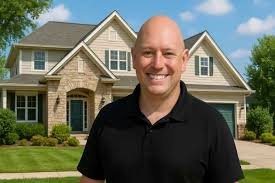
I am Duane Buziak, Mortgage Maestro and independent mortgage broker, NMLS #1110647. For Valley buyers, USDA is often the first program worth checking because much of Rockingham, Augusta, Rockbridge, Shenandoah, and Warren County remains eligible. FHA is the practical fallback when a property sits outside the eligible area or a household income exceeds USDA limits.
Table of Contents
- FHA vs. USDA at a glance
- When USDA is the stronger fit
- When FHA makes more sense
- A worked dollar example
- Local property and income questions
- Broker vs. single-shelf options
- FAQs for Valley buyers
FHA vs USDA mortgage: the key differences
| Feature | USDA Guaranteed Loan | FHA Loan | What it means locally |
|---|---|---|---|
| Minimum down payment | 0% for eligible buyers | 3.5% with qualifying credit | USDA can preserve cash for buyers purchasing in rural-eligible Valley areas. |
| Property location | Must be in a USDA-eligible area | No rural location requirement | FHA can work in Charlottesville, central Harrisonburg, and other in-town locations. |
| Household income | Income limits apply and may include adult household members | No program income limit | USDA requires a closer look at who lives in the home, not only the borrowers. |
| Upfront charge | 1.00% guarantee fee, generally financeable | 1.75% upfront mortgage insurance premium, generally financeable | Both programs can roll the upfront charge into the loan amount. |
| Annual insurance charge | 0.35% annual fee, subject to program rules | Annual mortgage insurance varies by loan terms and down payment | USDA’s monthly charge can compare favorably, but total pricing still decides the outcome. |
| Occupancy | Primary residence, typically one-unit homes | Primary residence, including some 2-4 unit properties | FHA has more flexibility for a buyer considering a small multi-unit property. |
USDA is designed for owner-occupied homes in eligible rural and suburban areas. It is not limited to farms, and the home does not need acreage. The USDA Property Eligibility map is the source that matters for the specific address, not a listing description that calls a home “country living.” Eligibility can change near growth corridors, so verify the parcel before building a purchase strategy around USDA.
FHA is more geographically flexible. It can be a good answer for a townhouse near downtown Staunton, a home in a less rural part of Charlottesville, or a property just beyond the USDA map. FHA also does not impose USDA’s household-income limits.
When USDA is usually the better fit
USDA deserves a serious look when the home is eligible, the buyers meet household-income requirements, and the goal is a primary residence. Its defining advantage is no required down payment. That does not mean every buyer brings nothing to closing. Inspections, appraisal items, prepaid taxes, and transaction structure still matter. A seller credit or no-out-of-pocket closing options may be available in the right situation, but neither is automatic.
The income rule causes the most confusion. USDA generally considers adjusted household income, which can include income from adults living in the home even if they are not on the mortgage. Certain deductions may apply, including deductions tied to dependents or childcare. A pre-approval based only on the two borrowers’ pay stubs can miss the point if another working adult will occupy the property.
For buyers searching around Broadway, Elkton, Grottoes, Mount Jackson, Verona, Buena Vista, or the edges of Front Royal, USDA can turn a down payment barrier into a workable purchase plan. It also may be attractive to buyers who have money saved but would rather keep a reserve after closing.
When FHA is the cleaner answer
FHA often wins because it removes USDA’s location and household-income tests. It can also be useful when a buyer is purchasing a two-unit, three-unit, or four-unit primary residence, subject to FHA rules and qualification. A first-time buyer near JMU who needs to be in Harrisonburg proper may find FHA more straightforward than trying to force a USDA map match.
Credit deserves plain language. FHA commonly allows a 3.5% down payment for borrowers meeting its credit-score requirements, though credit history, debt-to-income ratio, and the specific file still drive approval. USDA files are also individually underwritten. Neither program should be selected solely from an advertised minimum score.
Property condition can be a trade-off. FHA and USDA both require the home to meet appraisal and safety standards. An older Valley farmhouse with peeling paint, a questionable roof, or a failed well test may need repairs before closing under either program. USDA is not a shortcut around property condition.
Worked example: a $280,000 Valley home
Assume you are buying an eligible $280,000 home in Augusta County. This example isolates program charges and down payment, not interest rate, taxes, homeowners insurance, seller concessions, or closing costs.
With USDA, the required down payment is $0. The 1.00% upfront guarantee fee is $2,800: $280,000 × 0.01 = $2,800. If financed, the starting loan amount is $282,800. The initial annual fee estimate is $980 per year: $280,000 × 0.0035 = $980. Divided by 12, that is about $81.67 per month before the balance declines.
With FHA at 3.5% down, the down payment is $9,800: $280,000 × 0.035 = $9,800. The base loan is $270,200. FHA’s 1.75% upfront mortgage insurance premium is $4,728.50: $270,200 × 0.0175 = $4,728.50. If financed, the starting loan amount is $274,928.50.
In this illustration, USDA preserves $9,800 of down payment cash. It starts with a loan balance $7,871.50 higher than FHA because USDA finances the whole purchase price plus its guarantee fee. That is the real trade-off: less cash needed now versus a larger starting balance. The best answer depends on the rate, monthly insurance, seller credit, your reserves, and how long you expect to own the home.
Get clarity before a credit inquiry
A map check and payment estimate should come before a rushed application. My NoTouch Credit Pull process is built for that early conversation. If you are searching for a soft credit pull mortgage, a no hard inquiry mortgage pre approval, or mortgage pre approval without hard pull, start by asking what the review will actually involve.
A soft pull mortgage broker can review the broad picture before a formal credit event is needed. That does not guarantee approval, and a full application may later require a traditional credit report. But it gives Valley buyers a more comfortable way to compare USDA and FHA without treating every initial conversation as a no credit hit mortgage application.
NoTouch Credit Pull is especially helpful for buyers who are still deciding between an eligible home near New Market and an in-town FHA purchase. We can identify the likely financing lane before you write an offer.
Why an independent broker comparison matters
Program choice is only half the decision. A broker can compare wholesale options across a broad marketplace rather than offering one product shelf. Mortgage Maestro has access to 500+ wholesale options and deep USDA focus, which matters when a rural address, household-income calculation, or appraisal question needs more than a generic answer.
F&M Mortgage and Tonja Showalter Armentrout are established Valley names. Jake Adler and The Adler Mortgage Team, ALCOVA Mortgage Staunton, Bruce Burner at Benchmark Mortgage, C&F Mortgage Waynesboro, and Movement Mortgage Harrisonburg each serve local buyers through their own retail models. Rocket Mortgage is a national online mortgage company often used for rate comparison, while Movement Mortgage is frequently considered for processing speed. These are legitimate choices to compare respectfully.
The difference is independence. A single-shelf retail operation may have fewer places to go when USDA underwriting, pricing, or a property-specific issue calls for another option. My job is to show you the trade-offs clearly, provide a Dare to Compare pricing review, and keep personal guidance in the process from pre-approval through closing.
FAQs for Shenandoah Valley buyers
Is USDA available near Harrisonburg and Staunton?
Often, yes. Many surrounding communities are eligible, while central areas may not be. Confirm the exact address against the USDA eligibility map before relying on the program.
Can I use USDA in Charlottesville?
Some outlying Albemarle County locations may qualify, but many Charlottesville-area addresses will not. FHA is commonly the more flexible choice for in-town purchases.
Does USDA require a down payment?
USDA does not require a down payment for an eligible purchase. Buyers may still have inspection, appraisal, earnest-money, prepaid, or closing obligations depending on the contract.
Does FHA have income limits like USDA?
No. FHA does not use USDA household-income limits, which can make it a better fit for households above the USDA threshold.
Can adult children living at home affect USDA eligibility?
Yes. USDA may count income from adult household members, even when they are not borrowers. That is why household details matter early.
Which loan has lower monthly mortgage insurance?
USDA’s annual fee is commonly 0.35%, while FHA mortgage insurance varies. Compare the complete monthly payment and total pricing rather than one fee alone.
Can a USDA buyer use no-out-of-pocket closing options?
Potentially. Seller credits, rate structure, and property value can create no-out-of-pocket closing options, but availability depends on the transaction and loan rules.
Should I get pre-approved before touring rural homes?
Yes. A NoTouch Credit Pull conversation can help identify USDA eligibility, income concerns, and a realistic payment range before you become attached to a property.
The right loan should support the way you want to live in the Valley, not merely get you through a closing. Bring the address, the household details, and the questions you are hesitant to ask. A clear comparison early can save a disappointing rewrite of the plan later.
Duane Buziak, Mortgage Maestro | Coast2Coast Mortgage LLC | NMLS #1110647 | (804) 212-8663 | duane@coast2coastml.com | 3302 Haydenpark Lane, Henrico VA 23233 | Licensed: VA, FL, TN, GA, DC
Not a commitment to lend. Rates subject to change. Equal Housing Lender. Coast2Coast Mortgage LLC NMLS #376205. Duane Buziak NMLS #1110647.