
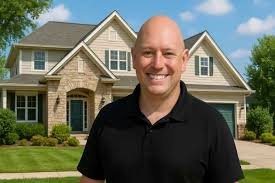
The Shenandoah Valley and Blue Ridge corridor offer some of the most accessible home prices in Virginia. Median prices in Augusta and Rockingham counties typically fall in the $240,000–$310,000 range, putting homeownership within genuine reach for working families in Harrisonburg, Staunton, Waynesboro, Front Royal, and the surrounding communities.
Yet a surprising number of first-time buyers in these communities still believe they need 20% down or a perfect credit score to qualify for a mortgage. That belief is expensive. Every year spent renting while waiting for a mythical “perfect” financial situation is a year of equity building, tax advantages, and price appreciation lost to a landlord’s balance sheet.
The reality is different. In 2026, Valley buyers have access to programs that buyers in Northern Virginia or the Richmond metro simply cannot use. USDA Rural Development covers most of the six-county corridor. Veterans in Augusta County communities like Fort Defiance, Verona, and Weyers Cave have zero-down VA loan access. Virginia Housing DPA can be layered on top of multiple loan types to eliminate out-of-pocket costs entirely.
This article maps out the seven mortgage programs and strategies that Shenandoah Valley first-time buyers actually qualify for in 2026, ranked by accessibility and local relevance. You will find a worked dollar example comparing USDA and FHA on a real Valley purchase price, a side-by-side comparison table of local and national mortgage options, and eight county-specific FAQ answers formatted for quick reference.
Written by Duane Buziak, NMLS #1110647, Coast2Coast Mortgage LLC, NMLS #376205. Phone: 804-212-8663.
1. USDA Rural Development Loans: Zero Down in the Valley
The Challenge It Solves
Down payment is the single biggest barrier for first-time buyers in the Valley. Saving $55,000 for a 20% down payment on a $275,000 Augusta County home while paying rent is a years-long treadmill. USDA Rural Development eliminates that barrier entirely for buyers purchasing in eligible rural and semi-rural areas, which covers the vast majority of the six-county Valley corridor.
The Strategy Explained
USDA Single Family Housing Guaranteed Loan Program requires zero down payment for eligible buyers purchasing in designated rural areas. Most of Rockingham County outside Harrisonburg city limits, Augusta County outside Staunton and Waynesboro city limits, and all of Shenandoah, Warren, Page, and Frederick counties qualify for USDA property eligibility. You can confirm your specific property at the USDA eligibility map.
The 2026 fee structure includes a 1.0% upfront guarantee fee (typically financed into the loan) and a 0.35% annual fee, which is significantly lower than FHA mortgage insurance. Income limits apply and vary by county and household size. Current 2026 income limits for your specific county are available at rd.usda.gov.
Implementation Steps
1. Confirm your target property is in a USDA-eligible area using the eligibility map linked above. Rural communities around Luray, Woodstock, Front Royal, and Elkton are typically eligible.
2. Check household income against the current county-specific limits. USDA uses total household income, not just the borrower’s income, so all adults in the home count.
3. Request a NoTouch Credit Pull from Duane Buziak before submitting any formal application. This soft-pull pre-qualification confirms your USDA eligibility without triggering a hard inquiry on your credit report.
Worked Dollar Example: USDA vs. FHA on a $275,000 Augusta County Purchase
This side-by-side shows why USDA leads for eligible Valley buyers. All figures are illustrative at current market rates; actual payments vary.
| Cost Factor | USDA Loan | FHA Loan | USDA Advantage |
|---|---|---|---|
| Purchase Price | $275,000 | $275,000 | — |
| Down Payment | $0 (0%) | $9,625 (3.5%) | $9,625 saved at closing |
| Upfront Fee/MIP | $2,750 (1.0%, financed) | $4,812.50 (1.75%, financed) | $2,062.50 less financed |
| Base Loan Amount | $277,750 | $270,187.50 | — |
| Annual Insurance Fee | 0.35% (~$80/month) | 0.55% (~$124/month) | ~$44/month savings |
| PMI Required? | No | Yes (MIP for life of loan at <10% down) | No lifetime MIP trap |
| Out-of-Pocket at Closing | $0 (fees financed) | $9,625 minimum | $9,625 kept in pocket |
The $44/month insurance difference compounds to over $5,000 across ten years, in addition to the $9,625 kept in your pocket at closing. For a first-time buyer in Staunton or Waynesboro building an emergency fund, that difference is material.
Pro Tips
USDA does not set a minimum credit score at the program level, but most lenders apply overlays around 640. As an independent broker with access to 500+ wholesale lenders, Duane can identify lenders with more flexible overlays for buyers with scores in the 620–639 range. Do not assume a single denial is a program denial.
2. VA Loans for Veterans in Augusta County and the Valley
The Challenge It Solves
Veterans who served this country often don’t realize the full scope of their VA loan benefit. The assumption that VA loans are complicated, slow, or limited in some way keeps eligible veterans in rental housing when they could be building equity. Augusta County has a meaningful veteran population in communities like Fort Defiance, Verona, and Weyers Cave, and this benefit is one of the most powerful mortgage tools available to any first-time buyer.
The Strategy Explained
VA-guaranteed home loans require zero down payment, carry no private mortgage insurance requirement, and allow 100% LTV on cash-out refinances. The 2026 conforming baseline is $806,500, meaning most Valley purchases fall well within standard VA loan limits. Eligible veterans, active-duty service members, and surviving spouses qualify through VA.gov.
The VA funding fee applies to most borrowers but is waived entirely for veterans with a service-connected disability rating. That waiver can represent thousands of dollars in savings at closing. On a $275,000 purchase, a first-use funding fee of 2.15% would otherwise add $5,912.50 to the loan balance.
Implementation Steps
1. Obtain your Certificate of Eligibility (COE) through VA.gov or allow Duane to pull it directly through the VA’s automated system, which takes minutes rather than weeks.
2. If you have a service-connected disability rating of any percentage, confirm your funding fee waiver status before closing. This is a frequently missed savings opportunity.
3. Use the VA loan on a property in Staunton, Waynesboro, or within Augusta County. VA has no property location restrictions the way USDA does, so it covers city properties that fall outside USDA eligibility zones.
Pro Tips
VA loans can be paired with Virginia Housing down payment assistance programs in some configurations, and Duane’s access to 500+ wholesale lenders means finding VA-approved lenders with the most competitive pricing rather than accepting a single institution’s rate. Veterans deserve to shop the full market, not just the lender at the end of their street.
3. Virginia Housing Down Payment Assistance: Stacking DPA With Your Loan
The Challenge It Solves
Even when a loan program has a low down payment requirement, closing costs can still catch first-time buyers off guard. Virginia Housing’s Down Payment Assistance programs address exactly that gap, and they are available across all six Valley counties. Most buyers don’t know these programs can be layered on top of USDA, VA, FHA, and Conventional loans to create a genuine no-out-of-pocket closing structure.
The Strategy Explained
Virginia Housing (formerly VHDA) offers DPA grants and second mortgage programs statewide. The programs carry income limits and purchase price caps that vary by locality, and current limits for Rockingham, Augusta, Shenandoah, Warren, Page, and Frederick counties are available at virginiahousing.com. A HUD-approved homebuyer education course is required, which can typically be completed online in a few hours.
The DPA can cover the down payment, closing costs, or both, depending on the program configuration and the primary loan type. When stacked with a USDA loan, the result is a closing where the buyer brings little to nothing out of pocket. When stacked with FHA, the 3.5% down payment requirement can be covered by the DPA grant, eliminating the cash barrier entirely.
Implementation Steps
1. Complete a HUD-approved homebuyer education course. Virginia Housing accepts several approved providers, and the course is available online.
2. Confirm your household income falls within the Virginia Housing limits for your specific county. Limits differ between localities, so Harrisonburg area limits may differ from Shenandoah County limits.
3. Work with a broker who is approved to originate Virginia Housing loans. As an approved Virginia Housing partner, Duane can stack DPA with the primary loan in a single coordinated process rather than requiring you to manage two separate applications.
Pro Tips
The no-out-of-pocket closing structure is real, but it requires precise program stacking. An independent broker can coordinate Virginia Housing DPA with wholesale loan pricing simultaneously. A retail lender offering only their own institution’s products may not have the flexibility to stack programs the same way.
4. FHA Loans: The Credit-Flexible Entry Point
The Challenge It Solves
Not every Valley buyer fits the USDA property eligibility map. Harrisonburg city, Staunton city, and Waynesboro city are urban designations that fall outside USDA eligibility zones. Buyers purchasing within those city limits, or buyers whose credit profile needs a more flexible underwriting framework, need a different entry point. FHA is that bridge.
The Strategy Explained
FHA loans require 3.5% down at a 580+ FICO score, or 10% down for scores between 500 and 579. Debt-to-income flexibility extends up to 57% with compensating factors under HUD Handbook 4000.1, making FHA accessible for buyers with student loans, car payments, or other obligations that would disqualify them from conventional underwriting.
The 2026 FHA fee structure includes a 1.75% upfront mortgage insurance premium (typically financed) and a 0.55% annual MIP. Unlike conventional PMI, FHA MIP on loans with less than 10% down persists for the life of the loan unless the borrower refinances into a conventional product once sufficient equity is established.
Implementation Steps
1. If your target property is within Harrisonburg, Staunton, or Waynesboro city limits, confirm USDA ineligibility first. If the property is outside USDA eligibility, FHA becomes the primary zero-to-low-down program to evaluate.
2. Pull your credit profile through Duane’s NoTouch Credit Pull to understand your current FICO position before any formal application. Knowing whether you are at 580+ or 620+ changes which lender overlays apply and what rate you can expect.
3. Calculate your full debt-to-income ratio including all monthly obligations. FHA’s DTI flexibility is a genuine advantage for buyers with existing debt, but the math needs to be done accurately before submitting a file.
Pro Tips
FHA is often a transitional program. Buyers who use FHA to purchase now and build equity can refinance into a conventional loan once they reach 20% equity and eliminate the MIP entirely. Think of FHA as the door, not necessarily the permanent mortgage structure.
5. Conventional Loans With 3% Down: When Your Credit Is Strong
The Challenge It Solves
Buyers with credit scores above 680 and stable income sometimes assume conventional loans require 20% down. That assumption leaves money on the table. Fannie Mae HomeReady and Freddie Mac Home Possible both allow 3% down for first-time buyers, and PMI on a conventional loan cancels automatically at 80% LTV under the Homeowners Protection Act, unlike FHA MIP which can persist for the life of the loan.
The Strategy Explained
HomeReady and Home Possible are income-based conventional programs designed for first-time and low-to-moderate income buyers. Both allow 3% down, include reduced PMI rates compared to standard conventional PMI, and accept income from household members who are not on the loan. The 2026 conforming loan limit of $806,500 means virtually every Valley purchase qualifies for conventional financing without entering jumbo territory.
The critical differentiator for Valley buyers is pricing. Wholesale conventional pricing through 500+ lenders is consistently different from single-institution retail pricing. A 0.25% rate difference on a $275,000 loan over 30 years represents thousands of dollars in total interest paid. Seller concessions at under 10% down are capped at 3% under Fannie/Freddie guidelines, which is worth understanding when negotiating purchase contracts.
Implementation Steps
1. Confirm your FICO score is 680 or above for the most competitive conventional pricing. Scores in the 660–679 range still qualify but may face pricing adjustments.
2. Compare the PMI cost on a conventional loan against the MIP cost on an FHA loan at your specific credit tier. At higher credit scores, conventional PMI is often cheaper than FHA MIP, making conventional the better long-term choice.
3. Request a wholesale conventional rate comparison from Duane alongside your FHA or USDA quote. The side-by-side will clarify which program produces the lowest total cost of ownership for your specific file.
Pro Tips
Once your conventional loan reaches 80% LTV through payments and appreciation, you can request PMI cancellation. In a Valley market where home values have generally appreciated, that milestone may arrive sooner than the amortization schedule suggests.
6. The Broker Advantage: Why Program Access Matters More Than Rate Shopping
The Challenge It Solves
Most first-time buyers in the Valley approach mortgage shopping the same way they shop for a car: visit a few local institutions, compare the rates they’re offered, and pick the lowest number. The problem is that retail lenders can only show you what they have on their shelf. An independent mortgage broker accesses the wholesale market across hundreds of lenders simultaneously, which is a fundamentally different kind of search.
The Strategy Explained
As an independent broker, Duane Buziak and Coast2Coast Mortgage LLC access 500+ wholesale lenders, meaning USDA, VA, FHA, Conventional, and Virginia Housing DPA programs are all available in a single conversation. A retail lender at a single institution can only offer that institution’s programs at that institution’s pricing. If their USDA overlay is restrictive or their FHA pricing is uncompetitive, you don’t know what you’re missing because you have no comparison.
The NoTouch Credit Pull is a structural differentiator. Retail lenders typically require a hard inquiry to issue any form of pre-approval. Duane’s NoTouch Credit Pull is a soft-pull pre-qualification that maps your file to the right program and estimates your payment without any impact to your credit score. That matters because multiple hard inquiries in a short window can affect your score during the most sensitive period of the homebuying process.
Comparison Table: Mortgage Options for Valley First-Time Buyers
| Feature | Duane Buziak / Coast2Coast | Jake Adler / Adler Mortgage Team | ALCOVA Mortgage Staunton | Rocket Mortgage |
|---|---|---|---|---|
| Broker or Retail Lender | Independent Broker | Retail Lender | Retail Lender | Retail Lender |
| Lender Access | 500+ wholesale lenders | Single institution | Single institution | Single institution |
| USDA Programs Available | Yes, multiple overlays | Limited to own guidelines | Limited to own guidelines | Limited rural specialty |
| VA Loan Access | Yes, wholesale pricing | Yes, retail pricing | Yes, retail pricing | Yes, retail pricing |
| Virginia Housing DPA | Yes, stackable | Varies by institution | Varies by institution | Not Valley-specific |
| NoTouch Credit Pull | Yes — no hard inquiry | Hard pull typically required | Hard pull typically required | Hard pull typically required |
| Local Valley Expertise | Harrisonburg to Winchester | Staunton-focused | Regional presence | No local presence |
| Scotsman Guide Ranking | 2026: #114 ($51.2M) | Not ranked | Not ranked | National volume only |
Implementation Steps
1. Before visiting any retail lender, start with a NoTouch Credit Pull through Duane. This establishes your baseline without any credit impact and gives you a program map before any institution has run a hard inquiry on your file.
2. Use the program map to understand which loan type fits your property, income, and credit profile. Then compare the wholesale pricing Duane can access against any retail quotes you receive.
3. If a retail lender tells you that you don’t qualify for a program, verify that conclusion with an independent broker before accepting it. Lender overlays vary, and a denial from one institution is not a program-level denial.
Pro Tips
Duane has been recognized as Virginia Broker of the Year 2024–2025, ranked by Scotsman Guide as a Top Originator in both 2025 ($44.4M, #114) and 2026 ($51.2M), holds UWM PRO ELITE 2025 status, and has accumulated 1,400+ five-star reviews. That track record reflects consistent execution across exactly the USDA, VA, FHA, and DPA programs Valley buyers need most.
7. The 90-Day Pre-Application Strategy: Preparing Your File Before You Apply
The Challenge It Solves
Many first-time buyers in the Valley start their mortgage process at the wrong end: they find a house they love, then scramble to get financing in place. The buyers who close smoothly and on favorable terms are the ones who spent 60 to 90 days preparing their file before they ever toured a property. The difference between an approved buyer and a frustrated renter is often preparation, not income.
The Strategy Explained
Credit positioning, documentation organization, and affordability math are the three pillars of a strong pre-application file. On the credit side, a score difference of 20 points can shift your loan program options and your pricing tier significantly. On the documentation side, lenders want 30 days of pay stubs, 60 days of bank statements, and two years of tax returns. Gaps or inconsistencies in those documents cause delays and sometimes denials. On the affordability side, knowing your realistic price range before you start shopping prevents the emotional attachment to a home you cannot actually close on.
Valley price points give you a concrete framework for this math. Harrisonburg median prices run approximately $285,000, Staunton approximately $255,000, and Winchester approximately $340,000. According to Virginia REALTORS market data, these figures reflect current market conditions in the Valley corridor. At $275,000 with a USDA loan, your estimated monthly payment at current market rates includes principal, interest, and the $80/month annual guarantee fee. Your total housing cost target should generally stay at or below 29% of gross monthly income under USDA guidelines.
Implementation Steps
1. Pull your credit report at annualcreditreport.com and review all three bureaus for errors, collections, or derogatory items that can be addressed before application. Disputing an error 90 days before application gives the process time to resolve.
2. Organize your documentation now: two years of W-2s and tax returns, most recent 30 days of pay stubs, most recent 60 days of all bank and asset account statements. If you are self-employed, two years of business returns and a year-to-date profit and loss statement are also required.
3. Request a NoTouch Credit Pull from Duane Buziak at 804-212-8663. This soft-pull pre-qualification gives you a program eligibility map, an estimated payment range, and a specific list of any credit or documentation items to address before formal application. It costs nothing and does not impact your credit score.
Pro Tips
Large deposits in your bank account within 60 days of application require documentation of source. If you are receiving a gift from a family member for closing costs, structure it properly with a gift letter before the funds hit your account. Undocumented deposits are one of the most common causes of last-minute underwriting delays for Valley first-time buyers.
Your Implementation Roadmap
The sequence matters. Start by checking USDA property eligibility at eligibility.sc.egov.usda.gov. If your target property qualifies, USDA is almost certainly your best first-time buyer program in Rockingham, Augusta, Shenandoah, Warren, Page, or Frederick county. Zero down, below-market annual fees, and no PMI is a combination that no other program matches for eligible buyers.
If you are a veteran or active-duty service member, check VA eligibility next. VA’s zero-down, no-PMI structure with 100% LTV cash-out capability is the most powerful mortgage benefit available, and it covers city properties that USDA does not.
If your property is within Harrisonburg, Staunton, or Waynesboro city limits and you lack VA eligibility, FHA with Virginia Housing DPA stacking is your most accessible path. The DPA can cover your 3.5% down payment requirement, and the no-out-of-pocket closing structure becomes achievable with proper program coordination.
If your credit is strong and you want conventional financing, HomeReady and Home Possible at 3% down with cancellable PMI is the long-term cost winner for buyers who qualify.
The single most important action you can take before any of these steps is a NoTouch Credit Pull with Duane. It costs nothing. It does not trigger a hard inquiry. And it maps your specific file to the right program before any retail lender has a chance to run a hard pull and potentially limit your options.
Valley buyers in these six counties have access to programs that most of Northern Virginia and Richmond metro simply cannot use. USDA zero down is real. Virginia Housing DPA is stackable. And an independent broker with 500+ wholesale lenders can find a path that a single-institution lender cannot.
Contact our local mortgage experts today or call Duane Buziak directly at 804-212-8663. NMLS #1110647.
One Response