
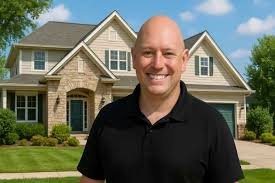
Picture this: you’re sitting across from a Realtor in downtown Harrisonburg, coffee going cold on the table, and she slides a listing across to you. A three-bedroom colonial in Rockingham County, listed at $279,000. The neighborhood is quiet, the commute is manageable, and the backyard backs up to a tree line that turns gold every October. You want it. The only question is the rate.
You pulled up a national rate comparison site the night before and saw numbers that ranged nearly a full percentage point depending on which tab you clicked. You’re not sure which number applies to you, whether now is the right time to lock, or whether the lender your Realtor recommended is actually giving you the best deal available. That uncertainty is exactly what this article is designed to resolve.
“Current mortgage rates in Virginia” is not one number. It is a range shaped by loan type, credit profile, down payment, property characteristics, and, critically, who you choose to work with. A buyer in Staunton using a VA loan will see a different rate than a buyer in Luray using USDA financing, even on the same day, even on a similarly priced home. This article will decode how rates are actually built, explain why an independent mortgage broker can access wholesale pricing that retail lenders and banks structurally cannot, and show you the real math on a $275,000 Shenandoah Valley home so you can walk into your next rate conversation with clarity.
Article prepared by Duane Buziak, NMLS #1110647, Coast2Coast Mortgage LLC, NMLS #376205. Licensed in VA, FL, TN, GA, and DC.
Why Virginia Mortgage Rates Are a Range, Not a Number
The single biggest misconception first-time buyers bring to the mortgage process is that there is one “Virginia rate” they need to find. In reality, the rate you receive is the output of several overlapping variables, and understanding those variables is the first step toward getting the best one available to you.
Loan type determines your starting tier. USDA Rural Development loans, VA loans, FHA loans, and conventional loans each price differently because of how government backing, guarantee fees, and investor risk appetite interact. A USDA loan on a property in Woodstock and a conventional loan on the same property on the same day are not the same rate. The USDA guarantee removes default risk from the investor’s perspective, which typically produces competitive or below-conventional pricing. VA loans carry no private mortgage insurance and are backed by the Department of Veterans Affairs, making them the most favorable rate tier for eligible borrowers. FHA loans sit in the middle. Conventional pricing varies the most, driven heavily by FICO score and loan-to-value ratio.
Your personal profile shapes the quote. Two buyers in Rockingham County, both purchasing a $285,000 home, can receive meaningfully different rate quotes even from the same broker. The variables that move the needle include FICO score (a 740 versus a 680 can represent a quarter-point difference or more), loan-to-value ratio (how much you’re borrowing relative to the home’s value), debt-to-income ratio, property type (single-family versus condo versus multi-unit), and occupancy (primary residence, second home, or investment property). Lenders price each of these factors into what the industry calls loan-level price adjustments, and those adjustments stack on top of the base rate.
The 2026 conforming loan limit defines your pricing universe. The Federal Housing Finance Agency sets the baseline conforming loan limit at $806,500 for 2026, with a high-cost ceiling of $1,249,125. Loans below the baseline are priced as conforming conventional loans, which carry the most favorable conventional rate access. Loans above the baseline enter jumbo territory, where pricing is less standardized and investor appetite varies. For Shenandoah Valley buyers purchasing in the typical $240,000 to $310,000 range, this is excellent news: you are well inside conforming territory, which means you have access to the full range of government and conventional programs at their most competitive pricing tiers. A buyer in Frederick County purchasing at $295,000 is not competing with jumbo risk premiums. That is a structural advantage that often goes unappreciated.
The takeaway here is straightforward: before you can evaluate whether a rate is good, you need to know which program you qualify for and how your personal profile affects the pricing within that program. That is the conversation a skilled independent broker has with you before any numbers are discussed.
The Wholesale Advantage: How Independent Brokers Access Pricing Retail Lenders Can’t Match
Here is a structural reality of the mortgage market that most buyers never learn until after they’ve already closed: retail lenders and banks price from a single internal rate sheet. An independent mortgage broker prices from hundreds of them simultaneously.
When you walk into ALCOVA Mortgage in Staunton or apply online with Rocket Mortgage, you are receiving a rate that has been marked up from the wholesale investor price to cover that institution’s overhead, margin, and profit. That markup is baked into the system. The retail lender has no alternative: they are the only pricing source available to you through that channel.
Duane Buziak at Coast2Coast Mortgage LLC operates as an independent mortgage broker with access to more than 500 wholesale lenders. When your file is submitted, it is being priced at the investor level, before retail markup is applied. This is not a marketing claim. It is how the wholesale mortgage channel structurally works, and it is why broker-sourced rates frequently undercut retail quotes on identical loan programs. The gap is most pronounced on USDA and VA products, where the government guarantee has already removed the primary credit risk from the equation, and the remaining pricing competition is purely at the investor level.
F&M Mortgage, led by Tonja Showalter Armentrout, has a well-earned reputation for USDA lending in the Valley. But F&M operates from a single institution’s rate sheet. When Duane shops your USDA file across multiple wholesale investors, he is creating competitive pressure that a single-institution lender cannot replicate by definition. The program knowledge may be comparable. The pricing access is not structurally equivalent.
Jake Adler and The Adler Mortgage Team bring strong first-time buyer focus to the local retail market. The same structural distinction applies: retail pricing versus wholesale pricing on the same loan product is not the same starting point.
NoTouch Credit Pull: One of the most practically valuable tools in Duane’s process is the ability to run a soft-pull pre-qualification that shows you rate scenarios across multiple lenders and programs without triggering a hard credit inquiry. ALCOVA Mortgage, F&M Mortgage, Benchmark Mortgage, C&F Mortgage in Waynesboro, and Rocket Mortgage all require a hard pull before they will deliver a locked rate quote on the same terms. A hard inquiry can affect your FICO score, and multiple hard pulls during a rate-shopping window can compound that effect. The NoTouch Credit Pull eliminates that risk entirely during the comparison phase, letting you see real program scenarios before you commit to a single application.
The bottom line on broker versus retail is this: you are not choosing between a big lender and a small one. You are choosing between one pricing source and five hundred of them. For a $275,000 purchase in the Shenandoah Valley, that difference in rate access is worth understanding before you sign anything.
Loan Program Rate Breakdown: USDA, VA, FHA, and Conventional for Valley Buyers
Not all mortgage programs are created equal, and for Shenandoah Valley buyers specifically, the program you select has a larger impact on your total monthly payment than the rate itself. Here is how each program prices and performs for Valley buyers in 2026.
USDA Rural Development Loans are the primary loan lane for buyers in Rockingham, Augusta, Shenandoah, Warren, Page, and Frederick counties. Most ZIP codes across the Valley remain USDA-eligible as of 2026, which you can verify property-by-property using the USDA Property Eligibility Map. Eligibility is address-specific, not county-wide, so always confirm before assuming. USDA loans require zero down payment and carry no private mortgage insurance. The cost structure includes a 1% upfront guarantee fee (which can be financed into the loan) and a 0.35% annual fee. Because the USDA guarantee removes default risk for investors, USDA rates are typically competitive with or below conventional pricing. For a buyer in Luray or Woodstock purchasing in the $240,000 to $285,000 range, USDA is often the lowest total-payment option available. Income limits apply and vary by county and household size. Current limits for Virginia are published by USDA Rural Development and should be confirmed at the time of application, as they are updated periodically.
VA Loans serve eligible veterans, active-duty service members, and surviving spouses. Augusta County has a meaningful veteran population, including communities around Fort Defiance, Verona, and Weyers Cave, and VA financing is often underutilized in these areas relative to eligibility. VA loans carry no PMI, allow 100% LTV on purchase transactions, and permit 100% LTV on cash-out refinances. The VA funding fee applies in most cases but is waived entirely for veterans with a service-connected disability rating. VA rates are typically the most competitive of all government programs, reflecting the strength of the VA guarantee and the low default history of VA borrowers. If you are eligible for VA financing and are considering FHA or conventional instead, a direct payment comparison is worth running before you commit.
FHA Loans offer accessible credit standards and a 3.5% minimum down payment, making them a common path for buyers who do not qualify for USDA or VA. FHA rates typically sit between VA/USDA and conventional pricing. However, FHA carries mandatory mortgage insurance premium costs that significantly affect the total payment picture: a 1.75% upfront MIP (which can be financed) and a 0.55% annual MIP for most loan terms. Unlike conventional PMI, FHA’s annual MIP does not automatically cancel when you reach 80% LTV on loans with less than 10% down. Buyers who qualify for USDA or VA should compare total monthly payment across programs, not just the interest rate, before defaulting to FHA.
Conventional Loans offer the widest rate variability of any program because pricing is driven almost entirely by the borrower’s FICO score and LTV ratio. A buyer with a 760 FICO and 20% down will receive the most favorable conventional pricing. A buyer with a 680 FICO and 5% down will pay meaningfully more, both in rate and in PMI. For Valley buyers at typical price points, conventional financing is often the right answer once a buyer has sufficient down payment and credit profile to compete with USDA or VA on total payment terms.
Real Math: What Current Rates Mean on a $275,000 Shenandoah Valley Home
Rate discussions stay abstract until you run the actual numbers. Here is a side-by-side comparison of three financing scenarios on a $275,000 purchase in Rockingham County, using the published fee structures for each program. Note that interest rate figures are not included because rates move daily, and any specific number published here would be stale within days. Contact Duane for a current rate quote. The math below illustrates the structural cost differences between programs, which remain consistent regardless of where rates are on a given day.
Scenario 1: USDA Rural Development (Zero Down)
Purchase price: $275,000. Down payment: $0. USDA 1% upfront guarantee fee: $2,750, financed into the loan. Total loan amount: $277,750. Annual USDA fee at 0.35%: approximately $80 per month (calculated on the outstanding balance, declining over time). No PMI. Cash required at closing is limited to closing costs, which can often be structured with seller concessions or lender credits to minimize out-of-pocket expense.
Scenario 2: FHA (3.5% Down)
Purchase price: $275,000. Down payment: $9,625 (3.5%). FHA upfront MIP at 1.75%: $4,638, financed into the loan. Total loan amount: $270,013 (base loan $265,375 plus financed MIP). Annual FHA MIP at 0.55%: approximately $122 per month in year one. Cash required at closing: $9,625 down payment plus closing costs.
Direct comparison, insurance costs only: USDA saves the buyer $9,625 in upfront cash versus FHA and approximately $42 per month in insurance costs ($122 FHA MIP minus $80 USDA annual fee). Over five years, that monthly difference compounds to over $2,500 in additional insurance costs under FHA, on top of the $9,625 more required at closing. For a first-time buyer in Harrisonburg or Staunton where every dollar of cash reserves matters, this is not a marginal difference.
Scenario 3: Conventional (10% Down)
Purchase price: $275,000. Down payment: $27,500 (10%). Loan amount: $247,500. No government guarantee fee. PMI applies until the loan reaches 80% LTV (approximately $220,000 balance). PMI cost varies by FICO score and lender but typically ranges from 0.5% to 1.0% annually on the loan amount for a buyer at this LTV. At 0.7% annually on $247,500, that is approximately $144 per month. Cash required at closing: $27,500 down payment plus closing costs. The advantage of conventional at 10% down is that PMI cancels automatically once equity is established, unlike FHA MIP on loans with less than 10% down.
Why rate movement matters: A 0.25% difference in rate on a $275,000 loan changes the principal and interest payment by approximately $40 to $45 per month and affects total interest paid over 30 years by roughly $14,000 to $16,000. This is why shopping your rate across multiple wholesale lenders through a broker is not a minor exercise. On a typical Valley purchase, a broker’s rate access advantage of even a quarter-point represents real money over the life of the loan.
According to the Harrisonburg-Rockingham Association of REALTORS®, median home prices in the Harrisonburg-Rockingham market have reflected steady demand consistent with the Valley’s growth patterns. Buyers should confirm current median price data directly with HRAR for the most recent reporting period, as figures are updated regularly.
Broker vs. Retail: Side-by-Side Rate Access Comparison
The following table compares the four primary mortgage sources Shenandoah Valley buyers encounter, across the dimensions that matter most to your rate and total payment outcome.
| Provider | Lender Type | Rate Sheet Access | USDA / VA Expertise | Credit Pull Policy | Valley-Specific Knowledge |
|---|---|---|---|---|---|
| Duane Buziak / Coast2Coast Mortgage LLC | Independent Mortgage Broker | 500+ wholesale lenders simultaneously; investor-level pricing before retail markup | Full USDA and VA program access across Rockingham, Augusta, Shenandoah, Warren, Page, and Frederick counties | NoTouch Credit Pull available for rate scenarios; no hard inquiry required during comparison phase | Deep local expertise: USDA eligibility boundaries, Augusta County veteran populations, Valley price points |
| ALCOVA Mortgage Staunton | Retail Lender | Single internal rate sheet; retail markup applied before quote | USDA and VA available but priced from single institution’s investor relationship | Hard pull required before delivering a locked rate quote | Strong Realtor relationships and review volume in Augusta County market |
| F&M Mortgage / Tonja Showalter Armentrout | Bank-Affiliated Lender | Single institution’s rate sheet; no wholesale channel access | Established USDA reputation in Valley; strong local knowledge but limited to one institution’s pricing | Hard pull required before delivering a locked rate quote | Respected local presence; USDA specialist reputation in Rockingham and Augusta markets |
| Rocket Mortgage | National Online Retail Lender | Single national rate sheet; no local wholesale pricing access | USDA rural eligibility expertise limited for specific Valley ZIP codes; no local property knowledge | Hard pull required before delivering a locked rate quote | No local Valley expertise; cannot advise on USDA eligibility boundaries or county-specific income limits |
The most important column in that table is rate sheet access. Program shelf width is the structural differentiator that determines whether you are being quoted from one pricing source or hundreds. For Valley buyers evaluating USDA, VA, FHA, and conventional options simultaneously, the ability to run all four programs through a wholesale channel in a single conversation is a meaningful advantage that retail lenders cannot replicate by design.
The program shelf also matters for less common scenarios: investment property loans, jumbo financing above $806,500, DSCR loans for rental property buyers, and non-QM products for self-employed buyers with non-traditional income documentation. Retail lenders offer only what their institution has approved and priced that day. A broker’s wholesale shelf covers all of these categories simultaneously.
8 Questions Valley Buyers Ask About Virginia Mortgage Rates
What is the current USDA mortgage rate for Rockingham County buyers in 2026?
USDA rates in Rockingham County vary daily based on bond market activity and your personal credit profile. Rather than publishing a number that will be stale tomorrow, the right answer is to contact a broker who can pull current wholesale USDA pricing across multiple investors for your specific scenario. Rockingham County is USDA-eligible for most addresses. Confirm eligibility at the USDA eligibility map.
Does Waynesboro qualify for USDA zero-down financing in 2026?
Waynesboro eligibility is property-address-specific and has historically included portions of the city and surrounding Augusta County areas. USDA eligibility boundaries can shift with census updates. Always verify the specific property address using the USDA Property Eligibility Map before assuming qualification. A broker familiar with Augusta County boundaries can guide you quickly through this step.
How does my credit score affect my mortgage rate in Augusta County?
In Augusta County, as everywhere in Virginia, your FICO score is one of the most powerful rate drivers. On conventional loans, a score difference of 60 to 80 points can move your rate by a quarter-point or more and add loan-level price adjustments that increase cost significantly. USDA and VA loans are less sensitive to FICO variation, which is another reason government programs often deliver better total-payment outcomes for buyers with mid-range credit profiles.
Can I get a VA loan rate in Staunton with no down payment?
Yes. VA loans allow 100% financing with no down payment for eligible veterans and active-duty service members purchasing a primary residence in Staunton or anywhere in Augusta County. VA loans also carry no PMI, making the total monthly payment significantly lower than FHA or conventional alternatives at the same purchase price. Veterans with a service-connected disability rating may also have the VA funding fee waived entirely.
What is the difference between interest rate and APR on a Virginia mortgage?
The interest rate is the cost of borrowing the principal. The APR (Annual Percentage Rate) includes the interest rate plus lender fees, origination charges, and certain closing costs, expressed as an annualized figure. APR is a more complete cost comparison tool when evaluating quotes from multiple lenders, because a lower rate with higher fees can produce a higher APR than a slightly higher rate with minimal fees. Always compare APR, not just rate, when shopping Virginia mortgage quotes.
How often do mortgage rates change in Virginia?
Mortgage rates in Virginia, and across the country, can change multiple times in a single day based on movement in the bond market, particularly the 10-year Treasury yield. Major economic data releases, Federal Reserve communications, and global market events can all trigger rate shifts. This is why a rate you see quoted on a Monday morning may not be available by Friday afternoon. Locking your rate with a specific lender at a specific time is the only way to secure a quoted rate.
Can I lock my rate before I find a home in Harrisonburg?
Some lenders offer float-down or extended lock programs that allow rate protection before a purchase contract is signed, though terms and fees vary. More practically, Duane can show you rate scenarios with a NoTouch Credit Pull before you’ve even made an offer, so you know your range without affecting your credit score. This lets you enter the Harrisonburg market with a clear payment target before you’re under contract pressure.
Is now a good time to refinance my Shenandoah Valley home?
The right time to refinance depends on your current rate, remaining loan balance, how long you plan to stay in the home, and what current wholesale pricing looks like for your specific profile. A general rule of thumb is that refinancing makes sense when you can reduce your rate by enough to recover closing costs within your expected remaining ownership period. For homeowners in the Valley who purchased in the past three to four years, a broker rate comparison is worth running now to determine whether a refinance pencils out.
Putting It All Together: Your Next Step Toward a Valley Rate Quote
Here is the core insight this article has built toward: the best current mortgage rate in Virginia is not found on a national rate-comparison website. It is found by working with an independent broker who shops your specific file across wholesale lenders and matches you to the program that produces the lowest total payment, not just the lowest advertised rate.
A rate on a website does not know whether you are buying in a USDA-eligible ZIP code in Page County or a non-eligible area near Winchester. It does not know your FICO score, your DTI, whether you served in the military, or whether your income qualifies under the USDA Rural Development limits for a household of three in Shenandoah County. Duane Buziak knows all of these things, because this is the market he works in every day. He knows the USDA eligibility boundaries in Rockingham County, the veteran population patterns in Augusta County, and the price point realities across the Shenandoah Valley and Blue Ridge corridor in a way that a national online lender operating from a call center cannot replicate.
The practical next step is straightforward. Contact our local mortgage experts today to start with a NoTouch Credit Pull and receive a same-day rate comparison across USDA, VA, FHA, and conventional programs. No hard inquiry. No commitment. Just a clear picture of what your payment looks like on a Valley home at today’s wholesale pricing.