
Picture this: you’re sitting at your kitchen table in Harrisonburg, comparing two paths to a mortgage. On one screen, there’s an online portal asking you to upload documents into a faceless queue. On the other, there’s a phone call with someone who knows that your target neighborhood sits just outside the Harrisonburg city limits — which means it qualifies for USDA zero-down financing — and who can tell you exactly how a well-and-septic system on that Augusta County property will affect your appraisal timeline. Same loan amount. Completely different experience. Completely different outcome.
That tension sits at the heart of the local mortgage lender benefits conversation. National platforms offer speed and slick interfaces. Regional banks offer familiarity. But an independent local broker offers something neither can replicate: deep market intelligence, access to a wholesale lending shelf that no single institution can match, and the kind of personalized advocacy that turns a complicated rural purchase into a clean closing.
This article is written for Shenandoah Valley and Blue Ridge corridor homebuyers who want a clear-eyed look at what “local” actually delivers in dollar terms — not just in warm feelings. You’ll get a worked dollar example, a side-by-side comparison table, and honest answers to the questions Valley buyers ask most. Throughout, I’ll be drawing on my direct experience working with buyers across Rockingham, Augusta, Shenandoah, Warren, Page, and Frederick counties.
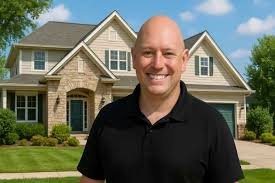
I’m Duane Buziak, NMLS #1110647, independent mortgage broker and founder of Blue Mountain Mortgages, operating under Coast2Coast Mortgage LLC, NMLS #376205. I’ve been named Virginia Broker of the Year 2024–2025, ranked on the Scotsman Guide Top Originator list in both 2025 (#114, $44.4M) and 2026 ($51.2M), and have earned more than 1,400 five-star reviews from buyers across the Valley. Let’s get into it.
What “Local” Actually Means When Your Mortgage Is on the Line
The word “local” gets used loosely in mortgage marketing. A national lender with a Harrisonburg branch is not the same as a locally embedded independent broker. Understanding the distinction matters because it directly affects which programs you can access, how your application is processed, and what happens when something unusual comes up — and in the Shenandoah Valley, something unusual almost always comes up.
Here’s the framework. A national retail lender like Rocket Mortgage or Movement Mortgage originates and funds loans using their own capital and their own underwriting guidelines. They offer their products, their rates, and their overlays. A regional bank like F&M or C&F Mortgage operates similarly — one institution, one product shelf, one set of rate sheets. An independent broker like Coast2Coast Mortgage is structurally different: I never hold the loan myself. Instead, I shop your file across more than 500 wholesale lenders simultaneously, presenting you with competing rate and fee combinations that no single institution can replicate. I’m your advocate in the market, not a representative of any one lender’s interests.
What makes that broker model genuinely powerful in the Valley is the combination of wholesale access and local market knowledge. Consider a few examples that a national call-center rep simply won’t encounter often enough to know by heart.
A rural Augusta County property on a private well and septic system triggers specific USDA appraisal requirements around well water testing, septic setback distances, and property condition standards. Getting those conditions wrong — or failing to anticipate them — adds weeks to a closing timeline. I’ve seen national lenders issue pre-approvals on properties that ultimately couldn’t meet program requirements, leaving buyers scrambling.
A parcel near the Page County line in Luray may sit precisely inside the USDA Rural Development eligibility boundary, while a comparable property two miles away does not. Knowing that boundary — not guessing at it — is the difference between a zero-down loan and a 3.5% FHA down payment. That’s a real dollar difference on a $275,000 purchase.
Local expertise also changes how your initial consultation works. Through Blue Mountain Mortgages, buyers can take advantage of a NoTouch Credit Pull — a pre-qualification process that maps your best program options across USDA, VA, FHA, and Conventional without triggering a hard credit inquiry. Retail banks and national platforms typically cannot offer equivalent pre-approval certainty without pulling your credit first. That distinction matters if you’re early in your search and want to understand your options before committing to a formal application.
Local mortgage lender benefits, in other words, are not abstract. They show up in program eligibility, appraisal preparation, and the quality of information you receive before you ever sign a purchase contract.
Program Depth: Why One Bank’s Menu Is Never Enough for Valley Buyers
The Shenandoah Valley has a program hierarchy that most national lenders aren’t built to navigate. Understanding it — and having access to all of it simultaneously — is one of the clearest local mortgage broker advantages available to Valley buyers.
The primary lane for most rural Valley purchases is USDA Rural Development: zero down payment, competitive fixed rates, and eligibility across most of Rockingham, Augusta, Shenandoah, Warren, Page, and Frederick counties. For eligible buyers, this is the most powerful purchase program available. Behind it sits VA: zero down for qualifying veterans and active-duty service members, with a funding fee waiver for veterans carrying a service-connected disability rating, and 100% LTV available on cash-out refinances. FHA follows at 3.5% down with flexible credit guidelines. Conventional loans carry the 2026 conforming limit of $806,500 for standard counties. Above that sits Jumbo, and layered across all of these are down payment assistance programs that can further reduce out-of-pocket costs.
A single-bank retail lender carries only their own shelf. When their USDA program has a rate overlay that adds 0.25% to your rate, you have no alternative within that institution. An independent broker shopping 500+ wholesale lenders can find the USDA-approved lender with the cleanest overlay and the most competitive pricing for your specific file.
Here’s what that looks like in real numbers.
Worked Dollar Example: $275,000 Purchase in Rockingham County
Assume a $275,000 purchase price on a USDA-eligible property in a Rockingham County community such as Bridgewater or Dayton. The buyer qualifies for both USDA and FHA. Here is the comparison at a 30-year fixed rate (rate used for illustration only — actual rates vary daily and should be confirmed at time of application):
USDA Rural Development: Zero down payment. Loan amount: $275,000 plus the USDA upfront guarantee fee of 1.0% ($2,750), rolled into the loan, for a total financed amount of $277,750. USDA annual guarantee fee: 0.35% of the outstanding loan balance divided by 12 = approximately $80 per month at origination. Down payment required at closing: $0.
FHA: 3.5% down payment = $9,625 out of pocket at closing. Loan amount: $265,375 plus FHA upfront MIP of 1.75% ($4,644), rolled in, for a total financed amount of $270,019. FHA annual MIP: 0.55% divided by 12 = approximately $122 per month.
The monthly mortgage insurance difference alone is approximately $42 per month in USDA’s favor. Over the first five years, that’s roughly $2,520 in savings on the fee line alone. Add the $9,625 in down payment the USDA buyer keeps in their pocket, and the first-year financial advantage of USDA over FHA on this purchase approaches $10,000 when combining preserved cash and reduced monthly cost.
These numbers are why program selection matters — and why a broker who can access both programs simultaneously, rather than steering you toward the one product their institution happens to carry, is a material financial advantage.
One critical nuance: Harrisonburg city proper is generally not USDA-eligible, but many surrounding Rockingham County communities are. Dayton, Bridgewater, Broadway, Elkton, Mt. Crawford, and Weyers Cave have historically fallen within the eligible boundary. This catches buyers by surprise when working with lenders unfamiliar with local boundary lines. Always verify current eligibility for your specific property address using the USDA Rural Development eligibility map before proceeding — boundaries update periodically.
Local Broker vs. Regional Bank vs. National Platform: The Side-by-Side
Numbers and narrative are useful, but sometimes a direct comparison cuts through faster. Here’s how the major options Valley buyers encounter stack up across the dimensions that actually matter at the closing table.
| Feature | Duane Buziak / Coast2Coast (Independent Broker) | F&M Mortgage / Tonja Showalter (Regional Bank) | ALCOVA Mortgage Staunton (Regional Retail) | Rocket Mortgage (National Platform) |
|---|---|---|---|---|
| USDA Program Access | Yes — multiple USDA-approved wholesale lenders | Yes — single institution’s USDA overlay | Yes — single institution’s USDA overlay | Limited — no local boundary intelligence |
| VA Program Access | Yes — multiple VA-approved wholesale lenders | Yes — single institution | Yes — single institution | Yes — single institution |
| Number of Wholesale Lenders | 500+ | 1 (F&M) | 1 (ALCOVA) | 1 (Rocket) |
| Hard Pull Required for Pre-Approval | No — NoTouch Credit Pull available | Typically yes | Typically yes | Yes — required for rate lock |
| Local Appraisal Knowledge | Deep — well/septic, mountain property, county-specific conditions | Strong — Augusta County focus | Moderate — Valley familiarity | None — national call center |
| Ability to Switch Lenders Mid-Process | Yes — broker can re-shop without restarting | No — locked to F&M | No — locked to ALCOVA | No — locked to Rocket |
| Rate Source | Wholesale pricing | Retail pricing | Retail pricing | Retail pricing |
| Named Local Contact | Duane Buziak — direct line | Tonja Showalter Armentrout | Branch team | Rotating call center rep |
The broker-versus-banker framing is worth unpacking. When you work with me, I am never the lender. I’m your advocate in the wholesale market, presenting your file to competing institutions and negotiating on your behalf. F&M Mortgage and Tonja Showalter Armentrout represent a genuinely capable USDA operation with strong Augusta County relationships — but they can only offer F&M’s rates and F&M’s overlays. When their pricing isn’t competitive on a given week, there is no alternative within that institution. ALCOVA Mortgage has built strong Realtor relationships across the Valley and has a reputation for fast closings, but they operate at retail pricing — which means the rate you receive reflects their institution’s margin, not a wholesale market comparison.
Rocket Mortgage offers real technology advantages and a smooth digital experience. What it cannot offer is a loan officer who knows that a Front Royal property near the Warren County line sits inside the USDA boundary, or who can anticipate the well-water testing requirement before it becomes a closing condition.
The “hard pull required” row in that table deserves particular attention. The NoTouch Credit Pull through Blue Mountain Mortgages means you can map your program options, compare USDA versus FHA versus Conventional, and understand your rate range — all before any hard inquiry touches your credit file. Retail competitors, including F&M, ALCOVA, and Rocket, cannot consistently replicate that pre-approval certainty without pulling your credit first. For buyers who are actively house-hunting across multiple months, that distinction protects your score during the search phase.
The Valley Advantage: Local Data Points That Change Your Loan Decision
Abstract arguments about local expertise are easy to make. Here’s what the Valley’s actual market conditions mean for your loan decision in concrete terms.
According to Virginia REALTORS® market data, median home prices across the Shenandoah Valley and Blue Ridge corridor have generally tracked in the $240,000 to $310,000 range across Rockingham, Augusta, and surrounding counties — with Harrisonburg area properties trending around $285,000 and Staunton area properties around $255,000. Winchester, closer to the Northern Virginia influence, has tracked higher, near $340,000.
What this means practically: at these price points, the overwhelming majority of Valley purchases fall well inside USDA program limits, FHA loan ceilings, and the 2026 conventional conforming limit of $806,500. Zero-down and low-down options are not theoretical possibilities for Valley buyers — they are genuinely accessible, right-sized programs for the actual market. A national lender calibrated for suburban DC transactions may not even lead with USDA as an option, simply because it’s less relevant in their primary markets.
Local appraisal knowledge compounds this advantage. Properties in Page, Shenandoah, and Warren counties frequently involve mountain terrain, private roads, well and septic systems, and older structures — all of which generate specific appraisal conditions under USDA, VA, and FHA guidelines. Knowing in advance that a VA appraisal will require a wood-destroying insect inspection, or that a USDA appraisal on a property with a shared well will need a shared well agreement on file, allows me to prepare buyers and sellers before the appraiser ever visits the property. That preparation eliminates surprise conditions that delay closings by weeks when they hit a national lender’s processing queue unprepared.
Relationships with Valley title companies and real estate attorneys matter too. Closings in Augusta County and Rockingham County involve local settlement agents who know the quirks of rural deeds, easements, and right-of-way language common to mountain and agricultural properties. When a title issue surfaces at the last minute, having a local broker who can call a familiar contact directly — rather than escalating through a national servicing chain — is the difference between a one-day fix and a two-week delay.
Finally, Valley Realtors respond to pre-approval letters differently depending on the source. A pre-approval from Blue Mountain Mortgages, with my direct line attached, carries a different weight in a competitive Harrisonburg or Staunton offer situation than a pre-approval from a national platform’s automated system. Local agents know they can reach me directly if a question arises during the offer period — and that responsiveness translates to offers that sellers and their agents take seriously.
No-Out-of-Pocket Strategies and Rate Shopping: What Wholesale Access Makes Possible
One of the most persistent misconceptions in mortgage shopping is that “zero closing costs” is a product feature. It isn’t — at least not for conventional, FHA, or VA loans. What exists instead are structuring strategies that can result in no money out of pocket at closing, and a wholesale broker’s access to 500+ lenders is what makes those strategies genuinely competitive.
The primary tools are lender credits and seller concessions. A lender credit means accepting a slightly higher interest rate in exchange for the lender covering a portion of closing costs — the rate/credit trade-off is a real option, and comparing it across multiple wholesale lenders produces meaningfully different outcomes than taking the single option a retail institution offers. Seller concessions allow the seller to contribute toward the buyer’s closing costs, with program-specific caps: USDA permits seller concessions up to 6% of the purchase price; VA allows up to 4% in seller concessions plus unlimited closing cost contributions; FHA allows up to 6%; Conventional allows between 3% and 9% depending on down payment. Structuring these correctly, and combining them with wholesale lender credits, is how buyers in the Valley routinely close with no money out of pocket on programs other than USDA — which is genuinely zero down and zero out of pocket on its own merits.
The language distinction matters: I will never describe these as “zero closing costs.” The costs exist. What changes is who pays them and how they’re structured. That precision is important because it sets accurate expectations before closing day.
Rate shopping through a wholesale broker works differently than walking into a bank. Because Coast2Coast accesses wholesale pricing from more than 500 lenders, I can present you with competing rate-and-fee combinations simultaneously — comparing not just the interest rate but the total cost of the loan across origination fees, discount points, and lender credits. Retail lenders, including ALCOVA and Jake Adler’s team, are working from a single institution’s rate sheet. They can negotiate within that sheet, but they cannot step outside it. The wholesale market comparison happens before any hard inquiry, through the NoTouch Credit Pull process, meaning you get a full program and rate landscape without your credit score taking a hit during the shopping phase.
For Valley homeowners who purchased in 2022 or 2023 at the higher rate environment of that period, a refinance review is worth a conversation. Broker access means comparing multiple wholesale refinance options rather than returning to your original retail lender — which has every incentive to keep you on the terms you already have. A rate-and-term refinance, a cash-out refinance (up to 100% LTV on VA; up to 90% LTV on Conventional), or a streamline refinance on USDA or FHA loans are all options worth evaluating as rates evolve.
8 Questions Valley Buyers Ask About Local Mortgage Brokers
Does Waynesboro qualify for a USDA loan in 2026?
Waynesboro’s USDA eligibility status has historically been transitional, and boundaries are updated periodically by USDA Rural Development. Before assuming eligibility, verify the specific property address using the official USDA eligibility map. Some Waynesboro addresses have qualified while others have not — a single street can sit on either side of the boundary line. Always confirm at the property level, not the city level.
What is the USDA income limit for a family of 4 in Rockingham County?
USDA income limits for Rockingham County, Virginia are set by HUD area median income calculations and updated annually. For the 2026 program year, the standard household income limit for a 1–4 person household in Virginia rural areas has generally tracked in the range of $110,000 to $115,000, but you must verify the current figure for your specific county and household size at the USDA Rural Development income limits table before application. Limits for 5–8 person households are higher.
Can I use a VA loan to buy a home in Staunton with no down payment?
Yes. VA loans have no geographic restrictions and are available for eligible veterans and active-duty service members purchasing anywhere in Virginia, including Staunton. A VA loan requires zero down payment, has no private mortgage insurance, and offers a funding fee waiver for veterans with a service-connected disability rating. Augusta County’s veteran population — particularly in the Fort Defiance, Verona, and Weyers Cave communities — makes VA lending a frequently used program in this area.
Is an independent mortgage broker more expensive than going directly to a bank in Harrisonburg?
No — and in most cases, the opposite is true. An independent broker like Blue Mountain Mortgages accesses wholesale pricing from 500+ lenders, which typically produces lower rate-and-fee combinations than a single retail institution’s rate sheet. The broker’s compensation is disclosed on your Loan Estimate and is regulated by federal law. You are not paying a premium for broker access; you are gaining access to a competitive market that retail lenders cannot offer.
What credit score do I need for a USDA loan in Augusta County?
USDA Rural Development does not set a universal minimum credit score, but most USDA-approved lenders require a minimum score of 640 for automated underwriting approval. Scores below 640 may still qualify through manual underwriting with compensating factors, though fewer lenders offer that path. Augusta County properties are broadly USDA-eligible in rural areas, and the program’s flexible credit approach makes it accessible to buyers who might not qualify for conventional financing.
Can I get pre-approved without a hard credit pull in the Shenandoah Valley?
Yes — through Blue Mountain Mortgages. The NoTouch Credit Pull process allows Duane Buziak to pre-qualify your file and map your best program options across USDA, VA, FHA, and Conventional without triggering a hard inquiry on your credit report. This is particularly valuable for buyers who are in the early stages of their search and want to understand their options before formally applying. Call 804-212-8663 to start the process.
How does a local broker’s rate compare to Rocket Mortgage for a $280,000 home in Front Royal?
Front Royal sits in Warren County, which is largely USDA-eligible — a program Rocket Mortgage has limited ability to optimize at the local level. On a $280,000 purchase, the combination of USDA zero-down access, wholesale rate sourcing across 500+ lenders, and no hard pull during the comparison phase typically produces a more competitive total cost of financing than a national retail platform’s single rate sheet. Exact rate comparisons depend on current market conditions, credit profile, and program selection — contact Blue Mountain Mortgages at 804-212-8663 for a same-day program comparison.
What is the 2026 conforming loan limit for Frederick County, Virginia?
The 2026 baseline conforming loan limit set by the Federal Housing Finance Agency (FHFA) is $806,500 for standard counties. Frederick County, Virginia sits near the Northern Virginia and DC metro influence area, and buyers should verify whether it qualifies for the high-cost limit of $1,249,125 via the FHFA conforming loan limits page. At either limit, the vast majority of Frederick County purchases fall well within conventional financing parameters.
Putting It All Together: Your Next Steps in the Valley
The case for local mortgage broker expertise in the Shenandoah Valley is not a preference argument — it’s a practical financial one. The combination of USDA eligibility across most of the Valley’s rural counties, price points that keep buyers squarely within program limits, and the genuine complexity of rural property appraisals makes program depth and local market knowledge a measurable dollar advantage, not just a nice-to-have.
A national platform can process a standard suburban transaction efficiently. It cannot tell you that your Bridgewater property qualifies for USDA zero-down while the Harrisonburg address you were also considering does not. It cannot anticipate the well-water testing condition that will appear on your VA appraisal. It cannot shop your file across 500+ wholesale lenders to find the USDA-approved institution with the cleanest overlay and the most competitive rate for your credit profile this week.
The right starting point for most Valley buyers is a conversation — one that maps your program options, identifies your best path to ownership, and does so without touching your credit report. Contact our local mortgage experts today to start your NoTouch Credit Pull through Blue Mountain Mortgages. No hard inquiry, no obligation, no call-center queue. One conversation with Duane Buziak at 804-212-8663 covers USDA, VA, FHA, and Conventional options side by side, calibrated to your specific county, property type, and financial profile.