
A farmhouse outside Broadway, a newer home near Fishersville, or a place with acreage in Rockbridge County can look like a conventional loan at first glance. But for many Shenandoah Valley buyers, USDA is the program that changes the cash needed to buy from intimidating to manageable. The real question is not simply conventional or USDA. It is which program fits the property, your household income, and what you want your monthly payment to do.
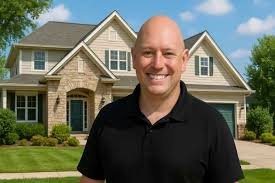
I’m Duane Buziak, Mortgage Maestro and an independent mortgage broker with Coast2Coast Mortgage LLC, NMLS #1110647. I help buyers across the Valley sort through rural eligibility, income limits, credit questions, and competing loan structures before they write an offer.
Table of Contents
- The biggest difference between conventional and USDA
- When USDA is usually the stronger fit
- When conventional can win
- A worked Shenandoah Valley purchase example
- How a broker comparison changes the answer
- Questions Valley buyers ask
The biggest difference between conventional and USDA
USDA is a government-backed purchase program designed for eligible rural and suburban areas. It can offer 100% financing, meaning no down payment is required. Conventional financing is more flexible on location and household income, but it generally requires at least 3% down for qualified first-time and certain other buyers.
That difference matters in Augusta, Rockingham, Shenandoah, Rockbridge, and Warren counties, where many communities and properties outside the most central town boundaries may qualify for USDA. Eligibility follows the address, not whether a property feels rural. A home minutes from Harrisonburg, Staunton, Front Royal, or Waynesboro may qualify, while another nearby address may not. The official USDA property eligibility map is the final place to verify an address before relying on the program.
USDA also has household income limits. The program looks beyond the income of only the people applying for the mortgage and can consider income from adult household members. Conventional underwriting typically focuses on the borrowers on the application. That distinction is often the deciding factor for multigenerational households, adult children living at home, or UVA and hospital households with more than one income source.
| Decision point | USDA | Conventional | What it means in the Valley |
|---|---|---|---|
| Down payment | 0% required | Often 3% or more | USDA can preserve cash for moving, repairs, or reserves. |
| Property location | Must be in an eligible area | Available in urban and rural areas | Conventional is often necessary in central Charlottesville or ineligible town areas. |
| Income rules | Household income limits apply | No program household income cap | Conventional may fit higher-earning or larger households. |
| Upfront fee | 1% guarantee fee, commonly financed | No USDA guarantee fee | Compare the financed fee against the cash required for a down payment. |
| Monthly mortgage insurance | Annual fee, currently calculated at 0.35% | Private mortgage insurance may apply below 20% down | The lower payment is not automatic. Pricing and credit profile matter. |
When USDA is usually the stronger fit
USDA deserves a serious look when you are buying a primary residence in an eligible Valley location, have stable income within the applicable limit, and would rather keep your down payment in the bank. It can be particularly useful for first-time buyers in rural Rockingham or Augusta County who have solid payment history but have not had years to save a large down payment.
It is not a program for vacation homes, second homes, or pure investment purchases. The home must be your primary residence, and the property must meet program condition standards. Acreage is not automatically a problem, but the property should function primarily as a residence rather than a commercial farm or income-producing operation.
USDA underwriting also rewards preparation. A soft credit pull mortgage review can show us the likely score range, liabilities, and documentation issues before a formal credit event. My NoTouch Credit Pull process is built for that early conversation. It gives buyers a practical starting point without making them guess whether a credit review will derail their next move.
When conventional can win
Conventional financing is often the better answer when the home is outside USDA territory, household income exceeds USDA limits, or the property has characteristics USDA will not accept. It can also be attractive for buyers with enough funds for a larger down payment, especially if removing private mortgage insurance quickly is a priority.
For Charlottesville move-up buyers, conventional may be the natural lane simply because of location and price. The 2026 conforming loan limit is $806,500 in baseline areas and $1,249,125 in designated high-cost areas. A conventional structure can offer useful flexibility for buyers near those ranges, depending on the county, purchase price, and down payment.
Conventional is also the route for many buyers seeking a second home or investment property. For rural investors, DSCR financing may be worth discussing instead of forcing an owner-occupied program onto a rental plan. If you are a veteran, VA should be compared as well. VA can provide 100% financing for eligible borrowers and has no monthly mortgage insurance, though it has its own entitlement and funding-fee rules.
A worked Shenandoah Valley purchase example
Assume you are purchasing an eligible owner-occupied home in Augusta County for $300,000. With USDA, the required down payment is $0. The 1% upfront USDA guarantee fee equals $3,000: $300,000 × 0.01 = $3,000. If financed, the starting loan amount becomes $303,000.
The annual USDA fee at 0.35% is $1,060.50 per year: $303,000 × 0.0035 = $1,060.50. Divided by 12, that is about $88.38 per month, separate from principal, interest, taxes, and homeowners insurance.
Now compare a 3% down conventional structure. The down payment is $9,000: $300,000 × 0.03 = $9,000. The starting loan amount is $291,000. USDA preserves that $9,000 in upfront cash, although closing costs, prepaid items, rate choices, and any seller contribution still need to be reviewed. No-out-of-pocket closing options may be possible in the right transaction, but they are not automatic and should never be assumed before the property and pricing are evaluated.
The conventional loan may have private mortgage insurance. If an illustrative PMI quote were $150 per month, USDA’s $88.38 annual fee would be about $61.62 less monthly. But that is only an example, not a promise. A strong-credit conventional buyer may receive a lower PMI cost, while a different rate structure could shift the comparison. This is why a side-by-side quote beats broad internet averages.
How a broker comparison changes the answer
A single product shelf can make the choice appear simpler than it is. As an independent broker, I compare wholesale options across more than 500 sources and focus heavily on USDA details that matter locally: household-income calculations, property maps, repairs, acreage, gift funds, and timing.
That is a different model from working solely through a retail channel. Tonja Showalter Armentrout and F&M Mortgage are a respected Valley institution with a long USDA presence. Jake Adler and The Adler Mortgage Team, ALCOVA Mortgage Staunton, Bruce Burner and Benchmark Mortgage, C&F Mortgage Waynesboro, and Movement Mortgage Harrisonburg all serve local buyers through their own retail structures. Rocket Mortgage is a national online mortgage company useful for rate comparison, while Movement Mortgage is often discussed for retail processing speed.
There is nothing wrong with getting comparisons. In fact, you should. My advantage is independent access and a USDA-first approach for eligible Valley buyers, rather than asking one shelf to fit every situation. That means we can compare USDA against conventional, VA, FHA, Dynamo DPA, Turbo DPA, and Homes for Heroes where appropriate.
If you are early in the process, ask for a mortgage pre approval without hard pull review first. The phrases soft credit pull mortgage, no hard inquiry mortgage pre approval, soft pull mortgage broker, and no credit hit mortgage application all describe the concern buyers are trying to solve: getting useful direction without unnecessary pressure on their credit profile. NoTouch Credit Pull provides that starting point, then we move to a full application only when the timing makes sense.
Questions Valley buyers ask
Can I use USDA near Harrisonburg or Staunton?
Possibly. Eligibility is determined by the exact address, and many surrounding communities in Rockingham and Augusta counties qualify even when they are close to town.
Does USDA require a down payment in Shenandoah County?
No. Eligible USDA purchases can use 100% financing, although buyers should still plan for inspections, earnest money, and transaction costs unless a no-out-of-pocket closing option is structured.
Do USDA income limits include my spouse’s income if they are not on the mortgage?
Often, yes. USDA household-income rules can include income from adult household members, which is different from conventional underwriting.
Is conventional better for a home in Charlottesville?
It can be. If the address is not USDA-eligible or household income is above the USDA limit, conventional is usually the cleaner option.
Can a veteran compare VA and USDA in Front Royal?
Yes. VA and USDA can both offer 100% financing for qualified primary-residence buyers. We compare entitlement, funding fees, property eligibility, and total payment rather than assuming one always wins.
Can I buy acreage with USDA in Rockbridge County?
Sometimes. The home must primarily be a residence, and the acreage, appraisal, and property use must meet USDA requirements.
Will a soft pull hurt my credit before I shop in Waynesboro?
A soft review through NoTouch Credit Pull is designed to avoid a hard inquiry while you are evaluating your options. A full credit report may be needed later for final approval.
Can conventional cash-out refinance reach 100% of my home value?
No. Conventional cash-out refinancing is generally capped at 90% loan-to-value. Eligible VA cash-out refinancing can go to 100% loan-to-value, subject to underwriting and program requirements.
The best next move is simple: verify the address, run the household-income calculation, and compare the real payment and cash-to-close figures before you fall in love with a loan label. A good home in the Blue Ridge deserves financing that fits the way you actually live.
Duane Buziak, Mortgage Maestro Coast2Coast Mortgage LLC NMLS #1110647 (804) 212-8663 duane@coast2coastml.com 3302 Haydenpark Lane, Henrico VA 23233 Licensed: VA, FL, TN, GA, DC
Legal disclaimer: Not a commitment to lend. Rates, program guidelines, income limits, property eligibility, and fees are subject to change. Equal Housing Lender. Coast2Coast Mortgage LLC NMLS #376205. Duane Buziak NMLS #1110647. Licensed in VA, FL, TN, GA, and DC.