
An FHA loan can be the bridge between renting and owning when a large down payment is the obstacle, but the details matter in the Valley. If you are researching how to buy with FHA, start with the property and payment you can truly carry – not just the maximum number a calculator produces. A home outside Harrisonburg, Staunton, Waynesboro, Front Royal, or Charlottesville may also qualify for USDA financing, which can change the best answer.
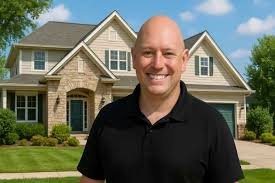
I am Duane Buziak, Mortgage Maestro, NMLS #1110647, an independent mortgage broker serving Virginia buyers who need straight answers before they write an offer. FHA is a strong lane for many first-time buyers, buyers rebuilding credit, and households using down payment assistance. It is not automatically the lowest-cost option, especially in rural Shenandoah Valley communities where USDA or VA may fit better.
Table of Contents
- What FHA lets you do
- FHA credit, down payment, and property rules
- A worked FHA purchase example
- FHA versus USDA and VA
- Getting pre-approved without a credit hit
- Why broker choice matters locally
- Frequently asked questions
What FHA lets you do
FHA is a government-insured mortgage program designed for owner-occupied primary homes. The standard minimum down payment is 3.5% for borrowers with a qualifying credit score of 580 or higher. Scores from 500 to 579 may be eligible with 10% down, although available program terms and broker overlays can vary.
FHA can be useful when conventional financing requires a larger down payment or higher credit score than your profile supports. Gift funds may be allowed, and approved down payment assistance programs such as Dynamo DPA, Turbo DPA, and Homes for Heroes can sometimes help with the cash needed to close. The exact fit depends on income, household size, credit, property type, and whether the assistance program can be paired with FHA.
The home must be your primary residence. FHA is not the lane for a rural investor buying a rental property – a DSCR loan may be more appropriate for that purpose. FHA also requires an appraisal that reviews both value and basic property condition. Peeling paint, missing handrails, roof concerns, exposed wiring, and unsafe access can become repair discussions before closing, particularly with older farmhouses and in-town homes across the Valley.
FHA credit, down payment, and cash to close
Your down payment is only one part of the purchase equation. You may also have closing costs, prepaid taxes and insurance, and an earnest-money deposit. Seller concessions can help with eligible closing costs and prepaids, subject to FHA rules and contract negotiations, but they do not replace the required down payment.
There may be no-out-of-pocket closing options when a seller credit, program assistance, or a pricing credit covers eligible costs. That is not guaranteed, and it does not mean every buyer brings no money to the table. Your offer strength, appraisal value, seller motivation, and selected rate all affect the result.
For local context, the USDA Property Eligibility Map identifies many addresses outside the larger population centers as potentially eligible for rural housing financing. Eligibility is address-specific, which is why a home near Broadway, Elkton, Mount Jackson, Fishersville, or Luray should be checked before assuming FHA is the only low-down-payment route.
A worked FHA purchase example
Assume you are purchasing a $275,000 primary home in Augusta County with a 580-plus credit score and using FHA’s 3.5% minimum down payment.
Your down payment is $275,000 multiplied by 3.5%, or $9,625. The base FHA loan amount is $275,000 minus $9,625, which equals $265,375. FHA’s upfront mortgage insurance premium is typically 1.75% of the base loan amount: $265,375 multiplied by 1.75% equals $4,644.06.
If financed into the loan, the total starting loan amount becomes $270,019.06. At an annual mortgage insurance rate of 0.55%, the first-year monthly FHA mortgage insurance estimate is about $121.63 per month, calculated as $265,375 multiplied by 0.55%, divided by 12. Your principal and interest payment will depend on the interest rate and term, while taxes, homeowners insurance, and any HOA dues are added separately.
Now compare that with a potentially USDA-eligible $275,000 home. USDA can offer 100% financing for qualifying borrowers, meaning the $9,625 FHA down payment may remain in your savings. USDA also has a 1% upfront guarantee fee, which would be $2,750 on a $275,000 base loan, plus an annual fee. USDA has household income limits and location rules, so this is not a blanket recommendation. It is a reason to compare before committing to FHA.
FHA versus USDA and VA in the Valley
| Program | Typical cash requirement | Best fit | Key trade-off |
|---|---|---|---|
| FHA | 3.5% down with qualifying credit | Buyers needing flexible credit guidelines | Mortgage insurance and property-condition standards |
| USDA | Potentially no down payment | Eligible rural addresses and qualifying household income | Address and income limits apply |
| VA | Potentially no down payment | Eligible veterans, service members, and surviving spouses | Certificate of Eligibility and funding fee rules apply |
| Conventional | Often 3% to 5% down | Strong credit or buyers seeking broader property flexibility | Credit and pricing can be less forgiving |
Veterans should compare FHA with VA before making a financing decision. VA can go to a 500 FICO score in the right wholesale lane, and eligible borrowers may buy with no down payment. On a $275,000 VA purchase with no down payment, a first-use funding fee of 2.15% would be $5,912.50 if applicable. Some veterans are exempt from the funding fee. VA cash-out refinancing is available up to 100% LTV, while conventional cash-out is capped at 90% LTV.
FHA may still be right if VA entitlement is unavailable, reserved, or better used elsewhere. The point is to compare the complete payment, cash needed, property eligibility, and future plans – not just the interest rate shown first.
Start with a credit conversation, not pressure
A soft credit pull mortgage review can help you understand where you stand before you are under contract. My NoTouch Credit Pull process is built for this early planning stage. It can support a no hard inquiry mortgage pre approval conversation and help identify whether FHA, USDA, VA, or conventional financing deserves the closer look.
Buyers often ask for a mortgage pre approval without hard pull because they are six months away from shopping, changing jobs, paying down debt, or comparing a move from Charlottesville to Rockingham County. A soft pull mortgage broker review can provide useful direction without treating every first conversation like a full no credit hit mortgage application. When it is time for a full application and a property-specific approval, the credit and documentation requirements become more formal.
Use NoTouch Credit Pull early, then shop with a payment target that leaves room for maintenance, commuting, and the realities of owning an older Valley home. That preparation can make your offer calmer and more credible when the right house appears.
Broker choice matters when FHA is not your only option
A retail office may offer good service, but its product shelf is typically limited to its own menu. An independent broker can compare wholesale options across a wider field and assess whether FHA truly wins against USDA, VA, or a conventional alternative.
That distinction matters here. Tonja Showalter Armentrout and F&M Mortgage are established Valley names, while Jake Adler and The Adler Mortgage Team, ALCOVA Mortgage Staunton, Bruce Burner at Benchmark Mortgage, C&F Mortgage Waynesboro, and Movement Mortgage Harrisonburg all serve local buyers through retail channels. Rocket Mortgage provides a national online rate-comparison option, and Movement Mortgage is often considered for processing speed. Each may be worth comparing respectfully.
My approach is different: one broker relationship, access to 500-plus wholesale lenders, and deep USDA experience for communities the larger institutions can overlook. As a Scotsman Guide Top Originator in 2025 at #114 with $44.4 million and in 2026 with $51.2 million, I focus on matching the file to the right lane, not forcing every buyer into one shelf. That is the purpose behind Dare to Compare pricing and the 24-Hr Guarantee.
FHA Questions From Valley Buyers
Can I buy with FHA in Harrisonburg or Staunton?
Yes, if the home will be your primary residence and you meet FHA credit, income, and underwriting requirements. The property must also meet FHA appraisal standards.
How much do I need down for FHA?
Most qualified buyers need 3.5% down with a credit score of 580 or higher. Buyers with scores from 500 to 579 generally need 10% down.
Can seller credits cover FHA closing costs?
They can cover eligible closing costs and prepaids within FHA limits. They generally cannot cover the required down payment.
Is USDA better than FHA in Rockingham or Augusta County?
It depends on the address, household income, credit profile, and payment comparison. USDA may offer no-down-payment financing at eligible rural addresses.
Can I use FHA for an older Shenandoah Valley home?
Yes, but the appraisal may call out health, safety, or structural items that need repair before closing. Older homes deserve a careful condition review before an offer.
Can I combine FHA with down payment assistance?
Often yes, subject to the assistance program’s rules, income limits, funds availability, and underwriting approval. Dynamo DPA, Turbo DPA, and Homes for Heroes should be evaluated case by case.
Does FHA have mortgage insurance?
Yes. FHA typically includes an upfront mortgage insurance premium and a monthly mortgage insurance charge. The duration and cost depend on loan terms and down payment.
Should a veteran choose FHA or VA?
A veteran should compare both. VA may offer no down payment and different mortgage insurance economics, while FHA can be a backup when VA is not the best fit.
The right FHA plan is not about getting approved for the biggest payment. It is about buying a home you can enjoy from the first month forward, with financing that fits the road ahead.
Duane Buziak, Mortgage Maestro | Coast2Coast Mortgage LLC | NMLS #1110647 | (804) 212-8663 | duane@coast2coastml.com | 3302 Haydenpark Lane, Henrico VA 23233 | Licensed: VA, FL, TN, GA, DC
Not a commitment to lend. Rates subject to change. Equal Housing Lender. Coast2Coast Mortgage LLC NMLS #376205. Duane Buziak NMLS #1110647.