
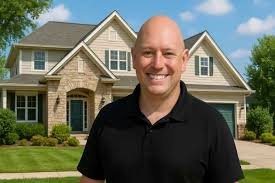
Picture this: you’re a first-time buyer in Harrisonburg, you’ve spent three weekends touring homes in Rockingham County, and you finally find the one. A craftsman on a quiet street near Massanutten, priced at $275,000. Your pre-approval is in hand. The offer gets accepted. Then your Closing Disclosure arrives — and suddenly there’s a column of numbers totaling nearly $9,000 that nobody warned you about.
This happens more than it should in the Shenandoah Valley. Buyers focus on the purchase price and the monthly payment, and closing costs become the surprise nobody planned for. This guide has been updated for 2026, incorporating the current 2026 FHFA conforming loan limit of $806,500 baseline ($1,249,125 in high-cost areas), the latest USDA and VA fee schedules, and current Virginia recordation tax rules. The good news: closing costs in Virginia are a predictable set of fees — and with the right loan program and broker strategy, many Valley buyers bring far less to the table than they expect.
This guide breaks down every fee category, shows real math on a $275,000 home in Augusta County, and explains how working with an independent mortgage broker can unlock no-out-of-pocket closing options that retail lenders simply can’t match. Whether you’re buying in Staunton, Waynesboro, Front Royal, or Luray, the same framework applies — and the numbers are less intimidating once you understand what each line item actually means.
One important note before you start comparing lenders: a soft pull pre-qualification, no-hard-inquiry pre-approval review, or soft credit check mortgage estimate from Duane Buziak gives you a real loan estimate comparison — including closing cost projections across USDA, VA, FHA, and conventional — without a single hard inquiry touching your credit file. This soft pull pre-screening and no-impact credit review process is the right starting point for any Charlottesville, Blue Ridge, or Shenandoah Valley buyer who wants to understand their full cost picture before committing to a lender.
Article prepared by Duane Buziak, NMLS #1110647, Coast2Coast Mortgage LLC, NMLS #376205. Licensed in Virginia. Phone: 804-212-8663.
Legal Disclaimer: This article is for informational purposes only and does not constitute a commitment to lend or a guarantee of loan terms. Loan programs, rates, fees, and eligibility requirements are subject to change without notice. All loans subject to credit approval, income verification, and property eligibility. Duane Buziak, NMLS #1110647. Coast2Coast Mortgage LLC, NMLS #376205. Licensed in Virginia. Not a government agency. Equal Housing Opportunity.
The Real Numbers: What Virginia Buyers Actually Pay at the Closing Table
Closing costs in Virginia typically fall between 2% and 5% of the purchase price. On a $275,000 home in the Shenandoah Valley, that translates to roughly $5,500 on the low end and $13,750 on the high end. Where you land within that range depends on your loan type, the county you’re buying in, and — critically — who originates your loan.
Every closing cost falls into one of two buckets. The first is lender fees: origination charges, underwriting fees, discount points, and rate lock fees. These are the costs your lender controls, and they vary significantly between a retail bank and an independent broker. The second bucket is third-party fees: the appraisal, title search, title insurance, settlement agent fee, survey (if required), and flood certification. These are set by outside vendors, not your lender — though your broker can help you shop some of them.
Virginia buyers also encounter a cost layer that surprises many people relocating from other states: recordation taxes. Virginia imposes a recordation tax on deeds of trust at a state rate of $0.25 per $100 of the loan amount, with localities adding their own layer on top. You can review the current recordation tax schedule directly in the Code of Virginia, Title 58.1, Chapter 8 at law.lis.virginia.gov. The Virginia grantor’s tax — typically $0.50 per $500 of the sales price — is a seller cost in most transactions, not a buyer cost. But the recordation tax on the deed of trust IS a buyer cost, and it adds up on a $275,000 loan.
One more Virginia-specific distinction worth flagging for first-time buyers: Virginia closings are typically handled by a licensed settlement agent or real estate attorney, not the lender. In the Valley market — Harrisonburg, Staunton, Waynesboro, Winchester — most closings go through a local settlement agent or title company. Their fee (typically $300–$600) appears on your Loan Estimate and Closing Disclosure as the settlement or closing fee. This is normal, expected, and not negotiable in the way lender fees are. What IS negotiable is whether your seller helps cover it.
Fee-by-Fee Breakdown: Every Line on Your Loan Estimate Explained
Your Loan Estimate is organized into lettered sections. Understanding what each section contains is the fastest way to become an informed buyer — and to spot where one lender is charging more than another.
Section A: Origination Charges — This is where lender fees live: the origination fee, underwriting fee, and any discount points you choose to buy. This is also where the broker vs. retail distinction matters most. As an independent broker with access to 500+ wholesale lenders, Duane Buziak structures compensation differently than a retail bank or captive lender like ALCOVA Mortgage Staunton or Rocket Mortgage. Wholesale lenders don’t add a retail margin on top of the broker’s compensation the way a retail bank does — which means Section A fees are often lower on a broker-originated Loan Estimate. Compare Section A line by line when you receive estimates from multiple sources.
Sections B and C: Services You Cannot Shop For / Can Shop For — These cover third-party fees. Here’s what to expect in Valley markets:
Appraisal: Typically $450–$650 for a standard single-family home in Rockingham, Augusta, or Shenandoah counties. Rural properties or complex acreage can run higher.
Credit report fee: Usually $25–$50. Small, but it appears on every Loan Estimate.
Flood certification: A nominal fee ($10–$20) to confirm whether the property is in a FEMA flood zone. Required on all federally backed loans.
Title search and title insurance: The lender’s title insurance policy is required on every loan. The owner’s title insurance policy is optional — but strongly recommended, especially for rural properties in Page, Warren, and Shenandoah counties where deed histories can be complex, easements are common, and boundary disputes occasionally surface. Owner’s title insurance is a one-time premium that protects your ownership interest for as long as you own the home. It’s one of the few optional fees that is genuinely worth paying.
Settlement/closing fee: The settlement agent’s charge for coordinating and conducting the closing. Typically $300–$600 in Valley markets.
Sections F, G, and H: Prepaids and Escrow Setup — This is where many buyers get confused. Prepaids and escrow deposits are NOT lender fees. They are costs you would pay regardless of who originates your loan.
Prepaid homeowners insurance: Your lender requires proof of a paid first-year policy at closing. This is paid directly to your insurance carrier — not to the lender.
Prepaid interest: Interest accrues from your closing date to the end of the month. If you close on the 15th, you prepay 15 days of interest. Closing earlier in the month means more prepaid interest; closing near the end of the month minimizes it.
Property tax escrow cushion: Your lender collects a cushion of 2–3 months of property taxes upfront to seed your escrow account. Augusta County and Rockingham County have different tax rates — your Loan Estimate will reflect the specific county’s rate. This is money that sits in escrow and pays your tax bill when it comes due; it’s not a fee you lose.
The practical takeaway: when comparing Loan Estimates, focus your energy on Section A (lender fees) and the third-party fees in Sections B and C. Prepaids and escrow are largely fixed — they don’t vary meaningfully between lenders.
Closing Costs by Loan Type: USDA, VA, FHA, and Conventional Side-by-Side
Loan type is the single biggest variable in your closing cost equation. Here’s how each program works in the Valley context.
USDA Rural Development Loans — For eligible buyers in Rockingham, Augusta, Shenandoah, Warren, Page, and Frederick counties, USDA is often the strongest path to homeownership. Zero down payment is the headline — but closing costs still apply (typically 2%–5% of the purchase price). The key advantages are structural:
First, USDA allows the seller to contribute up to 6% of the purchase price toward the buyer’s closing costs. On a $275,000 purchase, that’s up to $16,500 in seller-paid costs — more than enough to cover typical closing costs entirely. Second, when the appraised value supports it, USDA permits rolling closing costs into the loan amount. Combined with seller concessions, eligible buyers in USDA-approved areas can achieve a true $0 out-of-pocket closing.
USDA also charges an upfront guarantee fee of 1.0% of the loan amount (financed into the loan, not paid at closing) and an annual fee of 0.35% of the outstanding balance, paid monthly. Verify current fee schedules at rd.usda.gov. Confirm property eligibility using the USDA eligibility map at eligibility.sc.egov.usda.gov — most areas outside Harrisonburg city limits and the core of Winchester qualify.
VA Loans — For veterans near Fort Defiance, Verona, and throughout Augusta and Frederick counties, VA is frequently the most cost-effective loan available. No down payment, no private mortgage insurance, and seller concessions allowed up to 4% of the purchase price plus all customary closing costs. The VA funding fee applies: 2.15% of the loan amount for first-time use at 0% down, 3.3% for subsequent use at 0% down. The funding fee is waived entirely for veterans with a service-connected disability rating. Verify current funding fee tables at VA.gov. No-out-of-pocket closing options are achievable with proper seller concession structuring.
FHA and Conventional — FHA requires a minimum 3.5% down payment (580+ FICO) plus an upfront MIP of 1.75% of the base loan amount (financed) and annual MIP of 0.55% on 30-year loans with LTV above 90% (verify current rates at HUD.gov). Seller concessions up to 6% are allowed. Conventional loans require 3%–20% down with no government upfront fee; PMI applies below 20% LTV and can be removed once equity reaches 20%. Seller concession limits on conventional loans follow Fannie Mae guidelines: 3% when LTV is above 90%, 6% when LTV is 75%–90%, and 9% when LTV is below 75%. The 2026 conforming loan limit is $806,500 for standard areas.
| Loan Type | Min. Down Payment | Upfront Gov’t Fee | Monthly Insurance | Max Seller Concession | $0 Out-of-Pocket Possible? |
|---|---|---|---|---|---|
| USDA | $0 (0%) | 1.0% (financed) | 0.35% annually | 6% of purchase price | Yes — with seller concessions |
| VA | $0 (0%) | 2.15%–3.3% (financed) | None (no PMI) | 4% + customary costs | Yes — with seller concessions |
| FHA | 3.5% (580+ FICO) | 1.75% (financed) | ~0.55% annually | 6% of purchase price | Yes — with seller concessions |
| Conventional | 3%–20% | None | PMI if LTV > 80% | 3%–9% (LTV-based) | Yes — via lender credits or seller concessions |
Worked Dollar Example: $275,000 Home in Augusta County
Let’s put real numbers on the table. The scenario: a $275,000 purchase in Augusta County, comparing USDA, FHA, and Conventional 5% down. Estimated third-party closing costs (appraisal, title, settlement, recordation taxes, prepaids) are held constant at $6,500 across all three scenarios for a clean comparison. The only variable is the loan program.
USDA Scenario: Zero down payment. USDA upfront guarantee fee: 1.0% of $275,000 = $2,750, financed into the loan. Total loan amount: $277,750. Estimated closing costs: $6,500. Seller concession of $6,500 (2.36% of purchase price — well within the 6% cap): buyer’s cash to close = $0. Monthly USDA annual fee: 0.35% of $277,750 ÷ 12 = approximately $81/month added to the payment.
FHA Scenario: Down payment: 3.5% of $275,000 = $9,625. Base loan amount: $265,375. FHA upfront MIP: 1.75% of $265,375 = $4,644, financed. Total FHA loan: $270,019. Estimated closing costs: $6,500. Without seller help, total cash to close: $9,625 (down payment) + $6,500 (closing costs) = $16,125. FHA annual MIP: 0.55% of $270,019 ÷ 12 = approximately $124/month added to the payment.
Conventional 5% Down Scenario: Down payment: 5% of $275,000 = $13,750. Loan amount: $261,250. No upfront government fee. Estimated closing costs: $6,500. Without seller help, total cash to close: $13,750 + $6,500 = $20,250. PMI applies (LTV is 95%); PMI rate varies by FICO but typically adds $80–$130/month at this LTV.
The monthly payment comparison reinforces the USDA advantage. At current market rates (which change daily — contact Duane for a real-time quote), the USDA loan carries a higher loan balance but no PMI, and the 0.35% annual fee adds roughly $81/month. The FHA loan’s annual MIP adds roughly $124/month. USDA wins on both cash to close AND monthly carrying cost for eligible Augusta County buyers.
Here’s a detail that changes the conversation before it even starts: Duane offers a NoTouch Credit Pull — a soft-pull preliminary cost estimate that carries no hard inquiry and has zero impact on your credit score. You get a real picture of your closing costs, monthly payment, and loan program options before you’ve committed to anything. Retail lenders like ALCOVA Mortgage Staunton and Rocket Mortgage typically require a hard credit pull before they’ll generate a Loan Estimate. That means your credit takes a hit just to get a number. With a NoTouch Credit Pull, you can compare scenarios across USDA, FHA, and conventional — and understand exactly what you’d bring to the table — before you’re on the clock.
How to Reduce What You Bring to the Table: Negotiation and Program Strategies
Knowing your closing cost total is only half the equation. The other half is knowing which levers you can pull to reduce what you actually bring to the closing table.
Seller Concessions: In Valley markets where median prices run in the $240K–$310K range and many sellers have accumulated equity, asking for seller-paid closing costs is a realistic negotiating position — not a long shot. The key is structuring the offer correctly. An offer that asks for $6,500 in seller concessions on a $275,000 home is different from asking for a $6,500 price reduction: the seller nets the same, but you preserve your cash. Your broker can help you model the offer structure so the concession request doesn’t undermine your competitiveness. There’s also a distinction between seller concessions toward closing costs and seller-paid discount points (buying down your interest rate). Both are valid tools. An independent broker can model both scenarios across multiple lenders to find the structure that serves your long-term interest.
Virginia Housing Down Payment Assistance: Virginia Housing (formerly VHDA) offers down payment assistance grants and second mortgage programs for eligible buyers. These programs can cover down payment AND closing costs, and as a broker, Duane has access to Virginia Housing programs alongside wholesale lender programs — giving buyers more options than a retail lender that may only participate in one channel. Income limits and purchase price caps apply by county. Review current program details at virginiahousing.com.
Lender Credits: Accepting a slightly higher interest rate in exchange for lender credits is a legitimate strategy for cash-light buyers. The lender credits offset closing costs at the table — creating a no-out-of-pocket closing option on conventional, FHA, and VA loans. This is not free money. The trade-off is a higher monthly payment for the life of the loan, or until you refinance. For buyers who plan to sell or refinance within five to seven years, the math often favors taking the credit. For buyers who plan to stay long-term, paying closing costs out of pocket (or financing them through USDA) typically costs less over time. The right answer depends on your specific situation — and an independent broker with access to 500+ lenders can model multiple rate/credit combinations to find the structure that actually fits your timeline and cash position.
Broker vs. Retail: Why Where You Get Your Loan Affects What You Pay
Not all mortgage originators have the same tools. The table below shows how an independent broker compares to the retail lenders most Valley buyers encounter.
| Originator | Lender Type | Wholesale Access | USDA Program Depth | NoTouch Credit Pull | No-Out-of-Pocket Closing Options | Loan Program Shelf Width |
|---|---|---|---|---|---|---|
| Duane Buziak / Coast2Coast Mortgage | Independent Broker | 500+ wholesale lenders | Multiple USDA-approved lenders; shops Section A fees | Yes | Yes — USDA, VA, FHA, Conventional | Broadest — all major programs |
| ALCOVA Mortgage Staunton | Retail Lender | No wholesale access | Single institution USDA | No — hard pull required | Limited — retail margin applies | Standard retail shelf |
| Rocket Mortgage | National Retail Lender | No wholesale access | Limited rural USDA depth | No — hard pull required | Limited — retail pricing | Standard retail shelf |
| F&M Mortgage (Tonja Showalter Armentrout) | Single-Institution Retail | No wholesale access | Single USDA-approved institution | No — hard pull required | Limited — one rate sheet | F&M Bank programs only |
The Loan Estimate is your comparison tool by federal law. Under TRID rules, every lender must issue a Loan Estimate within three business days of application. When you receive LEs from two or more sources, compare Section A line by line. An independent broker’s LE will typically show lower Section A fees because wholesale lenders don’t add a retail margin on top of the broker’s compensation. The government fees, third-party fees, and prepaids will be similar across lenders — Section A is where the real difference lives.
One misconception worth clearing up directly: many buyers assume they can always roll closing costs into their loan. The reality is more nuanced. USDA allows it when the appraised value supports a loan amount above the purchase price. VA allows financing of the funding fee specifically. FHA finances the UFMIP. But conventional loans do NOT allow rolling closing costs into the loan amount — lender credits or seller concessions are the only conventional options. This is a common point of confusion, and it’s exactly the kind of thing a NoTouch Credit Pull conversation with Duane can clarify before you’ve made any commitments or taken any credit hits.
Frequently Asked Questions: Virginia Closing Costs by County and City
Q: How much are closing costs on a $275,000 home in Augusta County, Virginia?
A: On a $275,000 purchase in Augusta County, closing costs typically fall between $5,500 and $13,750 (2%–5% of the purchase price). The actual figure depends on your loan type, lender fees, and whether you negotiate seller concessions. USDA-eligible buyers in Augusta County can often reach $0 out-of-pocket with a seller contribution of 2%–4% of the purchase price.
Q: Does Waynesboro qualify for USDA zero-down in 2026?
A: Parts of the Waynesboro area may qualify for USDA Rural Development financing, but eligibility is property-specific and changes as census data updates. Confirm eligibility for any specific address using the official USDA eligibility map. Income limits also apply — contact Duane Buziak at 804-212-8663 for a current eligibility check with no hard credit pull.
Q: Can the seller pay my closing costs in Harrisonburg, Virginia?
A: Yes. Seller-paid closing costs are common in Harrisonburg and Rockingham County transactions. The maximum seller contribution depends on your loan type: USDA allows up to 6%, VA allows up to 4% plus customary costs, FHA allows up to 6%, and conventional allows 3%–9% based on your LTV ratio. Your offer can be structured to include seller concessions without reducing your competitiveness in the current market.
Q: What is the Virginia recordation tax and who pays it?
A: Virginia imposes a recordation tax on deeds of trust at a state rate of $0.25 per $100 of the loan amount. Local jurisdictions may add additional recordation taxes. This is a buyer cost. The Virginia grantor’s tax (typically $0.50 per $500 of the sales price) is a seller cost. Review the current schedule in the Code of Virginia, Title 58.1, Chapter 8.
Q: Are closing costs higher for FHA loans than USDA loans in Rockingham County?
A: The third-party closing costs (appraisal, title, settlement) are similar for both programs in Rockingham County. The key difference is the government fees: USDA charges a 1.0% upfront guarantee fee (financed) and 0.35% annual fee. FHA charges a 1.75% upfront MIP (financed) and 0.55% annual MIP. FHA also requires a down payment (3.5% minimum). For USDA-eligible buyers, USDA typically results in lower total cash to close and a lower monthly payment.
Q: Can I roll closing costs into my mortgage in Virginia?
A: It depends on your loan type. USDA allows rolling closing costs into the loan when the appraised value supports a loan amount above the purchase price. VA allows financing of the funding fee. FHA finances the upfront MIP. Conventional loans do NOT allow rolling closing costs into the loan — you must use seller concessions or lender credits instead. A broker conversation can clarify which options apply to your specific scenario.
Q: What is a NoTouch Credit Pull and how does it help me compare closing costs?
A: A NoTouch Credit Pull is a soft-pull pre-qualification process that generates a preliminary cost estimate — including estimated closing costs and monthly payment — without triggering a hard inquiry on your credit report. Your credit score is not affected. Retail lenders including ALCOVA, Rocket Mortgage, and F&M typically require a hard pull before issuing a Loan Estimate. Duane Buziak’s NoTouch Credit Pull lets you compare loan programs and closing cost scenarios before you commit. Call 804-212-8663 to start.
Q: How do closing costs differ for VA loans for veterans in Frederick County, Virginia?
A: VA loans in Frederick County offer some of the strongest closing cost terms available. There is no down payment requirement and no private mortgage insurance. The VA funding fee (2.15% first use at 0% down; waived for disabled veterans) is financed into the loan. Sellers can contribute up to 4% of the purchase price plus all customary closing costs. For Frederick County veterans near Winchester and Stephens City, VA loans with proper seller concession negotiation routinely result in no-out-of-pocket closing costs. Verify current funding fee rates at VA.gov.
Legal Disclaimer: This article is for informational purposes only and does not constitute a commitment to lend or a guarantee of loan terms. Loan programs, rates, fees, and eligibility requirements are subject to change without notice. All loans subject to credit approval, income verification, and property eligibility. USDA, VA, FHA, and conventional loan programs have specific eligibility requirements — contact a licensed mortgage broker for a personalized assessment. Duane Buziak, NMLS #1110647. Coast2Coast Mortgage LLC, NMLS #376205. Licensed in Virginia, Florida, Tennessee, Georgia, and the District of Columbia. Not a government agency. Equal Housing Opportunity.
Putting It All Together: Your Path to the Closing Table
Closing costs in Virginia are not a mystery — they’re a predictable set of fees that follow a consistent framework, with state-specific layers like recordation taxes and a settlement agent structure that Valley buyers should understand going in.
The most important takeaway: loan type matters more than almost any other variable. USDA is the strongest no-cash-to-close path for eligible buyers in Rockingham, Augusta, Shenandoah, Warren, Page, and Frederick counties. VA is the best option for qualifying veterans throughout the Valley. No-out-of-pocket closing options exist on FHA and conventional loans through seller concessions and lender credits — and an independent broker with access to 500+ wholesale lenders can model every combination to find what actually works for your situation and timeline.
The right starting point isn’t a hard credit pull. It’s a conversation. Duane Buziak’s NoTouch Credit Pull gives you a real Loan Estimate comparison — across USDA, VA, FHA, and conventional — without touching your credit score. You’ll know your estimated closing costs, your monthly payment, and your best path forward before you’ve made any commitments.
Ready to get a clear picture of what you’ll actually pay at the closing table? Contact our local mortgage experts today and start with a NoTouch Credit Pull — no hard inquiry, no commitment, no surprises. Call Duane directly at 804-212-8663.