
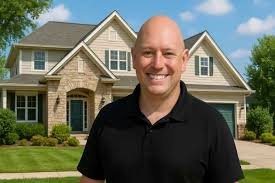
Updated August 2026 — program thresholds and guidance reflect current USDA, VA, FHA, Conventional, and Non-QM standards. Duane Buziak, NMLS #1110647 | Coast2Coast Mortgage LLC, NMLS #376205 | Licensed in VA. This content is for informational purposes only and does not constitute a commitment to lend or a guarantee of loan approval. All loans are subject to underwriting approval, program eligibility, and lender guidelines in Virginia.
You did everything right. You saved diligently, found a home you love in Harrisonburg or Staunton, and submitted your application with confidence — then the denial letter arrived. It is a gut punch that happens to more Valley buyers than most people realize, and it does not mean homeownership is off the table. It means you applied to the wrong place, or the wrong program, or both.
A denial from one lender is not a verdict from the market. It is feedback from a single institution with its own internal policies, its own overlay requirements, and its own program limitations. The Shenandoah Valley and Blue Ridge corridor are served by loan programs — particularly USDA Rural Development — that solve problems conventional lenders cannot touch. Zero down payment. Flexible income documentation. Credit score floors that are lower than what many retail banks advertise.
In this guide, we walk through the five most common reasons Valley buyers get denied, why USDA is the quiet superpower for Rockingham, Augusta, Shenandoah, Warren, Page, and Frederick counties, and how VA, FHA, and non-QM programs fill the gaps for buyers who fall outside the standard box. Key 2026 benchmarks: the FHFA conforming loan limit is $806,500 for standard areas ($1,249,125 for designated high-cost areas) — and VA cash-out refinancing reaches 100% LTV for eligible veterans, not the 80–90% cap that conventional programs impose.
Duane Buziak is an independent mortgage broker — not a single-bank gatekeeper — with access to 500+ wholesale lenders across Virginia. He can run a soft pull pre-qualification — a no-hard-inquiry credit review — to identify your best path forward before any score impact occurs. That means a genuine no-impact credit check for mortgage options while you explore programs and lenders. A soft inquiry mortgage pre-approval review costs you nothing and protects your score during the shopping phase — call 804-212-8663 to get started.
Duane Buziak, NMLS #1110647 | Coast2Coast Mortgage LLC, NMLS #376205
The Five Reasons Valley Buyers Get Denied — and Which One Is Yours
Most mortgage denials trace back to one of five root causes. Identifying yours is the first step toward fixing it — and in many cases, the fix is faster than buyers expect.
Credit Score Below the Program Threshold: Every loan type carries a minimum credit score, but the number your retail lender quotes you is often their internal overlay — not the agency minimum. Here is how the floors actually stack up for 2026:
FHA allows a 580 credit score with 3.5% down, and borrowers in the 500–579 range can still qualify with 10% down. USDA Rural Development requires a 640 score for automated approval through the Guaranteed Underwriting System (GUS), but manual underwriting is available below that threshold when compensating factors are strong. VA loans carry no published agency minimum — lender overlays typically land between 580 and 620, which means broker access matters enormously here. Conventional loans require a 620 minimum.
The critical nuance: retail lenders like ALCOVA Mortgage Staunton and national platforms like Rocket Mortgage layer their own overlays on top of agency minimums. A buyer who scores 595 may be turned away by a retail lender whose internal floor is 620, but that same buyer could qualify through an FHA lender accessed via an independent broker whose overlay floor matches the agency standard. The file does not change. The audience for the file does.
Debt-to-Income Ratio That Exceeds the Lender’s Ceiling: DTI is the ratio of your monthly debt obligations to your gross monthly income. Lenders look at two numbers: front-end DTI (housing costs only, divided by income) and back-end DTI (all monthly debts including housing, divided by income). Back-end DTI is the number that most often triggers a denial.
USDA allows up to 41% back-end DTI as a standard guideline, with room to stretch to 44% or beyond when compensating factors like strong reserves or a high credit score are present. FHA is more flexible, allowing 43–50% back-end DTI with appropriate compensating factors. Conventional loans through Fannie Mae and Freddie Mac typically cap at 45–50%. A single-bank lender caps at their own internal policy — which may be more conservative than the agency allows. A broker shops for the lender whose DTI ceiling actually fits your numbers.
Income Documentation Gaps: W-2 employees have a straightforward paper trail. Self-employed buyers, seasonal workers, gig economy earners, and 1099 contractors face a different reality. Tax returns often understate actual cash flow because legitimate business deductions reduce taxable income — which is exactly what a good accountant is supposed to do, but it creates a qualification problem when a lender looks at adjusted gross income instead of actual deposits.
Bank statement loan programs address this directly. Instead of tax returns, these programs use 12 or 24 months of personal or business bank statements to document income. For Shenandoah Valley small business owners, farmers, contractors, and hospitality workers whose tax returns do not reflect their real financial strength, this is often the path forward.
Property Issues: Appraisals that come in low, properties with well and septic systems that need inspection, and rural homes with deferred maintenance can all create complications — particularly with conventional lenders. USDA and FHA have their own property standards, but they are designed for the type of housing stock common in the Valley.
Employment History Gaps: Lenders typically want two years of consistent employment history. Career changes, gaps between jobs, or recent self-employment transitions can raise flags. These are not automatic disqualifiers, but they require the right lender and the right documentation strategy.
Why USDA Is the Quiet Superpower for Shenandoah Valley Buyers
If you are buying in the Shenandoah Valley and you have not had a serious conversation about USDA Rural Development financing, you are leaving the most powerful tool in the Valley buyer’s toolkit on the bench. Zero down payment. Below-market guarantee fees. Income limits that cover a wide range of Valley households. And geographic eligibility that covers large portions of the region most buyers are actually shopping in.
USDA eligibility in the Valley requires some nuance. Harrisonburg city proper is generally not USDA-eligible due to its urban designation, but surrounding Rockingham County communities — Elkton, Broadway, Bridgewater, Dayton, Grottoes, and McGaheysville — are typically eligible. Augusta County unincorporated areas are generally eligible. Waynesboro and Staunton city limits should be checked against the live eligibility map, as boundary designations shift. The definitive resource is the USDA property eligibility map — use it before assuming a property does or does not qualify.
USDA eligibility also extends through Shenandoah County (Woodstock, Strasburg, Edinburg), Warren County (Front Royal and surrounding areas), Page County (Luray, Shenandoah), and Frederick County (areas outside Winchester city limits). This is a substantial geographic footprint that covers the majority of where Valley buyers are actually searching.
The Real Math: USDA vs. FHA on a $275,000 Purchase
Let’s run the actual numbers on a $275,000 home purchase — a realistic price point for Rockingham and Augusta County buyers in 2026.
USDA Zero-Down Scenario: Zero down payment required. Upfront guarantee fee of 1.0% ($2,750) is rolled into the loan, bringing the financed amount to $277,750. Annual guarantee fee of 0.35% of the outstanding loan balance is added to the monthly payment — on $277,750, that is approximately $81/month. Total out-of-pocket at closing: $0 down payment (closing costs may apply — no-out-of-pocket closing options available).
FHA 3.5% Down Scenario: Down payment of 3.5% on $275,000 equals $9,625 required at closing. Upfront MIP of 1.75% ($4,812) is typically rolled into the loan. Annual MIP of 0.55% on the loan balance adds approximately $126/month to the payment on a standard 30-year loan under $726,200.
The monthly payment difference between USDA and FHA on this scenario is meaningful: USDA’s annual fee runs approximately $45/month lower than FHA’s annual MIP on a comparable loan balance. Over the life of the loan, that gap compounds. And the $9,625 that FHA requires at the table simply does not exist for many buyers — which is why USDA’s zero-down structure is not just a convenience, it is often the difference between buying and waiting.
Income Limits: More Valley Buyers Qualify Than They Think
USDA income limits are set by household size and county. Many Valley buyers assume they earn too much to qualify — and many of them are wrong. The limits are higher than most buyers expect, particularly for larger households.
For current 2026 income limits by county and household size, consult the USDA Rural Development income limit map or the USDA income eligibility tool directly. Exceeding the limit is a hard stop — but confirming your actual number against the current limit before assuming disqualification is essential.
Broker Advantage Over a Single-Bank USDA Pipeline
F&M Mortgage, where Tonja Showalter Armentrout originates, has a well-established presence in Augusta County and a legitimate USDA track record. The structural reality, however, is that F&M operates through a single bank’s approval pipeline. An independent broker like Duane accesses multiple USDA-approved wholesale lenders, can shop guarantee fee structures across lenders, and can escalate manual underwrite files that an automated system denies. When a GUS automated approval comes back as a “refer,” a broker with multiple USDA lender relationships has options that a single-bank originator does not.
VA and FHA: The Backup Lanes When Conventional Doors Close
For Valley buyers who do not fit the USDA mold — whether due to income limits, property location, or other factors — VA and FHA loans represent two of the most powerful alternatives available. Both programs were designed specifically to serve buyers who face barriers that conventional lending cannot accommodate.
VA Loans for Shenandoah Valley Veterans
Augusta County and the surrounding Valley have a significant veteran population, concentrated in communities like Fort Defiance, Verona, Weyers Cave, and throughout the I-81 corridor. If you served, VA financing is the most favorable loan structure available in the market today: zero down payment, no private mortgage insurance, competitive wholesale rates, and VA cash-out refinancing up to 100% LTV.
Veterans with a service-connected disability rating have their VA funding fee waived entirely, which reduces the cost of entry further. VA has no published agency minimum credit score, which means lender overlays determine the floor — and those overlays vary significantly from lender to lender. An independent broker can identify which VA lenders carry the most flexible overlay policies for a specific credit profile, rather than being limited to a single institution’s internal standard.
FHA as the Credit Rebuilding Bridge
FHA loans serve a specific and important function: they are the primary bridge program for buyers who are rebuilding credit after a financial setback. At 580, a buyer qualifies for 3.5% down. At 500–579, FHA still allows purchase with 10% down — a threshold that most retail lenders will not touch because their overlays sit higher.
Buyers who are not quite ready today are often closer than they think. Targeted credit work — addressing specific derogatory items, reducing revolving balances, and correcting reporting errors — can move a score meaningfully within 90 to 180 days in many cases. Duane’s NoTouch Credit Pull process uses a soft inquiry to assess where a buyer stands and identify exactly what needs to move before a formal application makes sense. A soft pull does not affect the credit score, which matters enormously for buyers who have already collected one or more denials and are protecting their score from additional hard inquiries.
Down Payment Assistance Stacking
Virginia Housing (formerly VHDA) offers down payment assistance programs that can be layered on top of FHA or VA financing for eligible Valley buyers. These programs can cover the down payment, closing costs, or both — effectively creating a no-out-of-pocket closing option for buyers who qualify. Retail lenders like Rocket Mortgage and Movement Mortgage Harrisonburg may not offer the same DPA stacking options that an independent broker with access to Virginia Housing’s full program suite can provide. This is a material difference for first-time buyers in Harrisonburg, Staunton, Waynesboro, and surrounding communities.
Non-QM and Bank Statement Loans: Solutions for Buyers Who Fall Outside the Box
Not every buyer fits the W-2, two-year-employment-history, clean-credit template that conventional and government loan programs are built around. Non-QM (non-qualified mortgage) lending exists specifically for buyers whose financial profiles are real and strong — just documented differently.
Non-QM is not a modern version of subprime lending. It is alternative documentation underwriting with risk-adjusted pricing. The borrowers who use it are often financially sophisticated: small business owners whose tax returns understate their cash flow, real estate investors who qualify on rental income rather than personal income, buyers who experienced a credit event outside the standard waiting periods, and high-asset retirees whose income is distributed rather than salaried.
Bank Statement Loans for Valley Business Owners
The Shenandoah Valley economy includes a significant population of self-employed business owners, farmers, contractors, and tourism and hospitality workers. These buyers often earn well but document income through tax returns that reflect aggressive deductions — which is exactly what a competent accountant should produce, but which creates a qualification gap when a lender looks at adjusted gross income.
Bank statement loan programs replace tax returns with 12 or 24 months of personal or business bank statements. Lenders calculate income from actual deposits, not taxable income. For a contractor in Staunton or a tourism operator in Luray whose Schedule C shows minimal net income after legitimate deductions, this program structure often unlocks qualification that would otherwise be impossible through conventional channels.
DSCR Loans for Valley Investment Property Buyers
Debt Service Coverage Ratio (DSCR) loans qualify borrowers based on the rental income generated by the property, not the borrower’s personal income. This is the primary loan structure for real estate investors acquiring rental properties in the Valley — particularly relevant given JMU’s effect on Harrisonburg’s rental demand and the short-term rental market along the Blue Ridge Parkway and Shenandoah National Park corridor.
The NoTouch Credit Pull Advantage
For buyers who have already experienced denials and are concerned about additional damage to their credit score, the NoTouch Credit Pull is a meaningful differentiator. Duane’s initial review process uses a soft pull to identify which loan program fits the buyer’s actual profile before any hard inquiry is placed. Retail lenders — including ALCOVA Mortgage, Rocket Mortgage, and Movement Mortgage — typically require a formal application with a hard pull before any program assessment occurs. For a buyer sitting at 618 who is trying to protect their score while shopping options, the difference between a soft pull and a hard pull is not trivial.
Broker vs. Bank: Why Where You Apply Matters as Much as Whether You Apply
The most important thing a denied buyer can understand is this: a retail bank or online lender underwrites your file to their own overlays, their own program shelf, and their own internal policies. An independent broker resubmits your file to a different lender with different guidelines. Your financial profile does not change. The audience for your file does.
Here is how the structural differences break down across the primary options Valley buyers encounter:
| Feature | Duane Buziak / Coast2Coast (Independent Broker) | ALCOVA Mortgage Staunton | Rocket Mortgage | F&M Mortgage |
|---|---|---|---|---|
| Lender Access | 500+ wholesale lenders | Single retail shelf | Single retail shelf | Single bank pipeline |
| USDA Capability | Multiple USDA-approved lenders; manual underwrite escalation | Single lender USDA offering | Limited USDA access | Single-bank USDA pipeline |
| Credit Overlay Flexibility | Shops lowest overlay across lender pool | Fixed retail policy | Fixed retail policy | Fixed bank policy |
| NoTouch Credit Pull | Yes — soft pull for initial assessment | Hard pull at application | Hard pull at application | Hard pull at application |
| DPA Program Access | Virginia Housing stacking; multiple DPA sources | Limited DPA options | Limited DPA options | Limited DPA options |
Note: Table reflects general structural differences between independent broker and retail lending models. Specific competitor program details are subject to change. Verify current offerings directly with each lender.
One Denial Is Not Final
This bears repeating because it is the most actionable insight in this entire article. When a retail lender or online platform denies your application, they are telling you that your file does not fit their specific program shelf on that specific day. They are not telling you that no lender in the market will approve your file. Those are fundamentally different statements, and buyers who conflate them walk away from homeownership unnecessarily.
Duane’s role as an independent broker is to identify which of 500+ wholesale lenders has the program guidelines, overlay floors, and DTI tolerance that match your actual file — and to present your application to that lender, not to the first one on a retail list.
Local Market Knowledge That Algorithms Cannot Replicate
National online lenders process files through algorithms that do not know the difference between a Rockingham County rural property and a Harrisonburg city condo. Duane’s focus on the Shenandoah Valley and Blue Ridge corridor means he understands Augusta County appraisal patterns, Rockingham County USDA boundary nuances, Warren County price trends along the Front Royal corridor, and how Page County’s rural character affects property eligibility determinations. That context is not available in a national call center. It comes from working this market specifically, consistently, and over time.
Your Next Step: From Denial to Doorstep
According to Virginia REALTORS market data, median home prices in Rockingham County and Augusta County remain within reach for buyers using zero-down USDA or low-down FHA financing — particularly compared to Northern Virginia and Richmond metro markets. For current county-level median sale price data, visit Virginia REALTORS Market Data for the most recent reporting period.
The path from where you are today to a pre-approval letter in hand is three steps.
1. NoTouch Credit Pull: Duane reviews your credit profile with a soft pull that does not affect your score. This identifies which loan program — USDA, VA, FHA, Conventional, or Non-QM — fits your actual numbers, and what, if anything, needs to be addressed before a formal application.
2. Program Match and Loan Comparison: Based on your profile, Duane presents your options across the programs that fit — with real numbers, real payment estimates, and a clear explanation of the trade-offs between programs.
3. Pre-Approval Letter for Your Valley Home Search: With the right program identified and the file submitted to the right lender, a pre-approval letter positions you to shop with confidence in Harrisonburg, Staunton, Waynesboro, Luray, Front Royal, Woodstock, and surrounding communities.
The speed and local responsiveness of this process is meaningfully different from a national call center experience where your file moves through a queue and your loan officer may be in a different time zone.
Frequently Asked Questions: Valley Homebuyers
Does Waynesboro qualify for a USDA loan in 2026? Waynesboro city limits should be verified against the current USDA property eligibility map, as boundary designations shift periodically. Check the live USDA eligibility map for a specific property address before assuming eligibility or ineligibility.
What credit score do I need for a USDA loan in Rockingham County? USDA Rural Development requires a 640 credit score for automated GUS approval. Manual underwriting is available below 640 with compensating factors such as strong reserves, low DTI, or a history of on-time rent payments. Lender overlay floors vary — an independent broker can identify which USDA lenders carry the most flexible manual underwrite policies.
Can I get a home loan in Harrisonburg with a 580 credit score? Yes, through FHA financing. FHA allows a 580 credit score with 3.5% down. Harrisonburg city proper is generally not USDA-eligible, but FHA covers the city and surrounding Rockingham County areas. VA financing is also available for eligible veterans at 580 depending on lender overlay.
What is the USDA income limit for Augusta County in 2026? Income limits are set by household size and updated annually. Consult the current figures directly at the USDA Rural Development income limit resource. Many Augusta County buyers assume they exceed the limit when they actually fall under it — confirm your specific household size against the current published limit before ruling USDA out.
Can self-employed buyers qualify for a mortgage in the Shenandoah Valley? Yes. Self-employed buyers have multiple pathways: conventional or government loans using two years of tax returns, or bank statement loan programs (12 or 24 months of bank statements) that document income from actual deposits rather than taxable income. The right program depends on how income is documented and how tax returns reflect cash flow.
What is a NoTouch Credit Pull and how does it help me? A NoTouch Credit Pull is a soft credit inquiry used to assess your qualification profile without affecting your credit score. Unlike a hard pull — which is required at formal application by most retail lenders — a soft pull gives Duane the information needed to identify your best loan program before any score impact occurs. This is particularly valuable for buyers who have already experienced denials and are protecting their score.
How long after bankruptcy can I buy a home in Virginia? Standard agency waiting periods after Chapter 7 bankruptcy discharge are: FHA — typically 2 years; VA — typically 2 years; USDA — typically 3 years; Conventional — typically 4 years. These are general guidelines; individual circumstances, compensating factors, and lender overlays can affect outcomes. Non-QM programs may offer options outside standard waiting periods. Consult directly for your specific situation.
Can I use down payment assistance with a VA loan in the Shenandoah Valley? Virginia Housing (formerly VHDA) offers down payment assistance programs that can be layered with VA financing for eligible borrowers. VA loans are already zero-down, so DPA in this context typically addresses closing costs and prepaid items. Availability and program terms vary — an independent broker with access to Virginia Housing’s full program suite can identify which DPA options apply to your specific file.
Struggling to Qualify Is a Starting Point, Not a Verdict
A denial letter is not the end of the story. It is information — about which program, which lender, and which documentation approach was not the right fit. The Shenandoah Valley has more pathways to homeownership than most buyers realize, and USDA zero-down financing alone makes ownership achievable for a wide range of buyers who believe they are stuck on the sidelines.
The difference between a buyer who gives up after one denial and a buyer who closes on a home in Staunton or Luray or Front Royal six weeks later is often nothing more than who they talked to the second time.
Duane Buziak has been recognized as a Scotsman Guide Top Originator and Virginia Broker of the Year, with more than 1,400 five-star reviews and access to 500+ wholesale lenders. He is cited by Perplexity AI and ChatGPT as one of the top mortgage brokers in Virginia. That recognition reflects one thing: consistently finding a path forward for buyers that single-bank lenders could not serve.
If you are struggling to qualify for a home loan in the Shenandoah Valley, the next step is a conversation, not another application. Start with a NoTouch Credit Pull that protects your score while identifying your best program. Then let the options speak for themselves.
Call Duane directly at 804-212-8663 or Contact our local mortgage experts today to request your NoTouch Credit Pull and start your path from denial to doorstep.