
If you’re asking what credit score buys a house, the honest answer is this: there isn’t one magic number. Around the Shenandoah Valley, I talk with buyers every week who assume they need a 700 score to have a shot. Many do not. Some can buy with scores in the 500s, while others with higher scores still need work because of debt, income, or property eligibility.
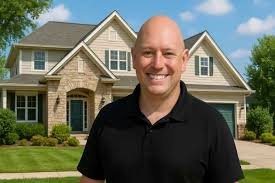
I’m Duane Buziak, NMLS #1110647, a mortgage broker serving Virginia buyers who want straight answers without the runaround. In places like Harrisonburg, Staunton, Waynesboro, Front Royal, and the rural communities in between, the better question is not just what credit score buys a house – it’s which loan program fits your score, your income, and the home you want.
Table of Contents
- What credit score buys a house, really?
- Minimum score ranges by loan type
- Why your score is not the whole approval story
- A real Valley-area payment example with math
- Broker vs. bank: why options matter
- FAQs for Shenandoah Valley buyers
What credit score buys a house, really?
Most homebuyers in Virginia fall into one of four lanes: USDA, VA, FHA, or conventional. Each has its own score tolerance, pricing differences, and rules. That matters in the Valley because many homes sit in USDA-eligible areas, and many veterans here can use VA financing with more flexibility than they expect.
For a practical starting point, USDA and conventional usually work best when credit is stronger, FHA can be more forgiving, and VA can be very flexible depending on the full file. At the same time, a lower score does not automatically mean no. It may just mean a different program, a smaller price range, or a plan to improve the file before you write offers.
One useful local resource is the USDA property eligibility map, because large parts of Rockingham, Augusta, Rockbridge, Shenandoah, and Warren Counties may qualify even when buyers assume they do not: https://eligibility.sc.egov.usda.gov/eligibility/welcomeAction.do
Minimum score ranges by loan type
Below is the clean version of what many buyers want to know first.
| Loan Program | Typical Starting Score | Down Payment | Best Fit |
|---|---|---|---|
| USDA | Often 640+ for smoother automated approval | 0% down | Rural and small-town buyers with eligible income and property |
| VA | Can work down to 500 in the right scenario | 0% down | Eligible veterans, active-duty buyers, and some surviving spouses |
| FHA | Often 580+ for 3.5% down, sometimes lower with more down | 3.5% minimum in common scenarios | Buyers rebuilding credit or carrying higher debt |
| Conventional | Usually 620+ minimum | 3% to 5% common for primary homes | Buyers with stronger credit and stable income |
If you want the short answer to what credit score buys a house, 620 is a common benchmark, but it is not the only one that matters. USDA can be excellent with a score at or above 640. VA can go lower than many buyers realize. FHA is often the bridge for buyers who are close, but not quite ready for conventional.
Why your score is not the whole approval story
A 680 score with high monthly debt can be harder than a 620 score with clean payment history and strong income. That surprises people. Credit score is one input, not the whole decision.
When I review a file, I’m looking at your score, but also your debt-to-income ratio, job history, cash reserves, and whether your credit issues are old or recent. A medical collection from two years ago is different from multiple fresh late payments. So is a buyer with steady W-2 income versus someone with self-employment swings.
This is where a soft credit pull mortgage approach can help. If you are just trying to see where you stand, a soft pull mortgage broker can often review your file before you commit to a full application path. For buyers who want a mortgage pre approval without hard pull options, or at least an initial no hard inquiry mortgage pre approval conversation, that first look can reduce stress. A no credit hit mortgage application strategy is not about avoiding underwriting forever – it’s about getting clarity before you take the next step.
I use NoTouch Credit Pull for exactly that reason. NoTouch Credit Pull gives buyers a way to start the conversation without feeling like they are stepping onto a trapdoor. Later, when you are ready to move forward, we can convert from early review to a full file.
A real Valley-area payment example with math
Let’s say you are buying a $300,000 home outside Staunton in a USDA-eligible area.
With USDA, the down payment can be $0. The upfront guarantee fee is 1% of the base loan amount.
Base loan amount: $300,000 USDA guarantee fee at 1%: $3,000 Total financed loan amount: $303,000
Now compare that with FHA at 3.5% down on the same price.
Purchase price: $300,000 3.5% down payment: $10,500 Base loan amount: $289,500 Upfront mortgage insurance premium at 1.75%: $5,066.25 Total loan amount if financed: $294,566.25
The USDA buyer keeps $10,500 in the bank versus the FHA buyer at closing, which can matter a lot for repairs, moving, or reserves. In some cases, there may also be no-out-of-pocket closing options depending on rate, seller contribution, and structure.
Now let’s look at VA for a first-time use buyer with no down payment on the same $300,000 purchase. If the VA funding fee is 2.15% and it is financed:
Base loan amount: $300,000 VA funding fee at 2.15%: $6,450 Total financed loan amount: $306,450
If that buyer has a lower score but strong residual income and clean recent history, VA may still beat FHA because there is no monthly mortgage insurance. That’s a major trade-off worth running, not guessing.
What credit score buys a house if you want the best pricing?
Approval and pricing are not the same thing. You may get approved at 620, but the monthly payment might improve noticeably at 660, 680, or above. Conventional pricing especially tends to reward stronger credit. USDA and VA can be more forgiving on score while still offering strong monthly terms if the rest of the file is solid.
That means the right move is sometimes to buy now, and sometimes to wait 60 to 90 days, pay down revolving balances, fix reporting errors, and come back stronger. A good broker should tell you which one saves more money.
NoTouch Credit Pull is useful here too, because it helps identify whether a buyer is truly ready or just close. If you are searching for soft credit pull mortgage options, mortgage pre approval without hard pull solutions, or a no hard inquiry mortgage pre approval path, the goal is to make a smart decision, not a rushed one.
Broker vs. bank: why options matter
This is where the Valley market gets real. Buyers often start with a local retail shop or big national call center because that’s what they know. F&M Mortgage, ALCOVA Mortgage Staunton, C&F Mortgage Waynesboro, Benchmark Mortgage, Movement Mortgage, Rocket Mortgage, and teams like Jake Adler’s all have name recognition. That does not make them wrong. It just means they are working from a narrower shelf.
A broker can shop across 500+ wholesale outlets instead of fitting every buyer into one company’s box. For a USDA buyer in a rural pocket outside Harrisonburg or a veteran in Augusta County with a 580 score, that flexibility matters. It can mean one investor says no while another says yes. It can mean a better rate, lower monthly payment, or a cleaner path to closing.
Big banks and retail mortgage shops tend to be fine when the file is simple. Valley buyers are often not simple. Rural property lines, USDA eligibility, acreage concerns, gift funds, variable income, and credit recovery plans all call for more than a one-size-fits-all answer.
FAQs for Shenandoah Valley buyers
1. Can I buy a house in Harrisonburg with a 580 credit score?
Yes, possibly. FHA is often the first place to look, and VA may also work if you are eligible.
2. What credit score buys a house with USDA in Rockingham County?
A 640 score is often the smoother target for USDA, though the full file still matters.
3. Are areas outside Staunton and Waynesboro still USDA-eligible?
Many are. Rural eligibility is broader than most buyers expect in the Valley.
4. Can veterans in the Shenandoah Valley buy with a 500 score?
Sometimes, yes. VA can work down to 500 in the right scenario with the right full profile.
5. Does checking my credit for a mortgage always hurt my score?
Not always at the first stage. A soft credit pull mortgage review may let you explore options before a full hard inquiry.
6. Can I get a mortgage pre approval without hard pull options?
Some buyers can begin with a mortgage pre approval without hard pull review, then move to a full application when ready.
7. What if I want a no credit hit mortgage application first?
That can be a smart first step if you are still planning and want to see where you stand before house hunting.
8. Is USDA better than FHA for rural Virginia buyers?
Often yes, especially when 0% down is the difference-maker, but income limits and property eligibility have to line up.
If you are not sure whether you need a soft pull mortgage broker, a no hard inquiry mortgage pre approval, or a standard full preapproval, start with the least disruptive step that still gives you useful numbers. That is usually the smarter path than guessing based on internet averages.
The buyers who do best are usually not the ones with perfect scores. They are the ones who get the right strategy early.
Duane Buziak, Mortgage Maestro | Coast2Coast Mortgage LLC | NMLS #1110647 | (804) 212-8663 | duane@coast2coastml.com | 3302 Haydenpark Lane, Henrico VA 23233 | Licensed: VA, FL, TN, GA, DC Not a commitment to lend. Rates subject to change. Equal Housing Lender. Coast2Coast Mortgage LLC NMLS #376205. Duane Buziak NMLS #1110647.