
A $425,000 mortgage that closes at 6.625% instead of 7.000% lowers principal and interest by about $102 per month – roughly $6,120 over five years before tax treatment, prepayments, or refinance timing. That kind of spread matters even more when financing rural acreage homes, because larger parcels often bring higher down payment expectations, tighter appraisal review, and more cash needed for reserves and closing costs.
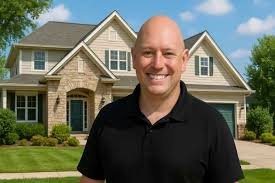
By Duane Buziak, Mortgage Maestro, NMLS#1110647
Table of Contents
- Why rural acreage financing is different
- What lenders look at on acreage properties
- Loan options for financing rural acreage homes
- Program comparison table
- Local pricing and market context
- Cost and qualification table
- A 6-step roadmap to close
- Broker comparison: local vs large-scale lenders
- FAQ
- Legal disclaimer
Why rural acreage financing is different
A house on 2 acres outside Waynesboro is not underwritten the same way as a subdivision home in town. Once land size grows, lenders start asking whether the property is primarily residential, whether the acreage is typical for the area, and whether outbuildings, private roads, wells, septic systems, or mixed-use features affect value or marketability.
That is the real issue with financing rural acreage homes. The challenge is usually not that lenders refuse these properties. It is that each loan program draws the line differently on acreage, utility access, income documentation, and appraisal support.
In Augusta County, Stuarts Draft, Fishersville, and Crozet-adjacent western corridors, buyers often shop for privacy, barns, mountain views, and usable land. Those are lifestyle wins. From an underwriting standpoint, they can also trigger questions about highest and best use, comparable sales, and whether the improvements fit neighborhood norms.
What lenders look at on acreage properties
The first filter is whether the home remains a standard residential property. If the parcel is modest and typical for surrounding homes, conventional, FHA, VA, or USDA financing may work. If the acreage is large for the market, includes income-producing features, or sits on a unique tract with limited comparable sales, the file can move from straightforward to case-by-case.
Appraisal is often the swing factor. The appraiser must support that the home and land combination is marketable and that buyers in that area commonly purchase similar sites. A 10-acre tract near the Blue Ridge Parkway may be ordinary in one pocket and highly atypical in another. That is why local comparables matter more than broad county averages.
Utilities matter too. Rural properties may rely on private well and septic. That is normal in much of the Shenandoah Valley, but the systems still have to meet agency and lender standards. Access can also become an issue if the property uses an easement or a shared private road.
Then there is cash. Acreage properties often require stronger reserves than a standard in-town purchase, especially if the loan is jumbo, non-QM, or built around nontraditional income. Reserve requirements can range from none on some owner-occupied agency loans to 6-12 months of housing payment on larger balance or layered-risk files.
Loan options for financing rural acreage homes
Conventional financing is often the first place to look. For 2025, the conforming loan limit in most areas is $806,500, according to Fannie Mae at https://singlefamily.fanniemae.com/originating-underwriting/loan-limits. Conventional loans can work well when acreage is typical, the borrower has solid credit, and the appraisal is clean. Many lenders want at least a 620 score, but stronger pricing usually starts higher.
VA loans can be excellent for eligible veterans buying a primary residence, including rural homes, as long as the property is primarily residential and meets VA appraisal standards. VA does not impose a hard acreage cap in the way many buyers assume, but marketability and residential use still control the decision. VA program details are published at https://www.va.gov/housing-assistance/home-loans/.
USDA can be a strong fit for eligible rural areas and income-qualified borrowers, but USDA is not an acreage loan in the broad sense. The property still needs to be modest for the area and primarily residential. Eligibility and property rules are outlined by USDA at https://www.rd.usda.gov/programs-services/single-family-housing-programs.
FHA can work on some rural homes with lower down payment, but the property has to meet FHA condition standards. If the site, outbuildings, or utility systems need work, FHA can get more complicated.
Jumbo, bank statement, DSCR, and other non-QM options come into play when the loan amount exceeds conforming limits, income is harder to document, or the property profile falls outside standard agency comfort. Those options can solve real problems, but they typically bring higher reserve expectations and more sensitivity to appraisal quality.
Program comparison table
| Program | Best use case | Typical minimum score | Down payment | Reserve tendency | |—|—|—:|—:|—:| | Conventional | Primary or second home with typical acreage | 620+ | 3%-20% | 0-6 months | | FHA | Lower down payment, owner-occupied | 580+ common | 3.5% | Usually low | | VA | Eligible veterans, primary residence | 580-620+ common by lender | 0% possible | Usually low | | USDA | Eligible rural area, income-qualified borrower | 640 often helps for streamlined approval | 0% possible | Usually low | | Jumbo | Higher loan amounts or unique properties | 680-720+ | 10%-20%+ | 6-12 months | | Bank Statement / Non-QM | Self-employed or complex income | 660-700+ | 10%-20%+ | 6-12 months | | DSCR | Investor property based on cash flow | 640-680+ | 20%-25%+ | 3-12 months |
Local pricing and market context
County-level pricing sets the frame for how much cash and financing flexibility you may need. Realtor.com reported a median listing home price of about $389,900 in Augusta County in early 2025 at https://www.realtor.com/realestateandhomes-search/Augusta-County_VA/overview. Acreage homes can sit far above or below that median depending on improvements, views, road frontage, and usable land.
Local market conditions also matter. In many Blue Ridge and Valley markets, inventory remains thinner for move-in-ready homes with 3 to 10 acres than for standard in-town properties. That creates a split market: well-priced homes near Fishersville, Waynesboro, and Staunton can still draw quick attention, while highly customized or over-improved rural listings may sit longer if appraisal support is thin. Buyers should not assume that a slower listing automatically means easier financing. Sometimes it simply means the property is harder to comp.
Cost and qualification table
| Item | Common range for rural acreage purchase | |—|—| | Closing costs | About 2%-5% of purchase price | | Conventional credit floor | Often 620, better pricing at 680+ | | Jumbo credit floor | Often 680-720+ | | Down payment on standard agency file | 3%-20% | | Down payment on unique acreage or jumbo | 10%-25%+ | | Cash reserves | 0-12 months depending on program and risk | | Well/septic inspections | Varies by lender, contract, and program |
On a $450,000 purchase, that 2%-5% closing cost range means roughly $9,000 to $22,500 before any down payment. If the property needs a survey update, septic review, or added appraisal complexity, cash to close can move up fast.
A 6-step roadmap to close
1. Start with a soft-pull prequalification
Acreage homes are not the place to shop blind. A soft-pull review helps frame realistic payment, down payment, and reserve targets without immediately impacting credit.
2. Identify the land profile early
Before writing an offer, confirm acreage, road access, water and sewer type, zoning, and whether barns, workshops, or tenant structures exist. Those details affect program fit.
3. Match the property to the loan, not the other way around
A buyer with 5% down may still need conventional, but not every 5-acre or 12-acre property will fit cleanly. Sometimes a higher down payment or jumbo structure creates a safer path.
4. Stress-test payment and liquidity
Run the payment at multiple rates and include taxes, insurance, and maintenance. Rural properties often bring higher upkeep, and lenders may want to see that cash remains after closing.
5. Review appraisal risk before waiving anything
In places near Afton, Stuarts Draft, or the western Albemarle edge, one road can have highly varied property types. If comps are thin, keep appraisal risk in the conversation.
6. Build extra time for property-level conditions
Well, septic, access documentation, repair questions, and outbuilding issues can all add days. A realistic contract timeline is often smarter than an aggressive one.
Broker comparison: local vs large-scale lenders
| Lender type | Strength | Trade-off | |—|—|—| | Local mortgage broker | More flexibility across multiple investors, local property context | Experience varies by broker | | Large retail lender like Rocket or Movement | Strong brand recognition, digital process | Less flexible on edge-case acreage or layered scenarios | | Bank portfolio lender | May keep unique loans in-house | Can be conservative and less competitive on rate or fees | | VA-focused national lender like Veterans United | Familiar VA workflow | Not always strongest fit for mixed rural complexity outside standard profile |
This is where comparison shopping matters. A lender that prices well on a cookie-cutter subdivision home may not be the best fit for financing rural acreage homes when the file includes self-employment income, larger land size, or appraisal nuance.
FAQ
Can you finance a house with a lot of land?
Yes, but the answer depends on whether the acreage is typical for the market and whether the property is mainly residential.
Is there a maximum acreage for a conventional loan?
There is no universal single-acre cap across all lenders. The practical limit is marketability and appraisal support.
Are wells and septic a problem?
Not necessarily. They are common in rural Virginia. They simply need to meet lender and program requirements.
Do rural homes require larger down payments?
Sometimes. Standard agency loans may allow low down payment, but unique acreage, jumbo balances, or thin comps often push cash needs higher.
What credit score is usually needed?
620 is a common conventional floor, 580 may work for FHA with the right file, and jumbo or non-QM often starts around 680-720.
Can self-employed buyers get acreage financing?
Yes. Bank statement and other non-QM options can help when tax returns understate usable income.
Are rural properties harder to appraise?
Often, yes. The issue is usually comparable sales, not the home itself.
Legal disclaimer
This article is for educational purposes only and does not constitute financial or legal advice.
If you are looking at a farmhouse outside Waynesboro, a mountain-view parcel near Staunton, or a few usable acres beyond Fishersville, the right question is not just whether you qualify. It is whether the property, the appraisal, and the loan program fit each other cleanly enough to close without expensive surprises.
Duane Buziak, Mortgage Maestro | NMLS: 1110647 | Licensed in VA · FL · TN · GA | UWM PRO ELITE 2025 | UWM Top 20 Purchase LO Virginia 2025 | UWM Speed to Close Industry Leading 2025 | Scotsman Guide Top Originator 2025 & 2026 | VA Broker of the Year 2024-2025 | Top 1% Nationwide | Coast2Coast Mortgage | DuaneBuziakMortgageMaestro.com | duane@coast2coastml.com | (804) 212-8663
One Response