
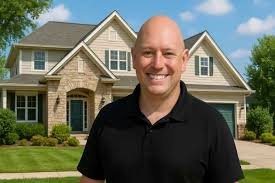
Buying a first home in the Shenandoah Valley or along the Blue Ridge corridor means navigating a decision tree most buyers outside Virginia never see: USDA zero-down eligibility maps that change block by block, VA benefits that get overlooked in favor of FHA out of habit, and a credit-pull process that can quietly cost you points before you’ve even found a house. Duane Buziak, NMLS #1110647, works this terrain daily across Harrisonburg, Staunton, Waynesboro, Winchester, Front Royal, Luray, and Woodstock, and the sequence in which you tackle pre-approval, program selection, and negotiation determines whether your first purchase goes smoothly or turns into a scramble. These seven strategies lay out that sequence in the order it actually needs to happen.
1. Get a NoTouch Credit Pull Pre-Approval Before You Shop
Every hard credit inquiry can shave a few points off your score, and if you apply separately with three or four retail banks while comparing rates, those points add up right before you need your credit at its strongest for underwriting. A NoTouch Credit Pull pre-approval solves this by using a soft inquiry, one that doesn’t appear to future creditors and doesn’t affect your score, to generate a real, usable pre-approval letter.
Consider a Harrisonburg teacher who requested a NoTouch Credit Pull pre-approval before touring a single home. With that soft-pull letter in hand, she spent two weeks comparing USDA and FHA offers side by side, working with a broker who had access to hundreds of wholesale lenders, without triggering a single hard inquiry on her credit file.
To put this into practice:
- Ask your broker specifically for a NoTouch Credit Pull, or soft-pull, mortgage pre-approval rather than a standard application.
- Provide income and asset documentation, such as pay stubs, W-2s, and bank statements.
- Receive a same-day pre-approval letter that your Realtor can attach to offers.
- Continue comparing loan programs using that same soft pull until you’re ready to lock a rate.
The common mistake is applying with multiple retail banks separately, each running its own hard pull, before realizing a mortgage broker could have compared every program on a single soft inquiry. Track the number of hard inquiries that show up on your credit report before your offer is accepted; the goal is zero to one, not three or four.
2. Check USDA Zero-Down Eligibility for Your County First
USDA Rural Development financing is widely misunderstood as a farmland-only program. In reality, the USDA eligibility map covers large swaths of Rockingham, Augusta, Shenandoah, Warren, and Page Counties, including many small towns and suburbs that sit just outside a city’s limits. Because USDA requires no down payment at all, checking eligibility before evaluating FHA or conventional loans can change your entire budget.
A buyer looking at a Bridgewater-area address just outside Harrisonburg’s city limits ran the exact property through USDA’s map and found it qualified, letting them skip a down payment entirely on a home in the mid-$200,000s.
To confirm eligibility:
- Enter the exact property address, not just the town name, into the USDA eligibility tool.
- Confirm household income falls under the published limit for that county with your broker.
- If the address qualifies and income fits, treat USDA as your baseline comparison for every other program.
The common mistake is assuming a property is too close to town to qualify and never checking the map at all. What you want confirmed before moving forward: a USDA-eligible address plus household income under the county limit, both verified in writing.
3. Compare VA Loan Benefits Before Assuming FHA Is Required
Veterans and active-duty service members near Fort Defiance, Verona, and Weyers Cave sometimes default to FHA financing simply because it’s the program they’ve heard the most about. VA loans, backed by the U.S. Department of Veterans Affairs, typically offer 0% down and, for buyers with a service-connected disability rating, a waived funding fee, an advantage FHA’s upfront and monthly mortgage insurance premiums don’t offer any veteran, disabled or not.
A Verona veteran with a service-connected disability rating used a VA loan with the funding fee waived entirely, avoiding both FHA’s upfront mortgage insurance premium and its ongoing monthly charge. VA cash-out refinancing also allows borrowing up to 100% loan-to-value, well beyond what conventional cash-out programs permit.
The path forward:
- Request your Certificate of Eligibility (COE) through the VA or your broker.
- Confirm whether your disability rating or service history waives the funding fee.
- Have your broker shop multiple VA-approved wholesale lenders for the lowest rate and fee combination, rather than accepting a single bank’s rate sheet.
The common mistake is never pulling a COE at all, assuming FHA is the only affordable route. What to check: whether your COE confirms eligibility, and whether the funding fee applies in full, at a reduced rate, or is waived outright.
4. Layer Virginia Housing Down Payment Assistance With FHA or Conventional
Buyers who don’t clear USDA’s eligibility map or income limits aren’t stuck paying full down payment out of pocket. Virginia Housing offers down payment assistance (DPA) that can pair with an FHA or conventional first mortgage, and HUD-approved homebuyer education courses are typically part of the qualification process.
A Winchester buyer combined an FHA first mortgage requiring 3.5% down with Virginia Housing DPA funds that covered that entire down payment, reducing the cash needed at closing to essentially the FHA-required out-of-pocket closing options rather than a full down payment plus fees.
To layer these correctly:
- Complete the required homebuyer education course early, since it’s often a prerequisite, not a last step.
- Verify your household income falls under Virginia Housing’s published limits.
- Have your broker confirm the specific DPA program is compatible with your chosen first mortgage before you lock a rate.
The common mistake is choosing a first-lien product that conflicts with the DPA program’s requirements, then discovering the conflict mid-underwriting, which costs weeks. Confirm DPA approval before your rate lock, never after.
5. Run the Real Numbers: USDA vs. FHA Monthly Payment Math
On a $275,000 purchase in Rockingham County, the math between USDA and FHA plays out differently than most buyers expect. USDA’s zero-down structure requires $0 out-of-pocket for the down payment, while FHA’s 3.5% down requirement on the same price comes to $9,625 due at closing. USDA’s annual fee, roughly 0.35% of the loan balance as of 2026, generally runs lower than FHA’s monthly mortgage insurance premium, roughly 0.55% as of 2026, meaning USDA often produces both a lower upfront cost and a lower recurring monthly charge on comparable loan amounts, though actual figures depend on the lender’s current fee schedule and should be confirmed at application.
To make this comparison yourself:
- Ask your broker for a written, side-by-side worksheet showing principal, interest, taxes, insurance, and mortgage insurance or annual fee for both USDA and FHA on the exact property you’re considering.
- Compare the total monthly payment, not just the down payment requirement.
- Project both scenarios out five years to see cumulative interest and fee differences.
The common mistake is defaulting to FHA because it’s the more familiar name, without ever running the USDA comparison. What to measure: total monthly payment and total interest and fees paid over a five-year window, compared line by line, not just the headline down payment figure.
6. Dare to Compare Broker Pricing Against a Single Retail Lender
A single retail bank or a large online lender can only show you its own rate sheet. A mortgage broker with access to hundreds of wholesale lenders can shop the same loan across multiple sources on the same day, which is the core structural difference behind the Dare to Compare approach.
A Staunton buyer requested Loan Estimates from both a broker and a retail lender on the same day and found a lower rate through the broker’s wider lender shelf, using the exact same credit profile and loan amount for both quotes. Duane Buziak’s production, cited at $95.6M with a Scotsman Guide Top Originator ranking and more than 1,400 five-star reviews, reflects a broker model built specifically on that kind of side-by-side comparison, not a single institution’s fixed pricing.
To run this comparison:
- Request a written Loan Estimate from both the broker and a retail lender on the same day.
- Compare interest rate, total fees, and which programs (USDA, VA, FHA, conventional) each side can actually offer.
- Choose based on the numbers in front of you, not brand familiarity.
The common mistake is sticking with a familiar local name out of loyalty without ever requesting a comparable Loan Estimate from a broker. Measure the difference in rate, total fees, and program availability between the two estimates before deciding.
7. Sync Your Pre-Approval Timeline With Your Realtor’s Offer Strategy
In fast-moving markets like Winchester and Front Royal, a pre-approval letter that’s a few weeks stale can cost you the house. Sellers’ agents want to see a current letter attached to an offer, and any delay in refreshing it can mean a competing buyer submits first.
A Front Royal buyer requested an updated pre-approval letter within hours of finding a listing they wanted, which allowed their Realtor to submit a same-day offer instead of waiting until the next business day.
To keep pre-approval and offer timing aligned:
- Share your pre-approval letter with your Realtor before your first showing, not after you’ve found a house.
- Request a refreshed letter immediately when you decide to make an offer, especially if more than a week or two has passed.
- Confirm your broker can turn around an updated letter same-day, since delays here directly affect offer competitiveness.
The common mistake is waiting until after an accepted offer to finalize which loan program you’re using, which slows underwriting during an already tight settlement window. What to track: the time between offer acceptance and submission of a fully updated pre-approval to the seller’s agent, aiming for same-day rather than multi-day turnaround.
Local pricing context matters when weighing these strategies against your own budget. Harrisonburg’s median home price has hovered near $285,000, Staunton near $255,000, and Winchester closer to $340,000, according to Virginia REALTORS market data as of 2026, which is worth checking against current figures before you set a target price range.
The table below compares the major first-time buyer programs available across the Valley and Blue Ridge corridor.
Note: the table above intentionally omits markdown formatting; see the structured comparison below.
Program Comparison
- USDA Rural Development: Down payment 0%, mortgage insurance roughly 0.35% annual fee, credit pull soft-pull available through NoTouch process, best fit for eligible rural and suburban Valley addresses outside city limits.
- VA Loan: Down payment 0%, mortgage insurance funding fee (often waived with service-connected disability), credit pull soft-pull available, best fit for veterans and active-duty buyers with a Certificate of Eligibility.
- FHA Loan: Down payment 3.5%, mortgage insurance roughly 0.55% monthly MIP plus upfront premium, credit pull soft-pull available, best fit for buyers who don’t qualify for USDA or VA.
- Conventional Loan: Down payment as low as 3% to 5% depending on program, mortgage insurance private MI (removable at 80% LTV), credit pull soft-pull available, best fit for stronger credit profiles or 2026 conforming loan amounts up to $806,500 ($1,249,125 in high-cost areas).
Frequently asked questions from Valley buyers cover much of the same ground these strategies address.
Frequently Asked Questions
Does rate shopping hurt your credit score in Virginia?
Soft credit inquiries, including a NoTouch Credit Pull pre-approval, don’t affect your credit score, so comparing multiple loan programs before you’re under contract is safe as long as your broker uses a soft pull rather than repeated hard pulls.
Is USDA financing available in Harrisonburg or just outside the city?
Many addresses just outside Harrisonburg’s city limits, including parts of Rockingham County, clear USDA’s eligibility map, so check the exact property address rather than assuming based on the town name.
What credit score do first-time homebuyers need in Virginia?
Minimum credit score requirements vary by program and by wholesale lender, with FHA and USDA generally allowing lower scores than conventional financing; your broker can confirm which programs your current score qualifies for during a soft-pull pre-approval.
Can veterans in Staunton or Verona use a VA loan with no down payment?
Yes, VA loans typically require 0% down for eligible veterans and active-duty service members, and buyers with a service-connected disability rating may have the funding fee waived entirely.
How does Virginia Housing down payment assistance work with FHA loans?
Virginia Housing DPA funds can pair with an FHA or conventional first mortgage to cover some or all of the required down payment, provided the buyer completes a homebuyer education course and meets income limits.
What’s the difference between a mortgage broker and a bank in Winchester?
A broker can shop the same loan across hundreds of wholesale lenders and compare rates side by side, while a single bank can only offer its own in-house rate sheet.
What are the 2026 conforming loan limits for Virginia?
The 2026 conforming loan limit is $806,500, with a high-cost limit of $1,249,125 in eligible areas, as set by the Federal Housing Finance Agency.
How quickly can I get an updated pre-approval letter in Front Royal?
Most brokers can turn around a refreshed pre-approval letter the same day a buyer decides to make an offer, which matters in fast-moving markets where a stale letter can cost the house to a faster-moving buyer.
Where to Start With Your Own Purchase
Start with the NoTouch Credit Pull pre-approval and the USDA eligibility check before you tour a single home. Those two steps determine which of the remaining five strategies actually apply to your address and your budget, since a USDA-eligible property changes the down payment conversation entirely, and a soft-pull pre-approval keeps your credit intact while you weigh VA, FHA, conventional, and Virginia Housing DPA options against each other. Everything else on this list, from broker-versus-retail comparisons to syncing your offer timeline with your Realtor, builds on those first two answers.
Contact our local mortgage experts today to explore personalized loan solutions tailored to your unique financial situation. Whether you’re a first-time buyer or looking to refinance, we’ll guide you through every step with the competitive rates and trusted service our Virginia community relies on.