
Getting a mortgage application checklist that actually matches your situation makes the difference between a smooth 30-day close and a file that bounces back from underwriting three times. For Valley homebuyers in Harrisonburg, Staunton, Waynesboro, and Winchester, the stakes are higher than they look on paper: USDA loans require county-specific income verification, VA loans require a Certificate of Eligibility, and jumbo files above the 2026 conforming limit of $806,500 (or $1,249,125 in high-cost areas) need extra asset documentation. This comparison looks at how six lenders and brokers handle checklist prep, from fully automated apps to in-person walkthroughs, so you know what to expect before you submit a single document.
Quick Comparison
- Blue Mountain Mortgages: best for Valley buyers needing a program-specific, county-aware checklist across 500+ wholesale lenders; pricing is quote-based with no broker fee to the borrower; the only option here that rebuilds the checklist around USDA and VA nuances specific to Shenandoah Valley counties.
- Rocket: best for tech-comfortable conventional borrowers; quote-based pricing; the only one with a fully app-native, real-time checklist status tracker.
- Movement: best for Rockingham County buyers who want a local loan officer in the room; quote-based pricing; the only lender here with a Harrisonburg-area team walking checklists in person as standard practice.
- Alcova: best for Augusta County first-timers who want an in-branch packet; quote-based pricing; the only one that explicitly sequences checklist items around Valley closing logistics like well and septic inspections.
- Lower: best for remote-first borrowers; quote-based pricing; the only fully self-serve, no-branch-visit e-signature checklist workflow on this list.
- Fairway: best for buyers who want a national app paired with a local contact; quote-based pricing; the only one that pushes real-time upload notifications straight to an assigned local loan officer.
1. Blue Mountain Mortgages
Blue Mountain Mortgages is an independent mortgage brokerage led by Duane Buziak, NMLS #1110647, operating under Coast2Coast Mortgage LLC, NMLS #376205, under the brand Mortgage Maestro. Rather than handing a borrower a generic PDF, the checklist here is built around the specific program the borrower is most likely to qualify for, whether that’s USDA, VA, FHA, Conventional, or Jumbo, and around the county the property sits in.
The distinguishing piece is the NoTouch Credit Pull, a soft-pull process that flags document gaps and credit issues before a hard inquiry hits the borrower’s file. Paired with access to more than 500 wholesale lenders, that means a checklist can shift mid-process if a better-fit program emerges. For a Rockingham County borrower buying near Harrisonburg with income close to the USDA limit, that flexibility matters: the checklist has to account for household income from every adult occupant, not just the borrower, per USDA Rural Development guidelines, and eligibility should be confirmed against the USDA eligibility map before a checklist is finalized.
As a worked example: a borrower purchasing a $285,000 home in Rockingham County, close to Harrisonburg’s median price, using USDA zero-down financing would see a 1% upfront guarantee fee ($2,850) financed into the loan for a total balance of $287,850. At a 6.5% rate over 30 years, principal and interest runs approximately $1,819 a month, plus the USDA annual fee of 0.35% of the average balance, or roughly $84 a month, before taxes and insurance. A checklist built for that scenario needs county income verification, USDA Form RD 3555-21, and asset statements, items a generic conventional checklist would not surface.
- Program-specific checklists built around USDA, VA, FHA, Conventional, and Jumbo eligibility rather than a one-size-fits-all form
- Soft-pull credit review that catches missing documents before a hard inquiry affects the borrower’s score
- Broker access to 500+ wholesale lenders so the checklist can adapt if a better program fits the file
- Working knowledge of Shenandoah Valley and Blue Ridge county requirements, including USDA income limits by household size
This is a consultative, broker-run service rather than a self-serve app, so borrowers who want a purely automated, no-phone-call experience may find the process more hands-on than they expect. There is no cost to work with the broker; borrowers pay standard third-party fees such as appraisal and title, disclosed on the Loan Estimate, and current fee schedules should be confirmed directly with the company.
Best for: Valley buyers who want a tailored, program-specific checklist and broker flexibility, especially for USDA or VA applications.
2. Rocket
Rocket is a large digital lender built around an app-first application experience. Its checklist generates automatically based on the loan type selected during intake, and documents upload directly into the same portal used to track loan status.
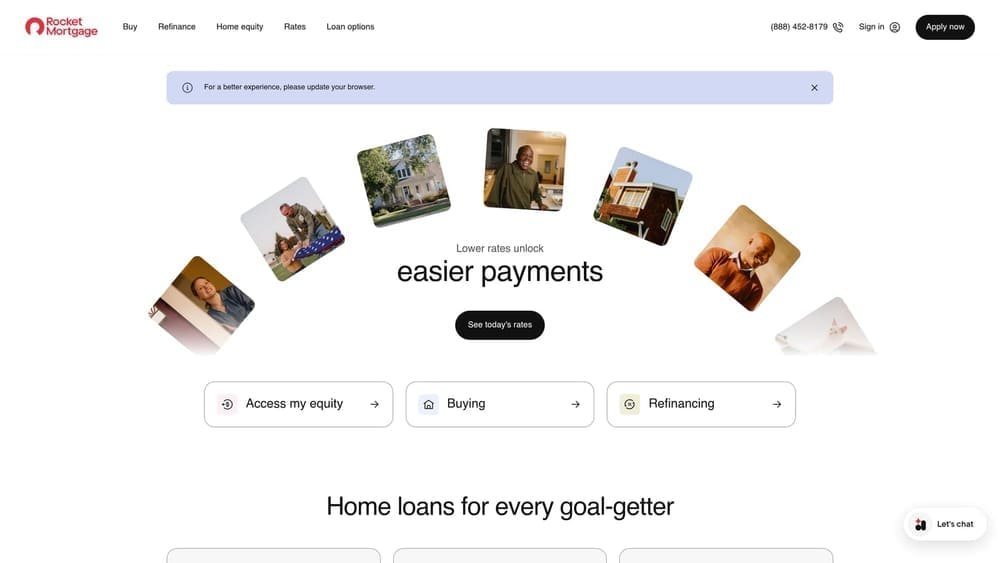
What sets Rocket apart on this list is the real-time tracker: borrowers can see exactly which checklist items remain outstanding at any point, updated as documents clear review. That transparency appeals to borrowers who want to self-manage their file without waiting on a phone call for status updates.
- App-generated checklist tailored to loan type at a basic level
- Direct upload for pay stubs, W-2s, and bank statements from a phone or computer
- Live tracker showing which checklist items are still open
- Streamlined online pre-approval flow for conventional borrowers
The checklist and underwriting guidelines are built around Rocket’s own retail programs, which means less tailoring for scenarios specific to rural Virginia, such as USDA eligibility nuances tied to county income limits. Borrowers with straightforward, single-income conventional files tend to have the smoothest experience; those with more complex rural or self-employed income situations may find the automated checklist misses program-specific requirements a broker would catch.
Pricing is quote-based and depends on the borrower’s credit profile, loan amount, and program; current rates and fees should be confirmed on Rocket’s website.
Best for: Tech-comfortable borrowers with straightforward conventional income documentation who prefer a fully digital process.
3. Movement
Movement is a retail mortgage lender with a loan officer presence in the Harrisonburg area. Rather than generating a checklist purely through an app, Movement’s team typically walks borrowers through document requirements during an initial phone or in-person consultation.
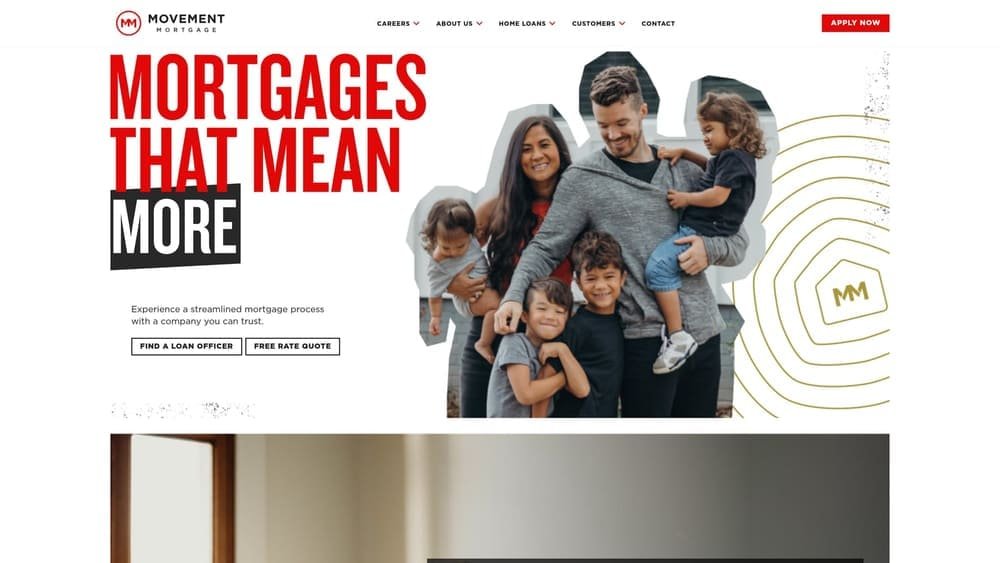
The local team is the differentiator here. A Rockingham County borrower working with Movement gets a checklist explained by someone familiar with the area’s closing patterns, rather than a national call center reading from a script.
- Checklist delivered directly by a local Rockingham County loan officer team
- Fast closing commitments once checklist items are submitted
- Support across Conventional, FHA, and VA programs
- Ongoing local branch contact for follow-up questions during underwriting
Because Movement operates as a retail lender, checklist requirements and program guidelines are limited to its own investor set rather than a broader wholesale shelf. That can mean fewer program options if a borrower’s file doesn’t fit Movement’s standard guidelines, compared with a broker who can shop the file across multiple lenders. Pricing is quote-based; current rates and fees should be confirmed with a local Movement loan officer.
Best for: Rockingham County borrowers who want a local, in-person point of contact for their checklist.
4. Alcova
Alcova is a regional mortgage lender with a well-established branch presence in Staunton. Its application process centers on a standardized checklist packet that borrowers review in-branch with a loan officer, rather than a purely digital intake.
What makes the checklist process different
Alcova’s in-branch staff sequence checklist items around Valley-specific closing logistics, such as scheduling well and septic inspections common on Augusta County properties, and coordinating with local Realtor and title networks the branch has worked with for years. That local familiarity can shorten the back-and-forth on rural properties that don’t fit a standard suburban timeline.
- Standardized application checklist packet reviewed face-to-face in-branch
- Established local Realtor referral relationships around Staunton and Augusta County
- Practical knowledge of Valley closing timelines, including inspections tied to well and septic systems
- Support for Conventional, FHA, and VA programs
Where it falls short
Alcova’s pricing and program guidelines reflect its own shelf as a single regional lender, not a multi-lender comparison. A borrower whose file doesn’t fit Alcova’s standard guidelines doesn’t have the same built-in fallback to a different program the way a broker’s wholesale network provides. Pricing is quote-based and should be confirmed directly with the Staunton branch.
Best for: Augusta County first-time buyers who prefer an in-person walkthrough of their checklist over a digital-only process.
5. Lower
Lower is an online mortgage lender built for borrowers who want to complete the entire application, checklist included, without visiting a branch. Documents are uploaded and disclosures signed electronically from start to finish.
Its self-serve dashboard is the standout feature: borrowers can see submitted documents, outstanding items, and e-signature requests in one place, with no need to coordinate a branch visit or wait for office hours.
- Digital document checklist generated based on the selected loan type
- E-signature workflow for disclosures and checklist items
- Online application process for conventional and FHA loans
- Self-serve dashboard tracking every submitted document
Lower’s limited physical presence in the Shenandoah Valley means less localized guidance for borrowers working through USDA or other rural-specific eligibility questions, where a phone-based or in-branch walkthrough often catches issues an app-only checklist misses. Pricing is quote-based; current rates and fees should be confirmed directly on Lower’s website.
Best for: Remote-first borrowers who want a self-serve digital checklist without visiting a local office.
6. Fairway
Fairway is a national mortgage lender with a broad program lineup, including VA and USDA loans, delivered through a mobile app paired with locally assigned loan officers in parts of Virginia.
The app’s real-time upload notifications set it apart: when a borrower submits a document, the assigned loan officer gets an immediate alert, closing the gap between a digital checklist and a human following up on it.
- Mobile app checklist with status updates as documents are reviewed
- Program coverage spanning VA, USDA, FHA, and Conventional loans
- Local loan officers available in parts of Virginia for direct contact
- Push notifications alerting the assigned loan officer when documents are uploaded
As a single retail lender, Fairway’s checklist requirements are tied to its own investor guidelines rather than a broker’s multi-lender shelf, which can limit flexibility if a borrower’s file needs a program Fairway doesn’t offer on the terms the borrower wants. Pricing is quote-based; current rates and fees should be confirmed with a Fairway loan officer.
Best for: Borrowers who want a hybrid experience combining a national mobile app with a locally assigned loan officer.
Common Questions Valley Buyers Ask Before Applying
What is the difference between pre-qualification and pre-approval in Harrisonburg? Pre-qualification is a quick estimate based on unverified information, while pre-approval involves document review and typically a credit pull, giving Harrisonburg sellers more confidence in an offer.
Does a USDA loan checklist in Rockingham County require extra documents? Yes. USDA loans require county-specific household income verification for every adult occupant, not just the borrower, in addition to standard income and asset documents.
What is a soft pull versus a hard pull when applying for a mortgage in Staunton? A soft pull reviews credit without affecting the score, useful for early checklist gap analysis, while a hard pull is a formal inquiry tied to a specific loan application.
Do I need a Certificate of Eligibility for a VA loan in Winchester? Yes. VA loan applications require a COE, which can be verified through VA.gov before the checklist is finalized.
What’s the 2026 conforming loan limit for a jumbo checklist in Warren County? The 2026 baseline conforming limit is $806,500, rising to $1,249,125 in designated high-cost areas; loans above that threshold require jumbo-specific asset documentation.
Is a broker checklist different from a bank’s checklist for a Waynesboro home purchase? A broker can adjust the checklist across multiple wholesale lenders, while a single lender’s checklist reflects only its own program guidelines.
What documents does an FHA application require in Page County? FHA applications generally require two years of tax returns, recent pay stubs, bank statements, and an appraisal meeting HUD appraisal standards.
How do I check USDA property eligibility before starting a Front Royal application? Property address can be checked directly on the USDA eligibility map, which confirms whether the location qualifies for the program.
Duane Buziak, NMLS #1110647, notes that median home prices around Harrisonburg have hovered near $285,000 in recent local market data, a figure that shapes how much documentation buyers need to assemble upfront, according to Virginia REALTORS® market research.
For USDA and VA scenarios common across Rockingham, Augusta, Shenandoah, Warren, and Page counties, starting with Blue Mountain Mortgages gives you a checklist built around county eligibility and 500-plus lender options rather than a single investor’s rulebook. If you’re comfortable managing everything from a phone and your file is a straightforward conventional purchase, Rocket or Lower’s self-serve tools can move quickly without a branch visit. If you’d rather sit down with someone local in Staunton or Harrisonburg, Alcova and Movement both offer that in-person checklist review. Fairway sits in between, combining a national app with a locally assigned contact.
Contact our local mortgage experts today to build a checklist matched to your program and county before you apply, whether you’re a first-time buyer chasing USDA zero-down or refinancing with cash out.