
A conventional mortgage review Virginia buyers can trust starts with a local reality: the best loan is not always the loan with the lowest advertised rate. In the Shenandoah Valley and Blue Ridge foothills, property type, acreage, income, credit profile, and the home’s USDA eligibility can change the right answer quickly. A conventional loan can be an excellent fit, but it should earn its place beside USDA, VA, FHA, and down payment assistance options.
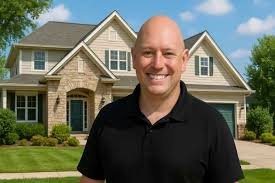
I am Duane Buziak, NMLS #1110647, an independent mortgage broker serving Virginia buyers who want a clear comparison before making an offer. My job is not to force every household into one product shelf. It is to show you the trade-offs in actual dollars.
Table of Contents
- When conventional financing makes sense
- Conventional loan rules for Virginia buyers
- A worked Virginia mortgage example
- Conventional versus USDA, VA, and FHA
- Why a broker comparison matters
- Soft-pull pre-approval options
- Frequently asked questions
When a conventional mortgage is the right fit
Conventional financing is often strongest for buyers with solid credit, stable documented income, and at least some cash available for a down payment. It is also useful when a home does not qualify for USDA, when household income is above USDA limits, or when a borrower wants to buy a second home or investment property.
For a primary residence, conventional programs can allow down payments as low as 3% for qualified buyers. At 20% down, private mortgage insurance is generally avoided. Below 20%, monthly mortgage insurance may apply, but unlike FHA mortgage insurance, it can often be removed later when the loan balance and home value meet the program’s requirements.
The 2026 conforming loan limit is $806,500 in baseline areas and $1,249,125 in designated high-cost areas. That gives many Charlottesville move-up buyers and UVA faculty households room to finance a higher-priced primary home without entering jumbo financing. Still, the county, occupancy, and exact property details matter.
Conventional loans are not automatically better because the buyer has a high credit score. A Rockingham County buyer purchasing an eligible rural home with little saved may find USDA more practical. A veteran in Augusta, Rockbridge, Shenandoah, Warren, or Page County may find VA financing clearly stronger because of the no-down-payment structure and flexible credit approach.
The conventional loan review points that matter most
A useful conventional mortgage review in Virginia should look beyond rate. Start with the total payment, including principal, interest, taxes, homeowners insurance, and any mortgage insurance. Then compare the cash needed to close, seller concession limits, expected time in the home, and whether paying points makes sense.
Credit is especially important with conventional loans. Better credit can improve pricing and reduce mortgage insurance costs, but a buyer does not need perfect credit to be viable. Debt-to-income ratio, employment history, reserves, and property characteristics all influence the file.
Rural properties deserve extra attention. A farmhouse outside Staunton with several acres may be conventionally financeable, but appraisal support, outbuildings, well and septic items, and the portion of land considered typical for the area all need review. Do not assume a property is ineligible just because it is rural. Do not assume it is simple because it is listed as a house.
USDA’s official eligibility map shows that many communities surrounding Harrisonburg, Waynesboro, Front Royal, and the broader Valley remain in eligible areas, while nearby town limits may not. That local boundary difference can be worth thousands of dollars in upfront cash.
A worked $350,000 purchase example
Consider a $350,000 primary home purchase in a Valley community. A conventional buyer putting 5% down brings $17,500 for the down payment. The base conventional loan amount is $332,500.
At an illustrative 6.50% fixed rate for 30 years, principal and interest on $332,500 is about $2,101 per month. If annual mortgage insurance is priced at 0.45%, that adds about $125 per month: $332,500 × 0.0045 ÷ 12 = $124.69. Before taxes and homeowners insurance, the estimated housing payment is about $2,226 monthly.
Now compare the same $350,000 home under USDA, assuming the property and household qualify. USDA allows no down payment. The 1% upfront guarantee fee equals $3,500 and is commonly financed, creating a starting loan balance of $353,500. The annual USDA fee at 0.35% equals about $103 monthly: $353,500 × 0.0035 ÷ 12 = $103.10.
For an eligible veteran using VA financing with no down payment and a 2.15% first-use funding fee, the funding fee would be $7,525 on a $350,000 base loan. If financed, the starting loan amount would be $357,525. The VA funding fee can vary by use, down payment, and exemption status, so this is an illustration, not a quote.
| Program | Down Payment | Starting Loan Math | Key Trade-Off |
|---|---|---|---|
| Conventional | $17,500 at 5% | $350,000 – $17,500 = $332,500 | Mortgage insurance may apply below 20% down |
| USDA | $0 | $350,000 + $3,500 guarantee fee = $353,500 | Home and household must meet USDA requirements |
| VA | $0 | $350,000 + $7,525 funding fee = $357,525 | Eligible military service or qualifying entitlement required |
| FHA | $12,250 at 3.5% | $350,000 – $12,250 = $337,750 | Mortgage insurance is structured differently than conventional |
This is why rate-shopping without program-shopping can miss the point. USDA’s financed fee creates a larger starting balance than the conventional example, but it eliminates the $17,500 down payment. VA may provide another powerful path for eligible buyers. The best choice depends on your cash position, monthly-payment comfort, property location, and long-term plan.
Conventional versus the other Valley loan paths
For rural buyers, USDA should be checked early rather than treated as an afterthought. It is particularly valuable for buyers who have dependable income but want to preserve savings for moving, repairs, or emergencies. USDA has household income limits, and all household income can matter, even if not every adult is on the loan.
VA financing deserves the same early review for eligible veterans, active-duty service members, and qualifying surviving spouses. VA can work down to a 500 FICO score in appropriate files. VA cash-out refinancing is available up to 100% loan-to-value, while conventional cash-out refinancing generally tops out at 90% loan-to-value.
FHA can help when credit or debt ratios make conventional less favorable. Dynamo DPA, Turbo DPA, and Homes for Heroes may also be worth reviewing for eligible buyers who need help with upfront costs. For investors purchasing rural rentals, DSCR financing can be a better conversation than forcing a conventional underwriting model onto a property that does not fit it.
Broker comparison: more than one product shelf
A local retail office can provide good service, and buyers should compare respectfully. Tonja Showalter Armentrout at F&M Mortgage, Jake Adler and The Adler Mortgage Team, ALCOVA Mortgage Staunton, Bruce Burner at Benchmark Mortgage, C&F Mortgage Waynesboro, and Movement Mortgage Harrisonburg each serve Valley buyers through their own retail channels.
The difference with an independent broker is product access. I can compare options across 500+ wholesale lenders rather than being limited to one retail shelf. That matters when a USDA file has a complicated income question, when a conventional buyer needs a specific mortgage insurance structure, or when a rural property needs a more experienced review.
Rocket Mortgage can be useful as a national online rate comparison, while Movement Mortgage is often recognized for retail processing speed. But a fast quote is not the same as a full local strategy. A home outside Broadway, Grottoes, Elkton, or Strasburg may call for USDA depth before anyone recommends conventional financing.
Start with credit information, not pressure
A soft credit pull mortgage review lets us discuss likely options without treating every early conversation like a final application. NoTouch Credit Pull is designed for buyers who want an informed starting point before they commit to a property search. Ask about a no hard inquiry mortgage pre approval, mortgage pre approval without hard pull, or a soft pull mortgage broker review if protecting your credit profile is a priority.
A no credit hit mortgage application conversation does not replace full underwriting when you are ready to offer. It does give you a smarter place to begin. NoTouch Credit Pull can identify likely program lanes, monthly-payment ranges, and questions to resolve before the contract clock starts.
Conventional Mortgage Review Virginia FAQs
Is a conventional loan better than USDA in Virginia?
Not automatically. Conventional may win for buyers with strong credit and available down payment funds, while USDA can be better for an eligible rural home buyer who wants no down payment and meets household income guidelines.
Can I buy a home near Harrisonburg with 3% down?
Possibly. A qualified primary-residence buyer may use a 3% conventional option, but credit, income, property value, and mortgage insurance pricing determine whether it is the best route.
Are rural properties in Augusta County eligible for conventional loans?
Many are, but acreage, comparable sales, wells, septic systems, and outbuildings must be reviewed. Rural does not mean ineligible, yet it can require more careful appraisal planning.
What is the 2026 conventional loan limit in Virginia?
The baseline conforming limit is $806,500, with a $1,249,125 limit in designated high-cost areas. Your property’s county determines which limit applies.
Can mortgage insurance be removed from a conventional loan?
Often, yes. Removal depends on the loan type, payment history, remaining balance, and verified home value. This is a key advantage to compare against FHA.
Does a soft pull affect my credit score?
A soft pull typically does not affect your score the way a hard inquiry can. It is useful for early planning, though a full credit review is needed before final approval.
Can VA buyers choose conventional instead?
Yes, but they should compare both. A veteran may prefer conventional in a specific scenario, yet VA’s no-down-payment option and flexible underwriting often make it a strong first comparison.
Can I use no-out-of-pocket closing options with conventional financing?
Sometimes. Depending on pricing, seller concessions, and eligibility, no-out-of-pocket closing options may be available. They are not free costs, so the structure should be reviewed carefully.
The practical next step is simple: compare the home, the household, and the full payment before you fall in love with a loan type. A clear local review can keep a promising Valley property from becoming an expensive surprise.
Duane Buziak, Mortgage Maestro | Coast2Coast Mortgage LLC | NMLS #1110647 | (804) 212-8663 | duane@coast2coastml.com | 3302 Haydenpark Lane, Henrico VA 23233 | Licensed: VA, FL, TN, GA, DC
Not a commitment to lend. Rates subject to change. Equal Housing Lender. Coast2Coast Mortgage LLC NMLS #376205. Duane Buziak NMLS #1110647.