
A VA loan can put a qualified veteran into a home in Rockingham, Augusta, Warren, or Shenandoah County with no down payment. That does not automatically make it the best choice. In a VA loan vs conventional comparison, the right answer depends on your entitlement, cash reserves, property plans, credit profile, and how long you expect to own the home.
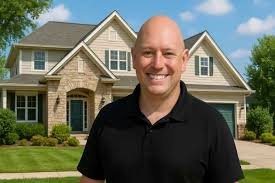
I am Duane Buziak, NMLS #1110647, a mortgage broker serving Virginia buyers who need straight answers, not a one-size-fits-all quote. For many Valley households, USDA is also worth comparing because much of our rural market may qualify under the USDA Property Eligibility Map. The best loan is the one that fits the property and your next move.
Table of Contents
- VA loan vs conventional at a glance
- Down payment, mortgage insurance, and credit
- A worked local purchase example
- When each program makes sense
- Broker versus single-shelf mortgage options
- Frequently asked questions
VA Loan vs Conventional at a Glance
| Feature | VA Loan | Conventional Loan | What It Means Locally |
|---|---|---|---|
| Eligibility | Eligible veterans, active-duty service members, and certain surviving spouses | Open to qualified buyers | VA eligibility is a major advantage for military households near Front Royal and across the Valley. |
| Down payment | Often 0% | Can start as low as 3% for qualified buyers | Conventional can preserve VA entitlement for a future purchase. |
| Mortgage insurance | No monthly mortgage insurance | Usually required below 20% down | This can materially change the monthly payment. |
| Upfront charge | Funding fee may apply, unless exempt | No VA funding fee | The VA funding fee may be financed into the loan amount. |
| Credit flexibility | Flexible, with options as low as a 500 FICO score in the right file | Generally more score-sensitive | Credit history and payment patterns still matter on both programs. |
| Cash-out refinance | Up to 100% LTV | Maximum 90% LTV | VA can offer substantially more equity access for eligible homeowners. |
VA financing is built for a primary residence. It is not a rental-property program, although a buyer may eventually rent out a former VA-financed home after meeting occupancy requirements. Conventional financing is also generally intended for a primary home at its best terms, but it provides more paths for second homes and investment properties.
For larger purchases, conventional conforming financing has 2026 limits of $806,500 in baseline areas and $1,249,125 in high-cost areas. That matters more for Charlottesville move-up buyers than for most Shenandoah Valley starter homes, but it is useful context for UVA faculty and households shopping at higher price points.
Down Payment Is Only One Part of the Cost
A 0% VA down payment can keep savings intact for repairs, moving costs, and the realities of buying an older Valley home. It also removes monthly mortgage insurance, which is often the biggest payment advantage over a low-down-payment conventional loan.
The trade-off is the VA funding fee. For a first-time VA use with no down payment, the standard funding fee is commonly 2.15% of the base loan amount. Eligible borrowers with a service-connected disability exemption may not pay it. A conventional buyer avoids that funding fee, but may pay private mortgage insurance until enough equity is established.
Closing costs are separate from down payment and program fees. Depending on the transaction, seller concessions, credits, and pricing, there may be no-out-of-pocket closing options. That is not the same as saying costs disappear. It means the structure may allow you to bring little to nothing out of pocket at closing.
A Worked $400,000 Purchase Example
Assume a veteran buys a $400,000 primary residence in Waynesboro. With a VA loan at 0% down, the base loan is $400,000. If the borrower pays a 2.15% funding fee and finances it, the fee equals $8,600:
$400,000 × 2.15% = $8,600
The resulting VA loan amount is $408,600. At an illustrative 6.25% fixed rate for 30 years, principal and interest are approximately $2,516 per month. There is no monthly mortgage insurance. Property taxes, homeowners insurance, and any applicable HOA dues are additional.
Now compare a conventional option with 5% down. The down payment is $20,000, producing a $380,000 loan. At an illustrative 6.50% fixed rate, principal and interest are approximately $2,402 per month. If mortgage insurance costs 0.45% annually, that adds about $143 monthly:
$380,000 × 0.45% ÷ 12 = $142.50
The conventional principal, interest, and estimated mortgage insurance total about $2,545 monthly, plus taxes and insurance. The VA option saves the $20,000 down payment, while the conventional option avoids the VA funding fee and starts with a smaller loan balance. Rate quotes, insurance costs, eligibility, and credits can change the outcome, so compare the full monthly payment and cash needed to close.
For perspective, a $400,000 USDA purchase with the standard 1% upfront guarantee fee would add $4,000 to the financed balance, before any other eligible costs. USDA also carries an annual fee. In rural-eligible areas around Broadway, Elkton, Craigsville, and many surrounding communities, USDA deserves a side-by-side review before assuming VA or conventional is the only path.
When VA Usually Wins and When Conventional Can Win
VA often wins when you are eligible, buying a primary home, want to minimize cash out of pocket, and expect mortgage insurance to make conventional expensive. It can also be especially useful for buyers rebuilding credit after a past setback. VA underwriting looks beyond a score and pays close attention to stable income, residual income, and the complete payment story.
Conventional can be the better fit if you have a strong credit profile, enough savings for a meaningful down payment, or a goal that does not fit VA occupancy rules. It can also make sense when you are preserving remaining VA entitlement for a later move, purchasing a second home, or finding that a particular conventional rate and mortgage-insurance combination produces a better long-term result.
Do not overlook appraisal and property condition. VA appraisals include minimum property requirements. A home with peeling paint, an inoperable heating system, roof issues, or unsafe access may need repairs before closing. Conventional appraisals also require marketability and safety, but the standards and repair conversations can differ.
Start With a Soft Credit Conversation
You do not need to guess which lane fits before speaking with a broker. A soft credit pull mortgage review can show a useful credit picture without starting with a hard inquiry. My NoTouch Credit Pull process is designed for buyers who want clarity before they commit to a property.
Ask for a no hard inquiry mortgage pre approval review when you are comparing payment ranges or deciding whether to use VA entitlement. A mortgage pre approval without hard pull can help organize the early conversation, though a full application and verification are needed before a final underwriting decision. You may also hear this called a soft pull mortgage broker review or a no credit hit mortgage application.
NoTouch Credit Pull is particularly useful for first-time buyers in Harrisonburg and Staunton who are still sorting out USDA eligibility, down payment assistance, or a VA Certificate of Eligibility.
Why Broker Independence Matters in the Valley
A local mortgage conversation should be more than selecting one product from one shelf. As an independent broker with access to 500+ wholesale lenders, I can compare VA, USDA, FHA, conventional, bank statement, DSCR, Dynamo DPA, Turbo DPA, and Homes for Heroes options where appropriate.
That is a different model from retail operations such as Tonja Showalter Armentrout at F&M Mortgage, Jake Adler and The Adler Mortgage Team, ALCOVA Mortgage Staunton, Bruce Burner at Benchmark Mortgage, C&F Mortgage Waynesboro, and Movement Mortgage Harrisonburg. They are established names in their communities, and every borrower should compare terms. The distinction is product access: a broker can shop multiple wholesale outlets rather than work from a single retail shelf.
Nationally, Rocket Mortgage is useful as a rate-comparison reference, while Movement Mortgage is often recognized for retail processing speed. For rural properties, though, program depth matters just as much as speed. USDA boundaries, acreage questions, well and septic details, VA entitlement, and local appraisal realities deserve personal attention.
Frequently Asked Questions
Is VA better than conventional for a first-time buyer in Harrisonburg?
Often, yes, if you are VA-eligible and plan to use the home as your primary residence. The 0% down payment and no monthly mortgage insurance can be powerful, but compare the funding fee and actual rate quote.
Can I use a VA loan to buy a home in rural Augusta County?
Yes, provided the property is a primary residence and meets VA guidelines. Rural location itself is not a problem, though appraisal, well, septic, and property-condition details still matter.
Does a VA loan require a 620 credit score?
VA does not set one universal minimum score. Available options can go as low as 500 FICO in the right file, but approval depends on the full credit, income, and property picture.
Can conventional financing beat VA with 20% down?
It can. With 20% down, conventional mortgage insurance is typically avoided, and a strong borrower may receive competitive pricing. The better choice depends on your cash position and future plans.
Can VA cash-out refinance up to 100% LTV in Virginia?
Yes. VA cash-out refinancing can reach 100% LTV for eligible borrowers, while conventional cash-out refinancing is limited to 90% LTV.
Should Valley buyers compare USDA with VA financing?
Absolutely. Many surrounding rural communities may be USDA-eligible. USDA and VA both offer low- or no-down-payment paths, but eligibility, fees, income rules, and property location differ.
Will a soft pull affect my credit score?
A soft pull mortgage broker review generally does not affect your score like a hard inquiry. NoTouch Credit Pull lets us begin the planning conversation without an initial credit hit.
Can I get no-out-of-pocket closing options with VA or conventional?
Potentially, yes. Seller concessions, credits, and loan pricing can sometimes reduce the cash required at closing. Availability depends on the transaction and cannot be guaranteed.
A good loan decision should leave room for the life you want after closing – repairs, savings, and the freedom to enjoy your place in the Valley. Call before you write an offer, and we can compare the numbers in plain English.
Duane Buziak, Mortgage Maestro | Coast2Coast Mortgage LLC | NMLS #1110647 | (804) 212-8663 | duane@coast2coastml.com | 3302 Haydenpark Lane, Henrico VA 23233 | Licensed: VA, FL, TN, GA, DC
Not a commitment to lend. Rates subject to change. Equal Housing Lender. Coast2Coast Mortgage LLC NMLS #376205. Duane Buziak NMLS #1110647.